Hey there! As a supplier of Compressed Air Treatment Equipment, I’ve had my fair share of dealing with different types of compressed air dryers. And let me tell you, the differences between these dryers can be pretty significant. So, in this blog, I’m gonna break down the main types of compressed air dryers and explain what sets them apart. Compressed Air Treatment Equipment
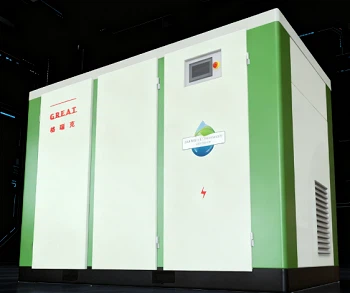
Refrigerated Dryers
Let’s start with refrigerated dryers. These are probably the most commonly used dryers in industrial settings. The basic idea behind a refrigerated dryer is to cool the compressed air down to a low temperature. When the air cools, the water vapor in it condenses into liquid water, which can then be drained out.
One of the big advantages of refrigerated dryers is that they’re relatively simple and reliable. They don’t have a whole bunch of complex moving parts, which means there’s less that can go wrong. They’re also pretty energy – efficient compared to some other types of dryers.
However, refrigerated dryers do have their limitations. They can only cool the air down to a certain point, usually around 3 – 5°C (37 – 41°F). This means that they can’t achieve extremely low dew points. So, if you need really dry air, like for applications in the electronics or pharmaceutical industries, a refrigerated dryer might not be the best choice.
Desiccant Dryers
Next up are desiccant dryers. These dryers use a desiccant material, like silica gel or activated alumina, to remove moisture from the compressed air. The desiccant adsorbs the water vapor as the air passes through it.
There are two main types of desiccant dryers: heatless and heated. Heatless desiccant dryers use a portion of the dried air to regenerate the desiccant. This process is called pressure – swing adsorption. Heated desiccant dryers, on the other hand, use an external heat source to regenerate the desiccant.
Desiccant dryers are great for applications that require very low dew points. They can achieve dew points as low as – 40°C (- 40°F) or even lower. This makes them ideal for industries where moisture can cause serious problems, such as in the food and beverage industry or in paint spraying.
But desiccant dryers also have some drawbacks. They’re more expensive to buy and operate compared to refrigerated dryers. The desiccant material needs to be replaced periodically, which adds to the cost. And they also consume more energy, especially the heated desiccant dryers.
Membrane Dryers
Membrane dryers are a bit different from the other two types. They work by using a semi – permeable membrane. The compressed air passes through the membrane, and the water vapor selectively permeates through the membrane and is removed from the system.
One of the nice things about membrane dryers is that they’re very simple and compact. They don’t have any moving parts, which makes them reliable and low – maintenance. They’re also very quiet, which can be a big plus in some environments.
However, membrane dryers are not as efficient as refrigerated or desiccant dryers when it comes to removing large amounts of moisture. They’re best suited for applications where the air flow is relatively low and the moisture content is not too high.
Comparison of Key Factors
Let’s take a look at how these different types of dryers compare in terms of some key factors.
Dew Point
As I mentioned earlier, refrigerated dryers can only achieve a dew point of around 3 – 5°C (37 – 41°F). Desiccant dryers can go much lower, down to – 40°C (- 40°F) or even lower. Membrane dryers can achieve dew points in the range of – 20°C to – 40°C (- 4°F to – 40°F), depending on the model and operating conditions.
Energy Consumption
Refrigerated dryers are generally the most energy – efficient. They use a refrigeration system to cool the air, but the energy consumption is relatively low compared to desiccant dryers. Heatless desiccant dryers use a portion of the dried air for regeneration, which can waste some energy. Heated desiccant dryers consume even more energy because of the external heat source. Membrane dryers have very low energy consumption since they don’t have any moving parts or external heat sources.
Cost
Refrigerated dryers are the most affordable option in terms of upfront cost. They’re also relatively inexpensive to operate. Desiccant dryers are more expensive to buy and operate, mainly because of the cost of the desiccant material and the energy consumption. Membrane dryers are usually in the middle in terms of cost.
Maintenance
Refrigerated dryers require regular maintenance of the refrigeration system, such as checking the refrigerant levels and cleaning the condenser. Desiccant dryers need the desiccant material to be replaced periodically, and they also require maintenance of the regeneration system. Membrane dryers are the easiest to maintain since they have no moving parts.
Choosing the Right Dryer
So, how do you choose the right compressed air dryer for your application? Well, it really depends on your specific needs.
If you need a simple, reliable, and energy – efficient solution for general industrial applications, a refrigerated dryer is probably a good choice. They’re great for applications where a moderate dew point is acceptable.
If you need extremely dry air for critical applications, like in the electronics or pharmaceutical industries, a desiccant dryer is the way to go. They can provide the low dew points required for these applications.
If you have a low – flow application and don’t need to remove a large amount of moisture, a membrane dryer might be the best option. They’re compact, quiet, and low – maintenance.

As a supplier of Compressed Air Treatment Equipment, I’m here to help you make the right choice. Whether you’re just starting out and need some advice on which dryer to buy, or you’re looking to upgrade your existing system, I’ve got the expertise to guide you through the process.
Compressed Air Treatment Equipment If you’re interested in learning more about our compressed air dryers or have any questions about which type is right for your application, don’t hesitate to reach out. We can have a chat, go over your specific requirements, and find the perfect solution for you.
References
- ASHRAE Handbook – HVAC Systems and Equipment
- Compressed Air and Gas Institute (CAGI) Standards
- Industrial Compressed Air Systems: A Guide to Energy Efficiency
Tianjin Air Compressor Co., Ltd.
We’re well-known as one of the leading compressed air treatment equipment manufacturers and suppliers in China. If you’re going to buy compressed air treatment equipment made in China, welcome to get quotation from our factory. Also, customized service is available.
Address: No. 5, 1st Jing Road, Siwei Road, Dongli Development Zone, Tianjin Economic-Technological Development Area, Tianjin, China
E-mail: greatsales02@tjkyj.com
WebSite: https://www.greatcompressor.com/
