As a supplier of pole-changing two-speed three-phase motors, I often encounter inquiries from customers regarding the speed ratio of these remarkable machines. In this blog, I aim to delve into the concept of speed ratio, explain its significance in pole-changing two-speed three-phase motors, and provide practical insights for those considering purchasing these motors. Pole-Changing Two-Speed Three-Phase Motor
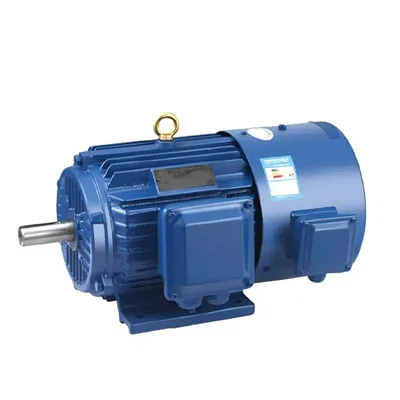
Understanding the Basics of Pole-Changing Two-Speed Three-Phase Motors
Before discussing the speed ratio, it is essential to grasp the fundamental principles of pole-changing two-speed three-phase motors. These motors are designed to operate at two distinct speeds by changing the number of magnetic poles in the stator winding. By altering the pole configuration, the motor can achieve different synchronous speeds, which significantly impacts its performance and application.
The synchronous speed of an AC motor is determined by the frequency of the power supply and the number of poles. The formula for calculating synchronous speed is:
[n_s=\frac{120f}{p}]
Where:
- (n_s) is the synchronous speed in revolutions per minute (RPM)
- (f) is the frequency of the power supply in Hertz (Hz)
- (p) is the number of poles in the motor
For example, in a standard 50 Hz power supply system, a 4-pole motor has a synchronous speed of:
[n_s=\frac{120\times50}{4}=1500\ RPM]
And a 2-pole motor operating on the same 50 Hz supply would have a synchronous speed of:
[n_s=\frac{120\times50}{2}=3000\ RPM]
What is the Speed Ratio?
The speed ratio of a pole-changing two-speed three-phase motor refers to the ratio of the higher speed to the lower speed. It is a crucial parameter that determines the motor’s versatility and suitability for various applications. For instance, if a motor can operate at 1500 RPM and 3000 RPM, the speed ratio is 3000/1500 = 2:1.
Common speed ratios for pole-changing two-speed three-phase motors include 2:1, 3:1, and 4:1. The choice of speed ratio depends on the specific requirements of the application. A higher speed ratio provides greater flexibility, allowing the motor to adapt to different operating conditions.
Significance of Speed Ratio in Different Applications
- Industrial Conveyors: In industrial conveyor systems, the ability to change speeds is essential for regulating the flow of materials. A motor with a suitable speed ratio can be adjusted to match the production requirements, ensuring efficient and smooth operation. For example, during the initial loading phase, a lower speed may be required to handle heavy loads gently. Once the conveyor is fully loaded, a higher speed can be selected to increase throughput.
- Machine Tools: Machine tools such as lathes and milling machines often require different cutting speeds for various operations. A pole-changing two-speed three-phase motor with an appropriate speed ratio allows the machine to achieve optimal cutting performance. For roughing operations, a lower speed can provide greater torque, while a higher speed can be used for finishing operations to achieve a smooth surface finish.
- Pumps and Fans: In pumping and ventilation systems, the speed ratio can be used to adjust the flow rate and pressure. By changing the motor speed, the pump or fan can be optimized to meet the specific demands of the system. For example, in a cooling tower application, a lower speed can be used during off-peak hours to reduce energy consumption, while a higher speed can be employed during peak demand periods to maintain adequate cooling.
Factors Affecting the Speed Ratio
- Pole Configuration: The most direct way to change the speed of a three-phase motor is by altering the pole configuration. Motors are typically designed with specific combinations of poles to achieve the desired speed ratio. For example, a motor with a 2:1 speed ratio may have windings that can be reconfigured from 4 poles to 2 poles.
- Motor Design: The design of the motor, including the stator winding and rotor construction, can also affect the speed ratio. A well-designed motor with optimized winding patterns can provide a more efficient and stable speed change.
- Power Supply: The frequency of the power supply is a critical factor in determining the synchronous speed of the motor. While most power grids operate at a fixed frequency (e.g., 50 Hz or 60 Hz), some applications may require variable frequency drives (VFDs) to achieve a wider range of speed ratios.
Benefits of Using Pole-Changing Two-Speed Three-Phase Motors with Appropriate Speed Ratios
- Energy Efficiency: By operating at the appropriate speed for the specific task, the motor can reduce energy consumption. For example, if a system only requires a lower speed for a majority of its operation, running the motor at that lower speed can save a significant amount of energy compared to running it at a constant high speed.
- Cost Savings: Using a pole-changing two-speed motor can eliminate the need for additional equipment such as gearboxes or pulley systems to achieve speed changes. This not only reduces the initial investment but also lowers maintenance costs over the motor’s lifespan.
- Flexibility and Adaptability: The ability to change speeds allows the motor to be used in a variety of applications. This flexibility makes it a valuable asset in industries where production requirements may change over time.
How to Select the Right Speed Ratio for Your Application
- Understand Your Application Requirements: Determine the specific tasks the motor will perform and the speed requirements for each task. Consider factors such as load, torque, and throughput.
- Consult with an Expert: As a supplier, we have extensive experience in selecting the right motors for different applications. Our team of experts can provide valuable advice and assistance in choosing the appropriate speed ratio based on your specific needs.
- Consider Future Expansion: Anticipate any potential changes or expansions in your production process. Select a motor with a speed ratio that can accommodate future requirements.
In conclusion, the speed ratio of a pole-changing two-speed three-phase motor is a critical factor that determines its performance and suitability for various applications. By understanding the concept of speed ratio and its significance, you can make an informed decision when selecting a motor for your specific needs.

As a leading supplier of pole-changing two-speed three-phase motors, we are committed to providing high-quality products and excellent customer service. Our motors are designed to meet the most demanding industrial applications, offering reliable performance and energy efficiency.
YE3 Three-Phase Motor If you are interested in learning more about our pole-changing two-speed three-phase motors or would like to discuss your specific requirements, please feel free to contact us. We look forward to the opportunity to work with you and help you find the perfect motor solution for your business.
References
- Fitzgerald, A. E., Kingsley, C., & Umans, S. D. (2003). Electric Machinery (6th ed.). McGraw-Hill.
- Chapman, S. J. (2012). Electric Machinery Fundamentals (5th ed.). McGraw-Hill.
- Krause, P. C., Wasynczuk, O., & Sudhoff, S. D. (2002). Analysis of Electric Machinery and Drive Systems (2nd ed.). Wiley-Interscience.
Taizhou Goodpump Trading Co., Ltd.
We’re well-known as one of the most professional pole-changing two-speed three-phase motor enterprises in China, featured by quality products and good service. Please rest assured to buy discount pole-changing two-speed three-phase motor in stock here from our factory. For quotation, contact us now.
Address: No. 38, District 6, Zhengye Village, Lunan Street, Luqiao District, Taizhou City, Zhejiang Province, China
E-mail: 19548175755@163.com
WebSite: https://www.goodpump-cn.com/
