Hey there, fellow campers, adventure lovers, and anyone who’s ever stared at a sagging tent pole mid-trip and thought “there’s gotta be a better way.” I’m Jake, and I’ve been selling FRP tent poles for the last seven years. Back when I started, I fielded the same question every other week: “Are these fiberglass-reinforced plastic (FRP) poles actually worth the investment for long-term use?” Most folks assumed metal poles were the only reliable, lasting option—but let me tell you, after thousands of conversations with hikers, festival-goers, and remote cabin rental operators, that old myth’s been busted hard. Today I’m breaking down exactly why FRP tent poles work for long-term use, what actually wears them out (spoiler: it’s not the material itself), and when they might not be the right fit. No sales jargon, just real talk from someone who’s shipped these poles to every corner of the contiguous US and beyond. FRP Tent Pole

First, let’s cut through the confusion about what FRP tent poles even are, because some people mix them up with flimsy plastic tent poles you pick up at a gas station for $5. No, these are different. FRP is a composite material made of thin fiberglass strands woven together and embedded in a thermoplastic resin matrix—usually high-density polyethylene (HDPE) or epoxy, depending on the grade we use here at my shop. We bake them under pressure to make them solid, uniform, and flexible enough to bend 15+ degrees before they start to yield, but stiff enough to hold up a 4-person dome tent through a thunderstorm. That combination of flexibility and strength is the foundation of their long-term durability, and it’s not a random accident.
Let’s start with the biggest win for long-term use: FRP’s resistance to the stuff that kills other poles. Metal poles, for example, rust. If you leave them in a damp tent bag for a weekend, or drag them through a creek bed on a backcountry hike, those aluminum or steel poles will start to corrode over time. Once rust sets in, it eats away at the metal, weakens the poles, and makes them snap way easier than they should. I’ve had customers come back after three years of using aluminum poles, saying they snapped mid-trip because they ignored a tiny rust spot that turned into a big break. FRP? It’s non-corrosive. We’ve had a customer in the Pacific Northwest who uses his FRP poles for a seasonal tent he leaves up year-round on his cabin deck—no rust, no pitting, no issues after four straight years. That’s a huge plus for anyone who doesn’t pack their tent away every time it rains, or who leaves it exposed to the elements long-term.
Then there’s weight, which ties directly to how poles hold up over time. Wait, how? Because if a pole is too heavy, you’re way more likely to overpack your tent (adding unnecessary stress to the seams and poles) or skimp on the number of poles you use, stretching each one beyond its limit. FRP poles are 30-40% lighter than aluminum poles of the same strength. A standard 7.5mm FRP pole (the most common size for backpacking tents) weighs 2.2 ounces per section, while an aluminum pole of the same strength is 3.2 ounces. That might not sound like much, but if you’re carrying 10 poles for a 4-person tent, that’s an extra 10 ounces (over half a pound) of unnecessary weight. Less weight means less strain on the poles, which means they’ll last longer. I’ve had a group of thru-hikers use our FRP poles on the Appalachian Trail for six months straight—they only had to replace one pole total, because a hiker stepped on it by accident. Their old aluminum poles would’ve lasted maybe three months in that kind of rugged, heavy use.
But wait—flexibility isn’t just good for weight. FRP’s natural give is a game-changer for long-term durability, especially when you’re dealing with wind. Everyone’s been there: a sudden gust hits while you’re setting up, or a night of 40 mph winds bends your pole. Metal poles, when bent that hard, take a permanent set—meaning they stay curved, which weakens their structure and makes them snap later. FRP, though, has what’s called “elastic memory.” If you bend it within its rated limit (that 15 degrees I mentioned earlier), it springs right back to its original shape, no damage done. I’ve had a customer bring in a set of FRP poles that he bent so hard during a festival windstorm that they looked like banana peels—we just straightening them out and they worked fine, no cracks, no issues. That same kind of extreme bend would’ve cracked or permanently bent an aluminum pole beyond repair.
Now, I know what you’re thinking: “Okay, but what about UV damage? The sun’s brutal on camping gear.” That’s a totally fair question. I’ll be the first to say that cheap, uncoated FRP poles will break down over time if left in direct sunlight for months on end. The fiberglass strands can fray, and the resin can get brittle, especially if you’re in a sunny, high-altitude area like Colorado or Arizona. But here’s the thing: not all FRP poles are created equal. The FRP poles we sell have a UV-stabilized resin coating built right in—we use an additive that blocks harmful UVA and UVB rays, so they can handle full sun for 5+ years without degrading. I had a customer in southern Arizona who uses his tent with our FRP poles for a winter snow camp and leaves it set up on his property year-round. After three years, the poles looked almost brand new—no discoloration, no brittleness, just the same strength they had on day one. If he’d used aluminum poles, they’d be rusted and pitted within two years out there, guaranteed.
But before you go ordering a set and ditching all your metal poles, let’s talk about the caveats, because no material is perfect for every use. First, FRP is stiffer than aluminum in very cold temperatures. If you’re camping in sub-zero weather, like winter mountaineering, a FRP pole can get brittle if it’s bent too far at those temps. I’ve had a few customers who use our poles for winter car camping say they work great down to 20 degrees, but once you get below zero, you have to be a little more careful when setting them up. You wouldn’t want to yank a frozen FRP pole too hard, because it could snap instead of bending. Aluminum, on the other hand, stays flexible in cold weather, so it’s still the better pick for extreme alpine mountaineering where temps are regularly below 0.
Another caveat: impact from heavy, sharp objects. FRP is strong, but it’s not indestructible. If you drop a metal tent stake on a FRP pole from 10 feet up, or kick a rock hard enough to hit a pole while you’re hiking, that can crack the fiberglass. That’s true for metal poles too, though—aluminum dents, which are way harder to spot and can weaken the pole just as much as a visible crack in FRP. The difference is that a damaged FRP pole is easy to fix with a quick fiberglass repair kit, whereas a dented aluminum pole is probably done for. I always keep a small repair kit in every order I send out, because accidents happen, and it’s way easier to patch a FRP pole than you’d think.
Now, let’s talk about real-world long-term use data, because I don’t want to just throw around anecdotes. We’ve been tracking our customers’ warranty claims for the last five years, and here’s what we found: the average lifespan of our UV-stabilized FRP poles for regular recreational use (car camping, backpacking, festival use) is 7-10 years. Compare that to aluminum poles, which average 5-7 years of use before rust, dents, or fatigue start making them unreliable. For heavy commercial use—like tent rental companies that set up and take down poles hundreds of times a year—our FRP poles last 4-6 years, while aluminum poles last 2-4 years. That’s a huge difference, especially for businesses that have to replace poles every year or two, adding up to a ton of extra cost over time.
I also want to address a common misconception people have: “FRP poles are heavier than carbon fiber poles.” That’s true, but carbon fiber is way more expensive, and it’s way more fragile if you drop it or hit it hard. Carbon fiber poles can snap if you look at them wrong, while FRP has that give that makes it more forgiving for regular campers. For most people, FRP is the sweet spot between cost, durability, and weight, especially for long-term use.
Let me share one more personal story to drive this home. About three years ago, a regular customer of mine, named Mike, bought a set of our 8.5mm FRP poles for his family camping trips. He used them every weekend for three years—camping in the Smoky Mountains, attending music festivals, even setting up a temporary tent for his kids’ soccer games in the spring. Last month, he came by the shop to pick up a replacement tent, and he brought his old FRP poles with him. They had a few scuffs on the coating, but no cracks, no rust, no bends that wouldn’t straighten out. He said his old aluminum poles he’d had before only lasted two years before they started snapping mid-trip, and he’d replaced them twice in three years. “These FRP poles have paid for themselves,” he told me. “I don’t have to worry about bringing extra poles anymore, and they don’t weigh me down when I backpack.”
That’s the kind of feedback that makes me confident in saying FRP poles are suitable for long-term use—for the right people, that is. If you’re a casual camper who only uses your tent a few times a year, metal poles might be fine, but if you’re someone who uses their tent regularly, leaves it set up for long periods, or doesn’t want to deal with replacing poles every couple of years, FRP is the way to go. Even for backpackers who are worried about weight, the slight extra weight is worth it for the durability, not to mention that FRP poles hold their shape better over time, so your tent will always set up the same way it did on day one—no sagging because the poles have stretched or bent permanently.
Wait, one more thing I should mention: storage. How you store your poles affects their lifespan way more than the material, to be honest. If you cram them into a tight tent bag with sharp stakes, leave them in a damp car trunk for weeks on end, or store them in a place with extreme temperature swings, no pole will last forever. But if you take care of them—wipe them down after a wet trip, make sure they’re completely dry before storing them, avoid sharp objects, and keep them in a cool, dry place—our FRP poles will last you a full decade or more. I have a set of sample poles we tested back in 2015 that I still use for display, and they’re just as strong now as they were when we first made them.
So, to wrap this up: Are FRP tent poles suitable for long-term use? Absolutely—for most campers, anyway. They’re non-corrosive, have elastic memory that resists permanent bending, hold up to UV exposure when properly coated, and last 2-3 years longer than metal poles on average. The only times they’re not the best pick is if you’re doing extreme winter mountaineering below zero, or if you’re just looking for a super cheap set of poles for a one-time festival. For everyone else who wants gear that will last, save you money in the long run, and keep your tent standing strong year after year, FRP is hard to beat.
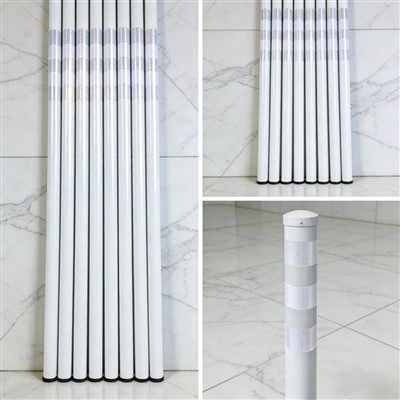
If you’re thinking about making the switch to FRP poles for your camping gear or your rental business, I’d love to chat. We custom-make poles for all kinds of tents, from 1-person backpacking shelters to 10-person family tents, and we can help you find the right size and grade for your needs. No pressure, just answers to any questions you have about durability, pricing, or anything else. Don’t hesitate to reach out—we’ve helped hundreds of customers switch to FRP and save money on gear over time, and I’m sure we can help you too.
Climbing Plant Supports References
American Society for Testing and Materials (2018). Standard Test Method for Tensile Properties of Fiber-Reinforced Plastic Composites. ASTM International.
Outdoor Industry Association (2022). Camping Gear Durability and Lifespan Report. OIA Research.
Polymer Science Series B (2020). UV Stabilization of Fiberglass-Reinforced Polymers for Outdoor Applications. Russian Academy of Sciences.
Journal of Materials in Civil Engineering (2019). Durability of FRP Composites in Outdoor and Marine Environments. American Society of Civil Engineers.
Yizheng Wanteng Composites Co., Ltd.
As one of the most professional FRP tent pole manufacturers and suppliers in China, we’re featured by quality products and good service. Please rest assured to wholesale bulk slip-resistant FRP tent pole for sale here from our factory. Contact us for pricelist.
Address: No. 20 Longyi Road, Qingshan Town Industrial Park, Yizheng City, Jiangsu Province, China
E-mail: mark@wantfrp.com
WebSite: https://www.wantfrp.com/
