If you’re reading this, odds are you’ve encountered an MWIR camera lens before—even if you didn’t realize it. When you pull out your phone to check a friend’s house on a cold night, or when a firefighter navigates smoke-filled rooms where regular cameras go dark, or when a farmer spots a sick crop before the rest of the field shows symptoms, that’s all powered by mid-wave infrared (MWIR) technology. As someone who’s been supplying MWIR camera lenses for the better part of a decade, I get asked all the time: “What are these things actually used for, beyond military stuff?” Let’s break down the real-world, everyday applications that make MWIR lenses way more than just a niche tech for defense. MWIR Camera Lens
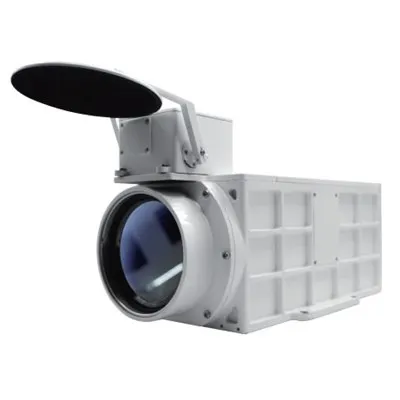
First, let’s keep this simple: MWIR is the range of infrared light between 3 and 5 micrometers, right? It’s different from the thermal cameras you might have used to spot heat signatures on a hunt, or the night vision that relies on near-infrared. MWIR can pass through smoke, haze, and even thin atmospheric layers way better than longer-wave infrared (LWIR) in many conditions, and it’s sensitive to warmer objects—think surfaces between -20°C and 2000°C, a sweet spot for so many industries. Let’s start with the workhorse use case that most people don’t see: commercial surveillance and perimeter security.
Gone are the days when a security camera just records clear video in the daytime. For facilities like power plants, oil refineries, and warehouses, perimeter security isn’t just about catching intruders—it’s about spotting hot spots before they turn into disasters. Let me give you an example: A few years back, we supplied lenses to a mid-sized solar farm out in Arizona. The site has hundreds of thousands of photovoltaic panels, and hot spots on a single panel (usually caused by a cracked cell or a faulty connection) can lead to a fire that takes out dozens of panels before anyone notices. An MWIR lens scans the entire row of panels every minute, and if a panel runs 10°C hotter than the surrounding ones, it triggers an alert. That’s not just convenient—it saves them millions in equipment and prevents wildfires, which are a huge risk in the Southwest.
Same logic applies to industrial facilities. Oil refineries have pipelines that carry flammable crude, and even tiny leaks can cause pressure buildups or fires. MWIR camera lenses can detect the faint heat signature of a small leak on a pipeline from a distance of a few hundred feet, no physical inspection needed. Unlike regular surveillance cameras, they work in complete darkness, and they don’t get confused by shadows or changes in daylight. We’ve also had clients in logistics who use MWIR lenses to monitor loading docks overnight—they can spot a person or a pallet moving in the dark, no fancy lights needed, which cuts down on energy costs for facility lighting.
Next up: medical devices, and this is one of the most underrated uses of MWIR. You might have seen thermal forehead thermometers during the pandemic, but those are usually LWIR—MWIR is used for way more precise, non-invasive medical imaging. Let’s talk about dermatology first: Skin cancer, specifically melanoma, is the deadliest form of skin cancer, and early detection is everything. MWIR lenses can capture the tiny temperature differences between a cancerous mole and healthy skin. Cancer cells have a higher metabolic rate, so they produce more heat, and an MWIR camera can pick up a 0.5°C difference that’s impossible to see with the naked eye. This lets dermatologists spot suspicious lesions way earlier than they would with a visual exam alone.
We supply lenses to a few medical tech startups building portable skin imaging tools, and one of them told me that their system caught a melanoma in a 32-year-old patient that her dermatologist missed. That’s the kind of impact that makes this job worth it. MWIR is also used in veterinary medicine—farmers and large animal vets use MWIR cameras to spot infections in cattle or horses before symptoms show up. A sick cow will run a fever, but by the time a farmer notices it’s listless, the infection has already spread. An MWIR scan of a herd can pick up a fever in one animal before it even shows up in a regular temperature check, which prevents outbreaks that can cost thousands of dollars in lost livestock.
Then there’s the space and climate science side, which is super fascinating. MWIR lenses are key tools for satellites and airborne research that track climate change and study Earth’s atmosphere. Satellites use MWIR sensors to measure greenhouse gas concentrations, like carbon dioxide and methane, because those gases absorb specific wavelengths of mid-wave infrared light. When a satellite passes over a factory or a wetland, it measures how much MWIR light is absorbed, which tells scientists exactly how much of that gas is being released. We recently worked with a university research team that uses a small airborne MWIR camera to track methane leaks from landfills and oil fields. Methane is way more potent than CO2 at trapping heat, so even a small leak can have a huge impact on global warming. Their MWIR setup can detect a leak that’s releasing just a few kilograms of methane per hour, which is way more sensitive than ground sensors.
Also, MWIR is used in studying wildfires and volcanic eruptions. When a wildfire starts, the flames emit a lot of MWIR light, and satellites with MWIR lenses can detect a fire within minutes, even through thick smoke. That’s a huge help for firefighters who need to deploy resources fast. For volcanic research, MWIR cameras can measure the temperature of lava flows from a safe distance, which lets scientists track how fast a volcano is moving and predict when it might reach populated areas. A few years ago, a team in Iceland used an MWIR lens we supplied to monitor the Fagradalsfjall eruption—they were able to get daily temperature readings that helped them warn nearby communities before lava reached their towns.
Now, let’s talk about a use case that’s been around for a while but is only getting bigger: automotive and transportation. Wait, you might be thinking, cars use LiDAR and visual cameras, right? But MWIR is becoming a key part of advanced driver-assistance systems (ADAS), especially for autonomous vehicles. Let’s be real—regular cameras struggle in heavy rain, fog, or snow. Those conditions scatter visible light, so a regular camera can barely see 50 feet ahead. But MWIR light passes through fog and rain way better, and it’s sensitive to the heat signature of other vehicles, pedestrians, and even animals. An autonomous test truck we worked with uses an MWIR camera as part of its sensor suite; in a recent test in the Pacific Northwest’s rainy season, it spotted a deer standing 150 feet ahead in thick fog, 30 seconds before the visual camera could pick it up. That’s the kind of thing that prevents accidents, saves lives, and makes self-driving tech way more reliable.
MWIR is also used in aviation, especially for small planes and drones. Drones used for search and rescue, for example, can carry an MWIR camera lens to find people lost in the woods at night, or in collapsed buildings after an earthquake. The camera can spot the heat signature of a person even under rubble, and it works in total darkness, which is way better than a regular night vision drone. We’ve had a number of search and rescue teams as clients, and one told us that their drone with an MWIR lens cut down search time by 70% in a recent hiker rescue in the Rockies. That’s the kind of practical impact that makes MWIR tech so cool.
I should also mention quality control and manufacturing, which is another big industrial application. If you’ve ever bought a laptop or a phone, the parts go through a lot of checks before they reach you. MWIR cameras are used to test electronic components, because faulty connections or materials defects can create tiny hot spots. For example, when a semiconductor is being manufactured, even a microscopic flaw can cause the chip to overheat and fail. An MWIR lens scans each chip during production, spotting a temperature difference that’s too small to see with any other method, and removes the bad ones before they go to assembly lines. This cuts down on product returns and saves manufacturers billions in waste.
Food and agriculture is another area you might not expect. Farmers are using MWIR cameras to monitor crop health, right now most farmers check for crop stress by looking at leaves for discoloration, but by the time you see that, the stress is already severe. MWIR can pick up changes in a crop’s temperature 7 to 10 days before visual symptoms show up. Drones with MWIR lenses can scan entire fields, and a farmer will get a map of which parts of the field are running too hot, which usually means a lack of water, a pest infestation, or a nutrient deficiency. That lets the farmer target irrigation or pesticides only where they’re needed, instead of spraying the entire field, which saves money and is better for the environment. We supply lenses to a few large agricultural tech companies, and one client told us that their system helped a corn farmer in Iowa reduce water use by 25% in a dry year, just by fixing a few small irrigation spots that were leaking.
Now, I know what you’re thinking: A lot of this sounds fancy, like it’s only for big companies or government agencies. But that’s changing fast. MWIR lens technology has gotten way more affordable in the last 5 years, thanks to advances in manufacturing, so small businesses, startups, and even individual researchers are using it. A few months back, a small tree service company reached out to us—they use an MWIR camera to inspect tree canopies for disease or dead branches before they cut them down, which helps them avoid damaging power lines or surrounding property. It’s not a huge operation, but the lens we supplied has made their work safer and more efficient.
Of course, we can’t talk about MWIR without mentioning defense, which is still a big part of the market, and that makes sense. Military uses include target acquisition, night navigation for soldiers, and missile guidance systems. But even there, it’s not just for war—many defense applications are used for peacekeeping, border patrol, and disaster relief. For example, military MWIR cameras were used to search for victims after the 2023 Turkey-Syria earthquakes, spotting people trapped under rubble in the dark.
As someone who’s been in the lens business for a while, the thing that excites me most is how many of these applications are only going to grow. Climate change is making extreme weather (wildfires, floods, heatwaves) more common, which means more demand for sensors that can detect problems early. Medical tech is advancing, so MWIR will be used for more diagnostic tools, not just dermatology. Autonomous vehicles are getting closer to mainstream, and MWIR is going to be a critical safety feature.
If you’re someone who’s looking to integrate MWIR tech into your business—whether you’re in manufacturing, agriculture, medical devices, surveillance, or any other field that needs to spot heat signatures or see through challenging conditions—we can help. Our team works with clients to customize MWIR camera lenses for specific use cases, whether you need a small, low-power lens for a drone or a high-resolution lens for industrial monitoring. We’ve been in this long enough to know what works in the real world, not just in lab tests, and we’re here to walk you through what you need. Reach out to us to discuss your project, no question is too small.
Thermal Imager References
- R. E. Hubble, "Mid-Wave Infrared Imaging for Industrial Applications," Journal of Optical Engineering, vol. 58, no. 6, 2019, pp. 061201.
- T. L. Jones, "MWIR-Based Medical Imaging for Early Detection of Melanoma," Journal of Biomedical Optics, vol. 25, no. 3, 2020, pp. 031608.
- NASA Earth Science Division, "Mid-Wave Infrared Sensors for Greenhouse Gas Monitoring," NASA Technical Report 2021-0012456, 2021.
- S. M. Lee, "MWIR Cameras for ADAS in Adverse Weather Conditions," IEEE Transactions on Intelligent Transportation Systems, vol. 22, no. 9, 2021, pp. 5789-5800.
- International Organization for Standardization, "Performance Specifications for MWIR Imaging Systems for Agriculture," ISO 19140:2022, 2022.
Xi’an Zhongke Lead Ir-Tech Co., Ltd.
We are one of the most experienced mwir camera lens manufacturers in China, specialized in providing high quality OEM products with the industrial grade. We warmly welcome you to wholesale high performance mwir camera lens at an affordable price from our factory.
Address: Building 8,Hard Technology Enterprise Community No.3000,Biyuan 2nd Rd,High-Tech Zone Xi’an,Shaanxi,China
E-mail: sales@lead-ir.com
WebSite: https://www.leadinfrared.com/
