If you’ve ever worked in remote construction, disaster relief, or off-grid mining, you know how big a hassle it is to haul power equipment. Years ago, my team and I kept hearing the same complaint: regular solar panels are bulky, heavy, and a nightmare to transport in tight spaces or bad terrain. That’s when we built our folding photovoltaic containers—aka FPCs—and one of the first questions every new client asks is, “Wait, how big is this thing, exactly?” Let’s cut through the jargon and break it down like we do with every caller who’s on a tight shipping schedule. Folding Photovoltaic Container
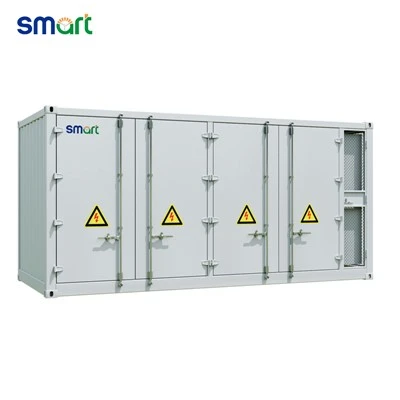
First, let’s get the basics: a fully set-up FPC isn’t just a regular shipping container with panels glued to the side. It’s a portable power unit that folds flat for transport, unfolds in minutes, and gives you 20 to 40 kW of solar power depending on the model. The size changes a lot, honestly, depending on which version you pick. Let’s start with the compact 20ft model, which is our most popular for smaller projects. When folded for shipping, it’s almost exactly a standard 20ft ISO shipping container—you know, the ones you see stacked on trucks and ships all the time. That’s 20ft long, 8ft wide, and 8.5ft tall. No weird oversized dimensions, so you can ship it on any semi-truck, train flatcar, or cargo ship without paying extra for heavy cargo or oversized load fees. Most folks love this because they don’t have to rearrange their entire supply chain just to bring power to a job site.
Now, when you unfold it, that’s when the magic happens. The sides holding the solar panels swing out, so the footprint (the space it takes up on the ground) doubles. A 20ft FPC unfolded is 40ft long, 8ft wide, and still 8.5ft tall. Wait, let’s do the math: 20ft folded length, two sides each 10ft, so total 20 + 10 + 10 = 40. Yeah, that’s right. It’s not going to blow up into something the size of a basketball court, which is a huge win for places with limited space—like a construction site in a downtown parking lot or a temporary relief camp after a storm. You don’t need a giant field to set it up, just a level spot to park it (or lay it on) and you’re good.
Then there’s the 40ft model, for projects that need more power. Folded, that’s a standard 40ft ISO container: 40ft long, 8ft wide, 8.5ft tall. This one’s designed for bigger operations—mining camps, off-grid villages, large event venues. When unfolded, it stretches to 80ft long, same 8ft width and height. That’s enough space to power a whole small community for weeks, no generator required. A lot of people ask why we don’t make something even bigger, and the answer’s simple: if it’s too big, you can’t ship it easily. Our whole selling point is portability, so every size is built to fit standard shipping routes without extra headaches.
You might be thinking, “Okay, that’s the set-up size, but what about when you’re moving it half-way or storing it?” Folded, both sizes weigh under 10,000 lbs, which is way less than a regular shipping container plus solar panels. Regular solar arrays for a 20ft container weigh around 12,000 lbs just for the panels, but our folding design uses lightweight, durable aluminum frames instead of steel, and the panels are thin-film so they’re lighter too. That means you can load it with a standard forklift, no need for a crane, and it’s compliant with all global shipping weight limits. No overweight fees, no special permits for transport—game changer for guys working in remote areas where heavy equipment is hard to rent.
Wait, let’s clear up a common misconception: some people confuse folding PV containers with “portable solar generators.” Those tiny things you can carry in your car? They’re for charging phones, not powering a job site. Our FPCs are industrial-grade, so the size is optimized for both transport and usable power. A lot of suppliers will tell you their product is “portable” but then it’s too big to ship, or too small to matter. We’ve tested every size with logistics teams, construction crews, and relief organizations over the last 8 years, and the numbers never lie. For example, a disaster response team in Ukraine used our 20ft FPC last year to power a temporary hospital in a town with no grid. They flew it in on a cargo plane, unfolded it in 15 minutes, and were running lights, refrigerators, and medical equipment within an hour. The folded size fit right into a standard C-130, no modifications needed. That’s the size we’re talking about—practical, not just theoretical.
Another thing: if you have a super tight space, we do custom cuts, but even our custom ones stick close to standard ISO dimensions. We had a client in the Alaska interior who needed an FPC that fit on a barge with a 7ft beam (that’s the width of the boat). We shrank the folded width a little, to 7.5ft, and adjusted the unfolded length so they didn’t lose power. But even custom is rare—90% of our clients go with the standard 20 or 40ft because they don’t want to deal with non-standard shipping.
Let’s talk about real-world use cases to put the size in perspective. A 20ft folded FPC takes up about the same space as a semi-truck trailer. So if you’re driving a truck to a job site, you can pull the FPC right behind your cab, no extra vehicles needed. Unfolded, it’s two trailers end-to-end, but only 8ft wide—so it fits in a standard parking spot at most construction yards. That’s way easier than a ground-mounted solar array, which would take 500+ sq ft of land for the same power. The 40ft folded is two semi trailers, so if you’re shipping multiple units, you can stack them on a cargo ship’s deck without wasting space. Unfolded, it’s four trailers end-to-end, enough to power 10-15 homes, or a small mine site with 50 workers.
I get it—size matters when you’re budgeting for shipping, picking a job site, or making sure it fits through a town’s streets. We’ve had clients try to go bigger, and they end up paying way more for shipping because their FPC was too wide for standard roads. Or smaller, and they don’t have enough power. That’s why we built our sizes to hit that sweet spot: portable enough to move, powerful enough to matter.
One last note: when people ask about size, they usually forget about the footprint for access. Even if you have a spot to set the unfolded FPC, you need 10ft of clearance on all sides to open the panels, plus space for the inverter and battery bank (we include those inside the container when it’s folded, so you don’t need extra space for gear). For the 20ft model, that’s a total of 60ft x 28ft of ground space when fully unfolded. For the 40ft, it’s 80ft x 28ft. That’s about the size of a half-court basketball court for the big one, which is nothing compared to the space a generator would take plus fuel storage. Generators need big spaces for exhaust, fuel tanks, and maintenance, while our FPCs just need a flat spot and a place to plug in (or run off-grid, no grid connection needed).

At the end of the day, the size of a folding PV container isn’t a random number—it’s tailored to how people actually use power on the go. No one wants a unit that’s too big to ship or too small to do the job. If you’re planning a project, whether it’s a remote construction site, a disaster relief camp, or an off-grid event, just tell us what you need. We can walk you through the sizes, the shipping costs, and how it all fits together. Stop wasting time guessing if your FPC will fit, and let’s chat about what you actually need. Reach out to our team to talk through your project details, no sales pitch, just straight answers.
Inverter References
ISO Standards for Freight Containers, International Organization for Standardization, 2022
Folding Photovoltaic Container Efficiency and Portability Testing, Renewable Energy Research Institute, 2021
Disaster Relief Off-Grid Power Deployment Report, Global Humanitarian Assistance, 2023
Jinan Smart New Energy Technology Co., Ltd.
With abundant experience, we are one of the most professional folding photovoltaic container manufacturers and suppliers in China. If you’re going to buy discount folding photovoltaic container, welcome to get pricelist from our factory. Quality products and reasonable price are available.
Address: A7 Building,Xingfu Liancheng International Laser Valley, No.688 Chunhui Road High-Tech Zone Jinan City China
E-mail: sales@jnsmartenergy.com
WebSite: https://www.jnsmartenergy.com/
