Hey everyone, if you’re hanging around the world of custom CNC milled parts, you’ve probably stumbled across anodization questions more times than you can count. As someone who’s been running a CNC milling parts shop for the last 8 years, I get asked “Can CNC milling parts be anodized?” at least once a week. Let’s cut through the confusion and lay this out straight—no fancy jargon, no stuffy textbook rules, just real talk from a guy who’s seen hundreds of milled parts go through the anodizing line and come out looking (and performing) like champs. CNC Milling Parts
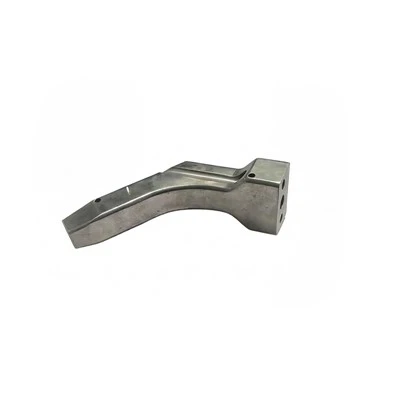
First off, let’s get one basic fact out of the way right now: yes, CNC milling parts absolutely can be anodized. Wait, hold on—before you start thinking that means every single milled part is a perfect candidate, let me clarify. Anodization isn’t a one-size-fits-all process, and the way you mill a part (what material you use, how you set up your CNC machine, even the little burrs you leave behind) makes a huge difference in how well the anodizing takes, how durable the finish is, and whether it’s even worth doing in the first place.
Most CNC milled parts we work with are aluminum, and that’s the sweet spot for anodization. Aluminum forms a natural oxide layer when it’s exposed to air, but anodization is like supercharging that layer. We crank up a controlled electrochemical process that builds a way thicker, more uniform oxide layer on the part’s surface. That layer is way harder than the raw aluminum, it resists scratches and corrosion like crazy, and you can dye it basically any color you want—from matte black to bright red to that military-style olive drab that so many clients love for aerospace or outdoor gear.
But wait, what if you’re milling something other than aluminum? Like stainless steel, titanium, or even plastic? Well, hold up—anodizing those is a whole different ballgame. Stainless steel can be anodized, but it’s not the same as aluminum anodization, and the finish ends up being more of a colored oxide layer rather than the tough, porous film we get on aluminum. Titanium anodization is more common for things like jewelry or medical implants, but it’s a niche process, not something we do for most of our standard CNC milled parts. And plastic? No, that’s usually powder coated or plated, not anodized. So for 90% of our clients who come to us with aluminum milled parts, the answer is a resounding yes.
Here’s where a lot of first-time clients mess up: they think “I’m getting a CNC milled aluminum part, so just send it off for anodizing.” But the devil’s in the details when it comes to milling. Let’s talk about how CNC milling affects anodization quality. When we mill a part, we use tools like end mills to cut away material, and that process leaves behind tiny surface features. For example, the tool path marks—those little lines you can see if you run your finger over a milled part. If those marks are too deep or uneven, they’ll show through the anodized finish, right? Because the anodized layer forms to match the surface it’s applied to. So if you have rough milling, you’ll get a rough, spotty anodized finish. That’s why on parts where anodizing is required, we adjust our CNC parameters: we use smaller, sharper tools to get a finer surface finish, we lower feed rates a little to reduce chatter, and we make sure we’re not leaving any burrs hanging around.
Burrs are another big one. If you’ve ever milled metal, you know those little sharp bits that stick to the edges of a part? They’re super hard to anodize evenly, and if you don’t remove them, they can flake off once the anodizing is done. So before we send any part out for anodizing, we do a secondary deburr step—usually with a tumbler or a soft nylon brush—to smooth out those edges. It’s an extra step, but it saves us (and our clients) a ton of headaches when the anodized part comes back perfect.
Another thing to consider: tolerances. CNC milling is all about tight tolerances, right? If a part needs to fit into another component with a 0.001-inch gap, adding an anodized layer is going to change those dimensions by a tiny amount—usually around 0.0002 inches per side for a standard anodize coat. That might sound like nothing, but if you’re working with super tight tolerances for aerospace or medical parts, that can be a problem. So we always talk to our clients upfront: do you need the part’s final dimensions to be exact? If yes, we mill the part slightly undersized, so after anodizing, it hits that perfect tolerance. It’s a small detail, but it’s the kind of thing that makes our clients come back, because we’re not just milling parts—we’re thinking about the whole end process.
Wait, let’s talk about common mistakes we’ve seen over the years, because that’s probably the stuff you care about most. A few months back, we had a client who brought in a batch of aluminum brackets they milled in-house. They rushed the milling process, used a dull end mill, and left huge tool marks all over the surface. When they sent them out for anodizing, the anodizer couldn’t get a uniform color—some parts came out lighter, some darker, and the tool marks were impossible to hide. They had to scrap the whole batch and re-mill them, which cost them time and money. Lesson learned: if you plan to anodize your CNC milled parts, factor that into your milling process from day one, not as an afterthought.
Another mistake people make: not disclosing the alloy. Aluminum comes in so many different alloys—6061, 7075, 5052, just to name a few—and each anodizes a little differently. 6061 is the workhorse, it anodizes evenly, takes color great, super popular for general purpose parts. 7075 is stronger, used for high-stress aerospace parts, but it anodizes a bit darker and can be more prone to streaks if the milling isn’t perfect. If you don’t tell your anodizer what alloy you used, they might not adjust the process, and you’ll get a finish that’s not what you expected. That’s why we always get alloy info from clients before we start milling, and we pass it along to our trusted anodizing partners.
Now, let’s get into the why—why do people anodize CNC milled parts anyway? Sure, it looks cool, but it’s mostly about performance. If you’re making parts for outdoor equipment, they’re going to be exposed to rain, dirt, salt (if they’re marine parts), and raw aluminum will corrode, pit, and wear out way faster. Anodized aluminum is like a shield—its oxide layer is inert, so it doesn’t react with most chemicals, and it’s much harder, so it resists scratches from tools or other parts rubbing against it. For medical parts, anodizing can add a biocompatible layer that’s easy to clean, which is a big deal for things like surgical tools or implant components. For consumer goods, that color you can get with anodizing is a huge selling point—think phone cases, bike parts, even gaming controllers.
Wait, but is there a case where anodizing a CNC milled part is a bad idea? Yeah, sometimes. If you’re making a part that’s going to be under extreme mechanical stress, and you don’t need the corrosion resistance or the color, anodizing might not be worth it. The process can add a little time and cost, so if it’s not necessary, you can skip it. Or if you need a part that’s super electrically conductive—wait, anodized aluminum is an insulator, right? Because that oxide layer is non-conductive. So if you’re making electrical connectors or parts that need to carry current, anodizing would mess that up. That’s a key point we always bring up: if your part needs electrical conductivity, we’ll make sure to mask off the contact areas before anodizing, or suggest a different finish like plating instead.
Let’s talk about our process, since that’s what our clients care about. When someone comes to us wanting CNC milled parts that will be anodized, here’s what we do step by step. First, we chat with them: what’s the part for? What alloy do they want? What tolerance do they need? What color or finish are they going for? Then, we program the CNC machine with those specs in mind—adjusting cutting speeds, tool sizes, tool paths to get a fine, uniform surface. After milling, we do a full inspection: check for burrs, check dimensions, do a quick surface finish test with a profilometer (it’s just a fancy tool that measures how rough a surface is) to make sure it’s suitable for anodizing. If everything checks out, we send it to our anodizing partner, who does the process: parts prep, the electrochemical anodization, dyeing if needed, sealing. Once it comes back, we do a final check to make sure the finish is uniform, no streaks, no chipping, and dimensions are still on point.
We’ve had clients come to us before who tried milling parts themselves, had them anodized, and ended up with garbage parts. One client was making custom drone frames, and their in-house milled parts had rough surfaces, so when anodized, the finish looked mottled and cheap. They switched to us, and we adjusted the milling process, got the surfaces smooth, and the anodized frames came out looking professional, passed all their strength tests, and they’ve been a repeat client ever since. That’s the kind of thing we live for—helping people avoid those costly mistakes.
Another common question: can you anodize parts after they’re assembled? Wait, say you have a CNC milled part that has other components attached to it, can you anodize the whole thing? Usually no, because you can’t get the anodizing solution into all the gaps, and you’d ruin the other parts. But you can mask off areas that you don’t want anodized—like threads, mating surfaces, or holes that need to stay conductive. That’s a trick we use all the time. When we mill a part with threads that will be used to bolt it to another component, we run a tap through the threads before sending it to anodizing, then we use a rubber plug to fill the threads so the anodizing doesn’t get in there and make it impossible to screw together. It’s a small step, but it saves our clients so much time when they go to assemble their parts.
Let’s get back to that original question that everyone’s asking: Can CNC milling parts be anodized? The short answer is yes, but only if you plan for it from the start, pick the right alloy, mill to the right surface finish, and work with an experienced anodizer. It’s not something you can do as an afterthought, and it’s not a one-size-fits-all process, but when done right, an anodized CNC milled part is way more durable, looks way better, and holds up way longer than a raw milled part.
If you’re thinking about getting CNC milled parts for a project, and you’re considering anodizing, don’t leave it to chance. We’ve been doing this long enough to know all the ins and outs, the mistakes to avoid, and the little adjustments that make a huge difference. Whether you need a small batch of custom brackets, a medical implant component, or a set of bike parts that need that perfect anodized finish, we can help you mill the parts right the first time, so the anodizing process goes smoothly and you end up with a part that meets all your requirements.
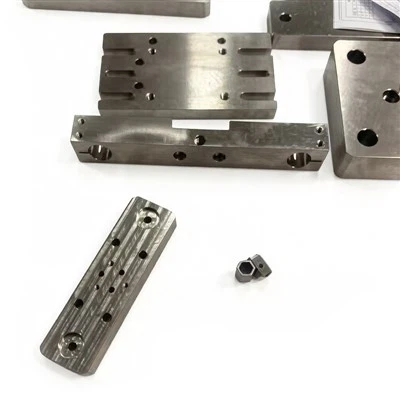
If you’re ready to chat about your project, just reach out. We’re here to answer any questions, walk you through the process, and make sure your CNC milled parts come out exactly how you want them—anodized, durable, and perfect for your application.
CNC Turning Parts References
- American National Standards Institute. (2018). Standard Practice for Anodizing Aluminum and Aluminum Alloys. ANSI B107.26-2018.
- Kennametal Inc. (2021). Surface Finish Considerations for Machining Aluminum for Anodizing. Technical Report: Machining 101.
- Metal Finishing Association. (2020). Anodizing Guidelines for CNC Machined Components. Best Practices for Metal Finishing Processes.
Suzhou Huaquan Electromechanical Manufacturing Co., Ltd.
As one of the leading CNC milling parts manufacturers in China, we warmly welcome you to buy bulk customized CNC milling parts made in China here from our factory. If you have any enquiry about pricelist and free sample, please feel free to email us.
Address: No.7550 Mudong Road, Hengjing Town, Wuzhong District, Suzhou City, Jiangsu Province, China
E-mail: Huaquan2005@outlook.com
WebSite: https://www.huaquancnc.com/
