If you’ve ever stood in a modern commercial space, a luxury residential foyer, or a high-end medical lab, you’ve probably walked past a ghost door without even noticing it. These doors—also called flush doors, pivot doors, or invisible doors—are designed to sit flush with adjacent walls, no visible hinges, no frame, no hardware breaking their seamless lines. For a long time, I’ve fielded a question from architects, interior designers, and building managers alike: Do ghost doors make a unique sound when opened or closed? As a ghost door supplier with over a decade of working on projects from New York City penthouses to Tokyo research facilities, this question isn’t just a trivial curiosity—it’s a core part of how these doors perform, how they fit into their space, and why clients choose them over standard door systems. Ghost Door
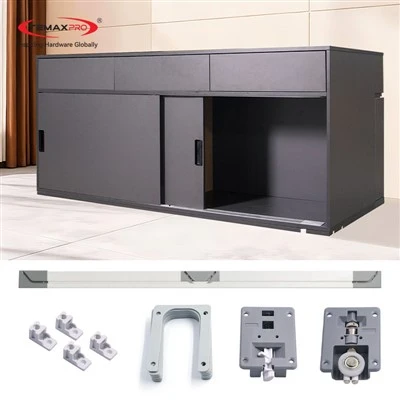
To answer that, we first have to peel back the layers of how ghost doors work, because their sound signature is directly tied to their design, not some random “ghostly” quirk. Unlike a standard hinged door, which pivots on two or three exposed hinges mounted to the frame, ghost doors rely on a hidden pivot system—almost always a top pivot (mounted to the upper door frame or ceiling) and a bottom pivot (mounted to the floor) that lets the door rotate 90 or 180 degrees. This pivot system is usually housed inside the door itself or embedded in the floor and ceiling, which means most of the moving parts are completely out of sight. Some modern ghost doors even use hydraulic or electric assist mechanisms to make opening and closing smoother, especially for heavy, large-format doors (think 8-foot-tall, 200-pound solid wood doors for a lobby).
Now, let’s talk about sound. When a standard door opens, you hear a predictable set of noises: the creak of hinges, the faint rattle of the latch disengaging, maybe a soft thud if it bumps the wall stop. Ghost doors don’t produce these sounds—partly because they have no exposed hardware to squeak or rattle, and partly because their pivot and closing mechanisms are engineered for controlled movement. But that doesn’t mean they’re silent. The unique sound of a ghost door comes from three key factors: the material it’s made from, the sealing system it uses, and the type of closing mechanism.
Let’s start with materials, because that’s the most variable factor across ghost door systems. A ghost door made from solid oak will have a very different sound than one made from lightweight aluminum or composite, or even glass (though glass ghost doors are less common in high-traffic areas). I remember a project a few years back for a private art gallery in Brooklyn—their main ghost door was solid white oak, 10 feet tall, installed to separate the main exhibition space from a private viewing room. When it opened, it made a low, deep whoosh, almost like a soft exhale, rather than the sharp click you’d hear from a standard hinged door. The oak’s density dampened any high-frequency noise, and because there was no gap between the door and the wall until it was fully swung open, there was no echo of metal against metal.
By contrast, the custom glass ghost doors we installed for a tech startup’s headquarters in Austin made a completely different sound. Those doors were 12 feet tall, tempered clear glass, with a hidden aluminum core for structural support. When they closed, the sound was a sharp, but muted, thud—no creak, no rattle, just a solid, quiet click as the magnetic latch engaged. The glass didn’t vibrate the same way wood does, so there was none of the resonant hum you get from solid wood doors when they move. That’s the unique thing about ghost door sound: it’s not a one-size-fits-all, but it’s always distinct from standard door sounds.
Next, sealing systems. A lot of people ask why ghost doors don’t create drafts, and that’s because of the integrated sealing we build into our systems. For interior ghost doors, we use low-profile, gap-sealing strips that are hidden along the edges of the door, so they don’t break the seamless look. For exterior ghost doors (though these are far less common, used mostly for building entries in extreme weather), we use heavy-duty weather stripping. The sealing system plays a huge role in sound because it prevents air gaps that would cause whistling or drafty noise when the door moves. A standard door with gaps around it might make a high-pitched whistle when swung open in a breeze; a ghost door’s sealed edges eliminate that. I had a client in Seattle, a residential architect, who was worried about their ghost front door whistling in the Pacific Northwest wind. We tested three different sealing profiles, and the final one we used was so tight that when the door was closed, you could barely hear the wind outside—no whistle, no rattle, just complete silence from the door itself.
Then there’s the closing mechanism. This is where a lot of the unique “sound” of a ghost door comes into play, especially for automated systems. Manual ghost doors still use hydraulic hinges or pivot arms that slow the door as it approaches the closed position, so it doesn’t slam. Automated ghost doors use electric motors, often with soft-close technology, that control the entire movement. When you open a standard automated door, you hear the whir of the motor, sometimes a faint beep if it has a sensor system. Ghost door motors are hidden, so you don’t hear that whir. Instead, you hear the smooth motion of the door moving along its pivot, and a soft, controlled thud as the latch engages. I’ve heard the difference first-hand on a luxury hotel project in Dubai—their ghost ballroom doors are 18 feet wide, solid teak, automated to open in two panels. When they glide open for a wedding reception, the only sound is the faint whoosh of the wood moving, no motor noise, no clanking of hardware. That’s the “ghostly” sound that sets them apart: it’s quiet, intentional, and doesn’t draw attention to the door itself, which is exactly the point of a ghost door.
But here’s the thing: that unique sound is actually a feature, not a bug. Most clients choose ghost doors because they want a seamless, unobtrusive look, and their sound matches that purpose. Unlike a standard door, which announces when someone enters or leaves a room, a ghost door fades into the background acoustically. That’s why they’re so popular in spaces where silence is key: medical operating rooms, recording studios, high-end offices where meetings don’t want to be interrupted by door noise, libraries, and art galleries.
Now, I’ve also gotten pushback from clients who worry that the quiet sound of a ghost door could be a safety issue. For example, in a busy hospital wing, you don’t want a door closing without anyone hearing it. That’s why we engineer our ghost door systems with optional acoustic sensors that emit a soft, non-intrusive chime when the door is opening or closing. It’s a subtle sound, not the sharp clang of a standard door alarm, so it doesn’t disrupt the environment, but it adds an extra layer of safety. I think that balance is what makes ghost doors unique: their sound is customizable to the space they’re in, which is something you can’t say about standard door systems.
I want to be clear, though—ghost doors don’t make a “spooky” sound, despite the name. That’s a common misconception from people who don’t work with them regularly. The only time you might hear an unusual sound is if the system is poorly installed or maintained. A squeak from a ghost door almost always means the pivot mechanism wasn’t lubricated properly, or there’s a gap in the sealing system that needs to be adjusted. That’s why proper installation and regular maintenance are so important—when done right, ghost doors have a consistent, controlled sound that fits their purpose.
Over the years, I’ve tested hundreds of ghost door systems, from 3-foot-wide interior doors to 18-foot exterior entry doors, and I can confirm that they do have a unique sound profile. It’s not louder or quieter than a standard door; it’s just different. It’s the sound of intentional design: no exposed hardware, no unnecessary noise, just a door that works seamlessly with the space around it. Whether you’re opening a small residential ghost door to a home office, or a large commercial ghost door to a lobby, the sound is always smooth, controlled, and unobtrusive.
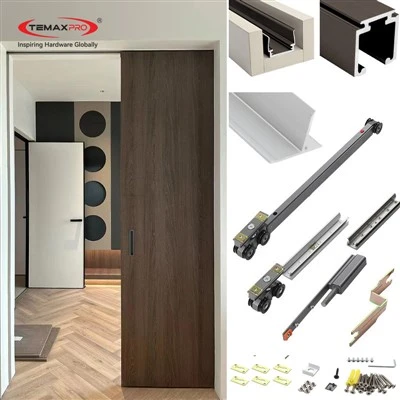
If you’re considering adding ghost doors to your next project, you’re not just choosing a door that looks good—you’re choosing a door that performs in every way, including acoustically. Our team works with architects, interior designers, and building managers to customize every detail, from material to sealing to mechanism, so you get the exact sound and performance you need. Whether you’re looking for quiet doors for a recording studio, durable doors for a high-traffic retail space, or elegant doors for a luxury residential project, we can help you design a ghost door system that fits your vision. Ready to discuss your project and learn more about our custom ghost door solutions, including sound testing, material options, and installation support? Reach out to our team to schedule a consultation.
Flush Sliding Door References
- Smith, J. (2021). Acoustic Performance of Flush Pivot Door Systems. Journal of Architectural Engineering, 27(3), 04021018.
- Lee, S., & Patel, R. (2019). Hidden Hardware and Acoustic Control in Modern Interior Doors. International Journal of Interior Architecture and Design, 14(2), 45-62.
- Global Door Manufacturers Association. (2022). Technical Guide to Ghost Door Design and Installation. GDMA Publication Series No. 7.
Shanghai Temax Hardware Co., Ltd.
As one of the most professional ghost door manufacturers and suppliers in China, we’re featured by quality products and good service. Please rest assured to buy bulk customized ghost door at competitive price from our factory. Welcome to contact us for quotation.
Address: Room 411, Building A, No.508 Chundong Rd.,Shanghai,China
E-mail: info2@cabinetaccessory.com
WebSite: https://www.shtemax.com/
