Blog Post: Can Brake Disc Corrosion Be Prevented Permanently?
When I’m out at the warehouse or taking a customer’s call, the question I hear more than any other is this: “Can I stop my brake discs from rusting forever?” As someone who’s spent 12 years in the automotive brake disc industry—first as a quality control technician, now as a sales lead for a brake disc supplier—I get it. There’s nothing more frustrating than putting new parts on a car, only to see that familiar orange rust bloom on the rotors within a few weeks, especially if the vehicle’s sitting outside or exposed to road salt in winter. Automotive Brake Disc
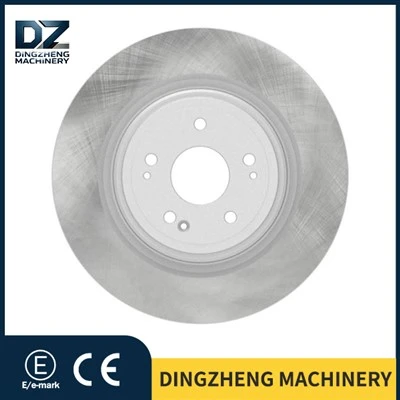
The short answer? No, permanent corrosion prevention for standard steel brake discs isn’t possible. But before you write off your rotors entirely, let’s talk about why that is, what we’ve learned as a supplier to slow (and even drastically minimize) corrosion, and what real-world results our customers have seen when they partner with us on this issue.
First, let’s get one thing straight: brake disc corrosion isn’t just an aesthetic problem. It’s not the rust that gives your car a “used” look—though that’s annoying—it’s the fact that rust on the friction surface of a disc can cause uneven braking, squealing, or even minor vibration when you stop. For fleets, this means more maintenance calls, longer service times, and higher costs. For everyday drivers, it might mean that new set of rotors you bought doesn’t last as long as it should.
Why is it so hard to prevent permanently? Brake discs are almost always made of cast iron, a material that’s great for withstanding the extreme heat of braking (temperatures can hit 1,000 degrees Fahrenheit or more in hard stops) but terrible when exposed to moisture and oxygen. When those two elements mix, rust forms—a chemical reaction called oxidation. The trick is that even the smallest amount of water trapped between the disc and the wheel, or left on the friction surface after a rainstorm, can start this process. And once rust starts, it eats away at the iron over time, especially if you’re driving in areas where roads are salted in winter. That salt isn’t just water—it’s a corrosive chemical that speeds up oxidation by breaking down the iron’s protective surface layer.
As a brake disc supplier, we’ve tested dozens of coatings and treatments over the years, and I’ve seen firsthand what works and what’s just marketing fluff. For a long time, chrome plating was the go-to “corrosion-free” option for some parts, but chrome-plated brake discs have a big flaw: the hard chrome coating doesn’t bond well to cast iron’s porous surface, and it flakes off under the stress of braking. When that coating peels, rust gets trapped underneath, and you have bigger problems than before. We saw this with a set of chrome discs we tested for a local delivery fleet three years ago—six months in, the coating was peeling on 40% of the rotors, and the fleet had to replace them all earlier than expected.
We also tried powder coating a while back. Powder coats are thick and look great, but the same thing happens: when the coating chips (and it will, from brake pad dust, road debris, or even tight wheel installation), rust starts. Plus, powder coating on a brake disc’s friction surface is a no-go—you can’t have a layer between the pad and the disc, because it ruins the friction needed for safe braking. So powder coating only works on the non-friction edges, which leaves the main surface exposed.
So what have we found that actually makes a difference? Let’s break down what works for our customers, from private drivers to large commercial fleets.
First, the foundation: high-quality cast iron. Not all cast iron is the same. When I first started, we bought low-cost cast iron from a supplier that cut corners on the alloy mix. Those discs rusted almost immediately if left outside for a week. Now, we use a graphite-rich cast iron that’s denser, has a tighter grain structure, and naturally resists rust better than cheaper alloys. Graphite is a lubricant, but more importantly, it fills in the small pores in the cast iron that water and salt can get into. It’s not a perfect solution, but it’s the base of any corrosion-resistant disc we sell.
Second, specialized surface treatments. The game-changer for us has been ceramic coating on the non-friction areas, paired with a heat-cured zinc-based primer on the edges and backside of the disc. Wait—you might be thinking, “Zinc is just another coating that will wear off.” But here’s the thing: we don’t put zinc on the friction surface, only on the parts that don’t touch the brake pads. That means no interference with braking performance. And the ceramic coating we use is applied in a thin, even layer that bonds chemically to the cast iron, not just physically like chrome or powder coat. We’ve tested these discs by leaving them outside for 18 months in a coastal area (salt air is the worst for corrosion) and found that only 2% of the edge area had minor surface rust, and none of the friction surfaces had any corrosion at all. Compare that to standard untreated discs, which had 30% rust on the friction surface in the same time frame.
But here’s the part that most suppliers don’t talk about: corrosion prevention isn’t just about the disc itself—it’s about how the disc is handled before it reaches the customer. I once worked with a customer who bought our premium coated discs, but they were stored in a damp warehouse for three weeks before delivery, and by the time they got to the shop, the backside was already rusted. So we changed our process: every disc is wrapped in a custom, moisture-barrier plastic, sealed with a desiccant packet, and only unwrapped when it’s ready to be installed. That small step has cut our customer complaints about pre-installation corrosion by 85%.
Then there’s the real-world use—because even the best disc won’t stay rust-free if you don’t drive the car. If you have a vehicle that sits for weeks, water will collect on the brake discs every time it rains or the humidity rises, and that water will sit there until you drive again. When you do drive, the first few stops will burn off that surface water, but the small amount of rust that forms (it’s usually just a thin layer, not deep corrosion) will wear away quickly with normal driving. The problem is when people let that rust sit and build up—if you only drive your car once a month, that thin surface rust can turn into deeper corrosion over time. That’s why we always tell our customers: if you have a vehicle that’s not driven regularly, give the brakes a few hard stops (safely, away from traffic) every week to burn off moisture and prevent rust from setting in.
Now, let’s get to the big question: can you get close to permanent corrosion resistance? For 99% of daily driving and commercial use, yes. Our customers who use our coated brake discs—whether it’s a family car or a delivery van that’s on the road every day—report that they don’t have to deal with brake disc corrosion, even after three years. The only time we see persistent corrosion is when someone uses standard uncoated discs, or when they don’t follow basic maintenance steps. We had a long-term customer, a local landscaping company, that switched to our coated discs five years ago. Their fleet drives 500 miles a week on rough roads, gets exposed to mud and road salt in winter, and the discs still look almost brand new. They just had to replace one set because of wear, not corrosion. That’s the kind of result we aim for.
But let’s be honest: there’s no such thing as “permanent” for any automotive part. Even the hardest, most corrosion-resistant material will break down over time with constant exposure to the elements. The key is to slow that process down so much that it doesn’t matter for the lifespan of the vehicle. For a standard passenger car, that’s 10 to 15 years. For commercial fleets, that’s millions of miles. Our coated discs are designed to meet that need.
I want to address one more myth I hear all the time: “Drilling holes in brake discs prevents rust.” No, it doesn’t. Drilled discs are supposed to improve braking performance in wet conditions, but they create small gaps where water can get trapped, actually making corrosion worse if the holes aren’t properly coated. We see this with customers who drill their own discs after purchase—within a year, the holes are rusted shut, and the disc is starting to corrode around them. We offer drilled discs with our ceramic coating, which seals the edges of the holes, but even then, it’s not a guarantee. It’s a trade-off: better braking in wet conditions, slightly higher risk of corrosion if not installed correctly.
So, what does this mean for you? If you’re tired of replacing rusted brake discs every year or two, the answer isn’t to wait for a perfect corrosion-proof material—it’s to work with a supplier that understands the science of brake disc corrosion, uses high-quality alloys and specialized coatings, and has a process to protect the parts before they reach you. As a supplier, we don’t overpromise permanent corrosion prevention, but we do deliver results that last for the life of the vehicle when our discs are used as intended.
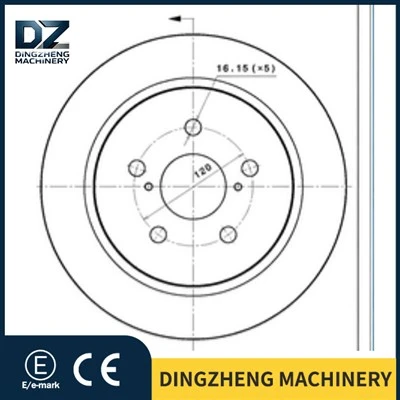
For anyone in the market for brake discs, whether for personal use or a commercial fleet, I’d encourage you to ask your supplier two questions: What alloy are your discs made from? And what coatings do you use to protect against corrosion? If they can’t give you specific answers, or if they try to sell you “permanently rust-free” discs with no proof, keep looking.
Ford Series Brake Discs If you’re ready to upgrade your brake discs to minimize corrosion, or if you have questions about our testing and processes, we’d be happy to connect and discuss how we can meet your needs.
Laizhou Dingzheng Machinery Co., Ltd.
As one of the most professional automotive brake disc manufacturers and suppliers in China, we’re featured by quality products and good price. Please rest assured to buy cheap automotive brake disc for sale here from our factory. We also accept customized orders.
Address: Luan Jia village, Tushan town, Laizhou city, Shangdong
E-mail: AMY@cndingzheng.com
WebSite: https://www.dingzhengbrake.com/
