Hey guys, let’s cut through the jargon real quick—if you’ve ever been deep in the weeds of anterior implant dentistry, you’ve probably heard the term “temporary abutment” tossed around like it’s just another standard part of the process. But if you’re new to the game, or even a seasoned clinician who’s been using the same stuff for years, you might be wondering: what the heck is a temporary abutment for anterior implants, and why does it matter so much? As someone who’s been supplying temporary abutments specifically for anterior cases for a minute now, I’ve heard every question under the sun about this little but super important piece. Let’s break it down like we’re chatting over a coffee at a dental conference, no stuffy textbook nonsense here. Temporary Abutments
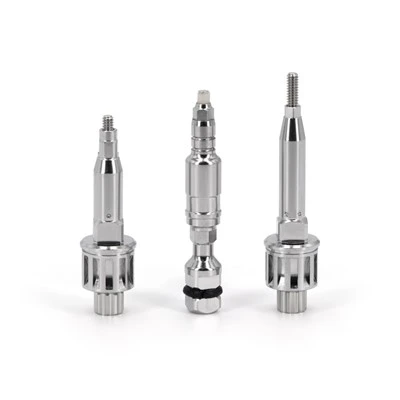
First off, let’s set the scene: anterior implants are the ones right up front—your incisors and canines, the teeth everyone sees when you smile. That’s not a trivial spot, right? Get this wrong, and you’ve got a patient staring at a wonky tooth every time they look in the mirror, not to mention issues with speech, eating, or even their confidence. Unlike posterior (back of the mouth) implants, where function is king and aesthetics are a secondary bonus, anterior is all about aesthetics first. So every step of the process has to be spot-on, and that’s where temporary abutments come in.
Wait, let’s make sure we’re not mixing up terms here. A lot of people confuse temporary abutments with temporary crowns, or with healing abutments. Let’s clear that up fast. Healing abutments are the little posts you put in right after the implant is surgically placed, to hold the gum tissue open while it heals—they’re just there to keep the site intact for a few weeks or months. Temporary crowns are the provisional teeth you put on once the implant is osseointegrated (fused to the bone, basically) while you wait for the final crown to be made. So what’s the temporary abutment in the middle? That’s the link between the two. It’s the custom (or sometimes pre-fabricated) part that sits on top of the implant fixture, and you attach your temporary crown to it before the final restoration is ready. But for anterior implants, it’s way more than just a link—this is where the magic of aesthetics starts to happen.
Let’s talk about why anterior cases are so different. When you’re replacing a front tooth, the gum tissue around it isn’t just filler—it’s a huge part of the smile. The shape, the contour, the symmetry of that gum line next to your other teeth can make or break the final result. If you just slap on a temporary crown without getting the abutment right, you might end up with a black triangle between teeth, or gum that’s too high or too low, or a crown that looks like it’s sticking out at a weird angle. That’s where the temporary abutment earns its keep.
Here’s the thing: when you first place an anterior implant, the implant fixture is embedded in the bone, and the gum is still healing. The temporary abutment lets you shape that gum tissue exactly how you want it before you even make the final crown. It acts as a scaffold for the gingiva (gum tissue) to remodel around. If you have a patient who’s missing a central incisor, for example, the adjacent teeth might have receded a little, or the gum line might be uneven. Using a temporary abutment that’s shaped to match the natural emergence profile of a real front tooth lets you guide the gum to fill in the gaps, or build up the tissue to create a seamless, natural-looking line that matches the patient’s other teeth. Without that, the final crown might look like it’s sitting on top of a weird, flat gum ridge, and the whole smile will look fake.
Another big one: occlusion, or how your teeth bite together. For posterior implants, occlusion is all about making sure the patient can chew without issues, but for anterior implants, it’s about function and phonetics (speech) too. If the bite is off, the patient might lisp when they talk, or have pain when they eat. The temporary abutment lets you adjust the height and angle of the crown way more easily than you would with a final abutment. Because once the final crown is cemented, you can’t just yank it off and reshape the part that connects to the implant without starting over. With a temporary abutment, you can tweak the position, the angulation, even the height until the bite is perfect, and the patient’s speech is normal, before you commit to the final restoration.
I’ve seen so many cases where clinicians skipped using a custom temporary abutment and used a generic pre-fab one just to save time. And while that works for some posterior cases, anterior? It’s a disaster waiting to happen. A generic abutment doesn’t let you adjust the emergence profile properly, so you end up with a temporary crown that looks too boxy, or the gum that doesn’t heal right, leading to that dreaded black triangle. By the time you realize the problem, the gum has already stabilized, and you have to do extra procedures like gum grafts to fix it—costing the patient more time and money, and stressing both the patient and the clinician. That’s why, in my 10+ years of supplying temporary abutments, I always tell clinicians: for anterior implants, custom is non-negotiable. It’s not an extra step—it’s part of the workflow that saves you headaches later.
Wait, let’s talk about the process a little, because that might make it more concrete. When a patient comes in for an anterior implant, first the surgeon places the implant fixture and the healing abutment, and waits for osseointegration (usually 3-6 months, sometimes less with modern techniques). Once the implant is ready, they take an impression of the site, including the adjacent teeth and the position of the implant. That impression gets sent to a lab, where a custom temporary abutment is milled or fabricated to match exactly how the implant is angled, and the shape of the natural emergence profile of the patient’s missing tooth. Then, when the patient comes back, they attach that temporary abutment to the implant, then place a temporary crown on top. Now, here’s the key part: you can adjust this temporary abutment as much as you need. If the gum is too high, you can reshape the part of the abutment that’s sitting under the gum to let it heal down. If the crown is angled a little off, you can tweak the abutment’s base to adjust the whole angle without messing up the tooth itself. The patient wears this temporary for a few weeks or even months—long enough for the gum to settle, the bite to be perfect, and everyone (clinician and patient) to be 100% happy with the aesthetics. Then you take a final impression of the temporary abutment to make the final, permanent abutment and crown that match exactly what you already know works.
Is there a downside to temporary abutments? Well, they’re not permanent, obviously—they’re meant to be removed once the final restoration is in, so they can wear out over time if they’re left on too long, or get damaged if the patient bites into something hard. But that’s a small trade-off for all the benefits. Also, they need to be made of the right material. Most temporary abutments for anterior cases are made of titanium or acrylic, right? Titanium is strong, so it won’t bend or break when you’re adjusting it, and it’s compatible with the implant, so there’s no risk of corrosion. Acrylic is sometimes used for even more temporary cases, but for the weeks or months you’ll have it in your mouth, titanium is the way to go for anterior—less risk of staining, and more stable for shaping the gum.
Let me tell you a story that stuck with me, to put this all in perspective. A few years back, a clinician I work with sent me a case where he had a patient who lost her central incisor in a car accident. He used a generic pre-fab temporary abutment, and when he placed the temporary crown, the gum line ended up being way too high on one side, and there was a huge black triangle between the adjacent tooth and the new crown. The patient was devastated—she was getting married in three months, and she didn’t want to have a fake-looking tooth in her wedding photos. The clinician called me, panicking, because he’d already sent off for the final abutment, but he realized he needed to fix the gum line first. We sent him a custom temporary abutment, milled exactly to match the natural gum line of the patient’s other central incisor. He reshaped the abutment to guide the gum down over the course of six weeks, adjusted the crown to fill in the gap, and by the time the final crown was ready, the patient’s smile looked so natural, you couldn’t even tell she had an implant. She sent me a photo from her wedding, and I still have it on my fridge. That’s the difference a good temporary abutment makes.
A lot of newer clinicians might be tempted to cut corners here, especially with insurance pressures or tight schedules. But trust me, from someone who’s in the thick of this, skipping a quality temporary abutment for anterior implants is a false economy. You might save 30 minutes in the short term, but you’ll end up spending way more time fixing mistakes, dealing with patient complaints, and maybe even redoing the entire implant case because the aesthetics are too far off.
Now, if you’re a clinician reading this, what should you look for when you’re picking a temporary abutment supplier for your anterior cases? First, make sure they offer custom, patient-specific abutments—generic ones just don’t cut it. Second, make sure the abutments are compatible with all major implant systems—you don’t want to have to switch your whole workflow because your supplier only works with one brand. Third, look for fast turnaround times. If a lab takes two weeks to make a temporary abutment, that’s two more weeks your patient is walking around with a temporary crown that doesn’t look or feel right. At my company, we get custom temporary abutments to clinicians in 48 hours for most cases, because we know how important speed is, especially with anterior cases where patients are waiting for a beautiful smile.
Also, don’t sleep on the quality of the material. Cheaper titanium abutments can have rough edges that irritate the gum, or stain over time, which can make the temporary look dirty before you even place the final crown. We use medical-grade titanium for all our temporary abutments, so they’re smooth, biocompatible, and won’t cause any gum irritation. And for clinicians who work with newer digital workflows, we offer CAD/CAM milled temporary abutments that work seamlessly with most digital scanners, so you don’t have to go through the hassle of traditional impressions. That’s a big win for anyone who’s moved to digital dentistry to make their cases more precise.
Wait, let’s address a common myth I hear all the time: “Temporary abutments are just a placeholder, so they don’t need to be that precise.” No, they’re not just a placeholder. For anterior implants, they’re the foundation of the entire aesthetic result. Every detail—from the angle, to the height, to the emergence profile—affects how the final crown will look. If your temporary abutment is off by even a degree, the final crown will look like it’s rotated or tilted, and you won’t be able to fix that later without replacing the final abutment and crown, which is a huge waste of time and money.
Another point: patient experience. Let’s be real, getting an implant is a big deal for a patient. They’re nervous about the procedure, worried about pain, and super conscious about how their smile looks. If you give them a temporary crown that’s lopsided or has a weird gap, they’re going to be stressed every time they look in the mirror. But if you give them a temporary that looks almost exactly like their natural tooth, they’ll feel more confident, more willing to come back for follow-ups, and way happier with the whole process. That’s good for you as a clinician, and it’s good for your patient.
So to wrap this up, let’s make sure we’re on the same page: a temporary abutment for anterior implants is not just a small, throwaway part of the process. It’s a critical tool that lets clinicians shape the gum tissue, adjust the bite, perfect the aesthetics, and set up the final restoration for success. For the front teeth, where every detail is visible, skipping a quality custom temporary abutment is a mistake that can lead to unhappy patients, extra work, and results that just don’t look right.
If you’re a clinician looking to upgrade your anterior implant workflow, or you’re tired of dealing with generic temporary abutments that don’t work, we’re here to help. We specialize in high-quality, custom temporary abutments tailored specifically for anterior implant cases, with fast turnaround, compatibility with all major implant systems, and materials that are designed to give your patients the natural smile they deserve. We work with clinics of all sizes, from solo practices to big multi-doctor groups, and we’re happy to walk you through the process, answer any questions, and find the right solution for your cases. Don’t settle for less when it comes to something that makes such a big difference for your patients (and your own workflow). Reach out to us to chat more about how our temporary abutments can improve your anterior implant results—we’re here to help you get that perfect smile, one case at a time.
Dental Implant Prosthetics References
- Fiorellini JP, Weber HP. Current concepts in anterior implant aesthetics. J Prosthet Dent. 2008;99(2):104-114.
- Salinas TJ, Eckert SE. Factors influencing esthetic outcomes with implant restorations in the anterior maxilla. J Prosthodont. 2010;19(3):187-195.
- Chen ST, Buser D. Clinical and esthetic outcomes of implants placed in post-extraction sites. Int J Oral Maxillofac Implants. 2009;24 Suppl:186-217.
- Jung RE, Sailer I, Hämmerle CH, et al. The use of provisional restorations for aesthetic implant therapy. Clin Oral Implants Res. 2012;23 Suppl 5:112-122.
Dongguan Denreal Devices Co., Ltd.
As one of the most professional temporary abutments manufacturers and suppliers in China, we’re featured by quality products and low price. Please rest assured to buy bulk customized temporary abutments made in China here from our factory. For free sample, contact us now.
Address: NO.622, Baoshi Road, Qishi town, Dongguan, Guangdong, China
E-mail: Chason.Yeh@Gmail.com
WebSite: https://www.denreal.com/
