Hey everyone, thanks for stopping by my blog – I’m Jake, and for the last 7 years, I’ve been running a small covered tricycle supply business. Most days, I’m on the phone with delivery services, small business owners, and even a few grandpas who want a stable ride for their errands. One question pops up more than you’d think: “Do covered tricycles even have heaters?” Covered Tricycle

I get it – when you’re looking at a three-wheeler that’s basically a tiny, enclosed box on wheels, warmth has to matter, right? Let’s break this down like I do with my customers – no fancy jargon, just straight talk about what we actually build, what’s out there, and why heaters aren’t one-size-fits-all.
First off, let’s clarify what a “covered tricycle” even is, because there’s a big gap between the ones we supply for commercial work and the leisure ones you see at amusement parks. For us, covered tricycles are mostly for businesses: food delivery, courier runs, even small local moving jobs. They’re not the fun, rental ones at the beach – those are for sunny days, not snow. Ours get used in all weather, from 30-degree wind chills in Chicago to 100-degree heat in Phoenix. So heater specs? They tie straight to how the tricycle’s being used.
Here’s the thing: not every covered tricycle comes with a heater. But that’s not a cop-out – it’s about matching the tool to the job. Let’s start with the base models we ship most. Our standard commercial covered trikes are built for year-round use, but they skip the heater for a reason. Why? Because adding a heater adds weight, adds cost, and can mess with the trike’s range. Most of our base models run on 48V lithium-ion batteries – same kind you’d find in an electric scooter, but bigger. A typical base trike gets around 60 miles on a single charge, which is perfect for a delivery driver’s 8-10 hour shift. Toss in a 12V or 24V heater (the ones that run off the battery) and you’ll eat up 15-20% of that range fast. For a driver who’s got back-to-back runs, losing 10 miles of range is a non-starter.
But wait – that’s not the end of the story. We get a ton of orders from places like Canada, Minnesota, and even parts of northern Germany, where winter temps drop well below freezing. For those customers, we don’t just throw a heater in and call it good. We build a “cold-weather package” that’s tailored to their needs. Let me walk you through what that includes. First, we upgrade the battery to a 60V model – it’s a little heavier, but it has enough extra power to run a heater all day without killing the range. Then we add a compact, high-output cabin heater – not the big, clunky ones you’d find in a car, but a 24V unit that’s small enough to fit under the driver’s seat without taking up space for delivery boxes. We line the cabin with closed-cell foam insulation too, so once the heater warms the air, it stays warm – that cuts down on how much the heater needs to run, which saves battery.
I’ve seen way too many competitors cut corners here. Last year, a guy from Michigan bought a base model and tried to add a cheap aftermarket heater himself. It worked for a week, but it drew too much power, fried his battery’s charging port, and left him stranded mid-run. We don’t do that – our cold-weather heaters are wired directly into the trike’s power system, with a built-in thermostat that kicks on when the cabin drops below 50 degrees and off when it’s above 65. That not only protects the battery, it means the heater only runs when it actually needs to. Our cold-weather package adds about 10% to the total cost, but for drivers who make their living on the road in winter, it’s worth every penny.
Now, let’s talk about the other side – what if you’re using a covered tricycle for leisure? Like, if you’re a small business owner who sells hot cocoa out of a trike, or a retiree who uses it for weekend rides around the neighborhood. We don’t push heaters on those customers unless they specifically ask. Why? Because most leisure trikes have a smaller battery (usually 24V) and they’re not used for 8-hour shifts. If you’re only going out for a couple hours on a cool day, a heated seat cushion (which we also sell as an add-on) is way more efficient than a full cabin heater. Plus, a lot of people who use them for fun don’t want a cabin that’s too enclosed – they like the fresh air, even when it’s a little chilly.
Wait, another thing I get asked all the time: “Can I add a heater to my existing covered tricycle?” The short answer is maybe – but not always. It depends on your trike’s age, its battery setup, and even how much space you have in the cabin. If you’ve got a newer model with a 48V or higher battery, and there’s room under the seat for a small heater, we can sell you a universal kit and walk you through installation step by step. But if you’ve got an older trike with a tiny 12V battery, adding a heater will drain it way too fast – you’d be stopping to charge every 2 hours, which defeats the whole purpose. I always tell customers to hit us up before they buy anything aftermarket – we’d rather steer you right than have you waste money on something that doesn’t work.
Let me also clear up a common misconception: some people think covered tricycles with heaters are just glorified golf carts. Nope. Golf cart heaters are made for short trips around a neighborhood, not 50-mile delivery runs. Our cold-weather heater systems are tested in real winter conditions – last January, we sent a dozen trikes to a courier service in Toronto, and their drivers reported the cabin stayed a steady 68 degrees even when it was 20 degrees outside with a 15 mph wind. That’s not luck – that’s the insulation and the thermostat working together.
Why does this matter to me, anyway? A few years back, one of my first customers was a single mom in Minneapolis who used a covered trike to deliver school supplies. Winter hit, and she called me panicking because her hands were freezing, she was taking longer on routes, and her customers were complaining about late deliveries. I didn’t have a cold-weather package back then, so I adjusted her battery to a higher voltage, added a small heater, and gave her heated glove liners for free. She came back a month later and told me her delivery time dropped by 20% because she wasn’t stopping to warm up her hands every hour. That’s when I realized – heaters aren’t just a luxury for covered tricycles, they’re a lifeline for people who depend on their trikes to make a living.
Now, let’s talk about what’s not included. We don’t offer gas-powered heaters, for example. Most commercial trikes are electric, and gas heaters would add fumes, require regular refills, and mess with emissions rules in a lot of cities. All our heaters run off the trike’s battery, which means they’re zero-emission, no extra fuel to buy, and easy to maintain. That’s a big selling point for businesses who care about their carbon footprint – and let’s be real, it saves drivers money too, since they don’t have to pay for propane or gas for a heater.
Another thing: size of the heater. We don’t put big heaters in tiny trikes, and we don’t put tiny heaters in trikes that have large cabins. Our cold-weather heaters are matched to the cabin size – if you’ve got a trike with a 6-foot cabin, we use a 24V heater that can warm that space fast. If you’ve got a smaller 5-foot cabin, we use a smaller 12V heater to save power. It’s all about matching the output to the space, so you’re not wasting energy or making the cabin too hot.
So, to circle back to the original question: do covered tricycles have heaters? The answer is: some do, some don’t, and that’s a good thing. It’s not a one-size-fits-all. If you’re a delivery driver in a cold climate, we’ve got a trike with a heater that works for your all-day runs. If you’re a leisure rider in a mild climate, you can skip the heater and save on cost and range. If you already have a trike and want to add a heater, we can help with that too – as long as it’s the right setup for your rig.
I know picking a covered tricycle can feel overwhelming, especially when you’re worried about things like warmth, range, and cost. That’s why we don’t push every add-on on every customer – we ask questions first. How many hours a day do you use it? What’s the coldest temp you’ll ride in? Do you need space for cargo, or just for yourself? Those answers help us point you to the right trike, heater or no heater.
If you’re in the market for a covered tricycle, or you’re not sure if a heater is something you need, hit us up. I don’t work with pushy salespeople – I’d rather chat with you about your needs, show you what we’ve got, and make sure you leave with something that actually works for you. No hidden fees, no pressure, just a straight answer from someone who’s been in the covered tricycle game for years.
We’re always tweaking our cold-weather packages too – last year, we added heated floor mats as an optional extra, because drivers told me their feet were the first thing to get cold. This year, we’re testing a heater that runs even more efficiently, so it uses less battery and gives even more range. We listen to what our customers need, and that’s why we’re not just a supplier – we’re a group of people who use these trikes every day, too.
At the end of the day, a covered tricycle’s heater isn’t just a nice feature. For a lot of folks, it’s the difference between being able to work in winter and having to park their trike for months. It’s the difference between getting to a customer on time and being late. It’s the difference between being comfortable and being miserable on a cold ride. That’s why we take the time to get it right – no shortcuts, no gimmicks, just a heater that does what it’s supposed to do.
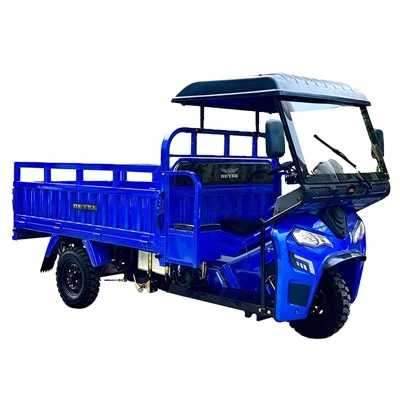
If you’re ready to talk more about covered tricycles, whether you want one with a heater, without, or you’re curious about adding one later, reach out to us to set up a time to chat. We’re here to help, and we don’t mind answering all the questions you have – even the ones you think are silly. After all, that’s how I learned the most, right? From customers asking me the stuff no one else was thinking about.
250cc Cargo Tricycle References:
- National Renewable Energy Laboratory. (2022). Battery Efficiency for Light Electric Vehicles in Cold Climates.
- Commercial Vehicle Safety Alliance. (2023). Winter Operation Guidelines for Light Delivery Vehicles.
- Electric Transportation Journal. (2021). Cabin Heating Systems for Low-Emission Commercial Vehicles.
- Small Business Administration. (2022). Operational Costs for Last-Mile Delivery Vehicles.
- International Energy Agency. (2023). Zero-Emission Two- and Three-Wheeler Use Cases.
Chongqing Beiyi Vehicle Co., Ltd.
With abundant experience, we are one of the most professional covered tricycle suppliers in China. We warmly welcome you to buy durable covered tricycle at competitive price from our factory. If you have any enquiry about pricelist, please feel free to email us.
Address: Area B, Luohuang Industrial Park, Jiangjin District, Chongqing.
E-mail: dayang@besttricycle.com
WebSite: https://www.beyeemoto.com/
