As a seasoned piston supplier, I’ve witnessed firsthand the critical role pistons play in various engines, from automotive to industrial applications. Ensuring the quality and performance of pistons is paramount, and that’s where comprehensive test methods come into play. In this blog, I’ll delve into the different test methods used to evaluate pistons, shedding light on the processes that guarantee their reliability and efficiency. Piston

Visual Inspection
Visual inspection is the first line of defense in piston quality control. It involves a thorough examination of the piston’s surface for any visible defects such as cracks, porosity, or surface irregularities. Using magnifying glasses and inspection lights, our quality control team carefully scrutinizes each piston to identify any imperfections that could affect its performance. This initial inspection helps us catch obvious issues early on, preventing defective pistons from progressing further in the production process.
Dimensional Measurement
Accurate dimensional measurement is crucial for pistons to fit precisely within the engine cylinder. We use advanced measuring tools such as micrometers, calipers, and coordinate measuring machines (CMMs) to ensure that each piston meets the specified dimensions. These measurements include the piston diameter, length, pin bore diameter, and skirt profile. By maintaining tight tolerances, we ensure that the pistons fit snugly in the cylinders, minimizing friction and maximizing engine efficiency.
Material Analysis
The quality of the piston material directly impacts its performance and durability. We conduct comprehensive material analysis to verify the chemical composition and mechanical properties of the piston material. This includes techniques such as spectroscopy and hardness testing. Spectroscopy helps us determine the exact elemental composition of the material, ensuring that it meets the required specifications. Hardness testing, on the other hand, measures the material’s resistance to indentation, providing insights into its strength and wear resistance.
Thermal Testing
Pistons operate in extremely high-temperature environments, and their ability to withstand thermal stress is crucial. We subject pistons to thermal testing to evaluate their performance under different temperature conditions. This involves heating the pistons to specific temperatures and monitoring their dimensional stability, mechanical properties, and resistance to thermal fatigue. By simulating real-world operating conditions, we can identify any potential issues with the piston’s thermal performance and make necessary adjustments to improve its durability.
Fatigue Testing
Pistons are subjected to repeated cyclic loading during engine operation, which can lead to fatigue failure over time. Fatigue testing is used to evaluate the piston’s resistance to fatigue by subjecting it to a large number of loading cycles. We use specialized testing equipment to apply controlled loads to the piston, simulating the stresses it experiences in real-world operation. By monitoring the piston’s performance during fatigue testing, we can determine its fatigue life and make design improvements to enhance its durability.
Leakage Testing
Pistons must form a tight seal within the engine cylinder to prevent the leakage of combustion gases. Leakage testing is used to ensure that the pistons meet the required sealing standards. We use various methods for leakage testing, including pressure testing and helium mass spectrometry. Pressure testing involves applying a specified pressure to the piston and monitoring for any leakage. Helium mass spectrometry is a more sensitive method that can detect even the smallest leaks by using helium gas as a tracer.
Performance Testing
In addition to the above tests, we also conduct performance testing to evaluate the piston’s overall performance in an engine. This involves installing the pistons in a test engine and running it under various operating conditions. We measure parameters such as power output, fuel consumption, and emissions to assess the piston’s impact on engine performance. By analyzing the test results, we can identify any areas for improvement and optimize the piston design for better performance.
Conclusion
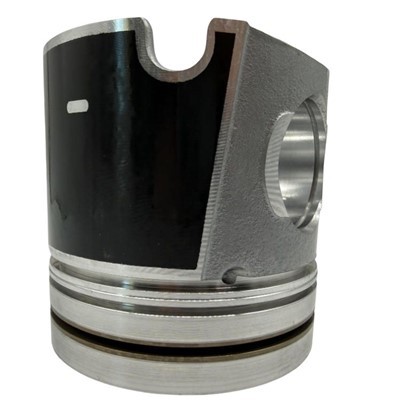
As a piston supplier, we understand the importance of providing high-quality pistons that meet the strictest standards. By using a combination of visual inspection, dimensional measurement, material analysis, thermal testing, fatigue testing, leakage testing, and performance testing, we ensure that our pistons are reliable, efficient, and durable. Our commitment to quality control and continuous improvement allows us to deliver pistons that exceed our customers’ expectations.
Caterpillar Piston If you’re in the market for high-quality pistons, we’d love to hear from you. Our team of experts is ready to assist you in finding the right pistons for your specific application. Contact us today to discuss your requirements and start a partnership that will drive your engine performance to new heights.
References
- Smith, J. (2018). Piston Design and Manufacturing. Automotive Engineering International.
- Johnson, R. (2019). Quality Control in Piston Production. Industrial Manufacturing Journal.
- Brown, A. (2020). Testing Methods for Pistons. Engine Technology Review.
Hebei Yuwei Piston Co., Ltd.
As one of the most professional piston manufacturers and suppliers in China, we’re featured by quality products and good service. Please rest assured to buy customized piston made in China here from our factory. Also, quotation is available.
Address: Beizhujiacun Village, Sujiuzhuang Town, Ningjin County, Xingtai City, Hebei Province
E-mail: jack@ywpiston.com
WebSite: https://www.ywpiston.com/
