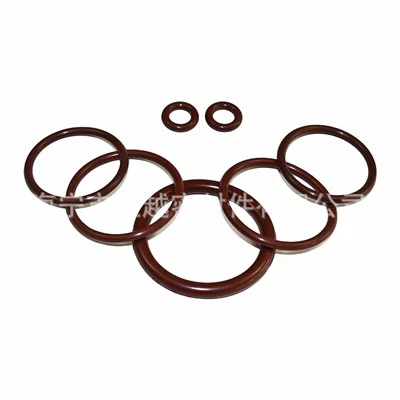
Hey there! As a supplier of silicone O rings, I often get asked all sorts of questions about these little but super useful parts. One question that pops up pretty regularly is, "Are silicone O rings resistant to static electricity?" Well, let’s dig into this topic and see what the deal is. Silicone O Ring
First off, let’s talk a bit about static electricity. You know how sometimes when you walk across a carpet and then touch a metal doorknob, you get that little zap? That’s static electricity. It’s an imbalance of electric charges within or on the surface of a material. Static electricity can cause all sorts of problems in different industries. In electronic manufacturing, it can damage sensitive components. In the chemical industry, it can potentially ignite flammable substances.
So, when it comes to silicone O rings, are they good at keeping static at bay? The answer isn’t a simple yes or no. Regular silicone rubber, which is what a lot of basic silicone O rings are made from, isn’t naturally great at conducting electricity. In fact, it’s a pretty decent insulator. This means that it can build up static charges easily. When electrons aren’t able to move freely through a material, they can pile up and create a static charge. So, if you’ve got a regular silicone O ring in an environment where static electricity is a concern, it might not be the best option.
But here’s the good news. We can do something about it. There are ways to make silicone O rings more resistant to static electricity. One common method is to add conductive fillers to the silicone rubber during the manufacturing process. These fillers can be things like carbon black or metal powders. When added in the right amounts, they create pathways for the electrons to flow through the silicone, which helps to dissipate the static charge.
Conductive silicone O rings are a game – changer in industries where static can be a major headache. For example, in the pharmaceutical industry, where they need to prevent static – generated dust and particles from contaminating the drugs. Conductive O rings can ensure a more sterile environment. In the automotive industry, especially in electric vehicles, preventing static build – up is crucial for the proper functioning of electrical systems. These O rings can be used in connectors and seals to keep things running smoothly.
Another factor to consider is the surface resistance of the silicone O ring. Surface resistance is a measure of how easily electricity can flow across the surface of a material. For a silicone O ring to be considered static – dissipative, its surface resistance should typically be in the range of 10^6 to 10^9 ohms per square. This means it allows some electrical conduction but not so much that it short – circuits any electrical systems. When we’re modifying silicone rubber to make it more static – resistant, we carefully adjust the filler content to achieve this optimal surface resistance.
Now, let’s talk about the testing process. When we produce silicone O rings, we don’t just take our word for it that they’re static – resistant. We use specialized equipment to measure their electrical properties. One common test is the surface resistance test, where we place electrodes on the surface of the O ring and measure the resistance between them. We also do tests in simulated real – world environments to see how the O rings perform under different conditions.
Temperature and humidity can also have an impact on the static – resistance properties of silicone O rings. In low – humidity environments, static electricity is more likely to build up because there’s less moisture in the air to help dissipate the charges. On the other hand, high temperatures can sometimes change the electrical properties of the filler materials in the silicone rubber. So, we take these factors into account when designing and testing our O rings, making sure they can hold up in a wide range of conditions.
As a supplier, I’ve seen firsthand the importance of static – resistant silicone O rings in different applications. Whether it’s in a high – tech cleanroom or a heavy – duty industrial setting, having the right O ring can make a huge difference. It can prevent costly breakdowns, improve product quality, and most importantly, keep things safe.
If you’re in an industry where static electricity is a concern and you’re looking for reliable silicone O rings, we’ve got you covered. Our team of experts is always ready to help you find the perfect solution for your specific needs. We can customize the O rings to meet your exact requirements in terms of size, shape, and static – resistance level.

So, if you’re thinking about purchasing silicone O rings and want to learn more about their static – resistance capabilities, don’t hesitate to reach out. Just drop us a message, and we’ll be more than happy to start a conversation about what we can do for you. Let’s work together to find the best silicone O ring solution for your business.
Polyurethane O Ring References:
- "Rubber Technology" – A comprehensive guide on the properties and manufacturing of rubber products, which includes information on silicone and its modifications.
- Industry standards and guidelines related to electrical safety and static control in different sectors such as automotive, electronics, and pharmaceutical.
Haining Chaoyue Seals Co., Ltd.
As one of the most professional silicone o ring manufacturers and suppliers in China, we offer a wide range of products with superior quality. Please feel free to wholesale high quality silicone o ring made in China here from our factory. Also, custom service is available.
Address: Building 9, 158 Lianhong Road, Yuanhua Town, Jiaxing, Zhejiang, China.
E-mail: chaoyue@cyseals.com
WebSite: https://www.hncyseal.com/
