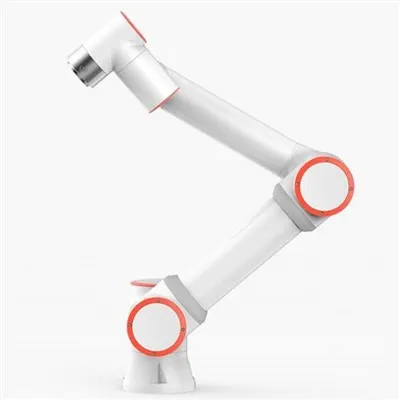
Hey there! As a supplier of collaborative palletizing robots, I often get asked all sorts of questions about where our robots can be used. One question that came up recently really got me thinking: Can a collaborative palletizing robot be used in a high – altitude environment? Let’s dig into this topic and find out. Collaborative Palletizing Robot
Understanding High – Altitude Environments
First off, what exactly do we mean by a high – altitude environment? Generally, we’re talking about places that are 1,500 meters (4,900 feet) or more above sea level. At these heights, the air is thinner, the temperature can vary widely, and there’s more exposure to UV radiation.
The thin air is a big deal. With less oxygen available, it can affect how machines operate. For example, combustion engines might not work as well because they need oxygen to burn fuel. But our collaborative palletizing robots don’t have combustion engines. They run on electricity, so the lack of oxygen isn’t a direct problem for their power source.
Temperature variations are another factor. High – altitude areas can be really cold at night and quite warm during the day. Our robots are built to handle a certain range of temperatures, but extreme variations can be a challenge. Cold temperatures can make the lubricants in the robot’s joints thicker, which might slow down its movement. On the other hand, high temperatures can cause the electronic components to overheat if they’re not properly cooled.
UV radiation is also something to consider. Over time, it can damage the robot’s outer casing and some of the internal components. The plastic parts might become brittle, and the wiring could degrade.
How Our Collaborative Palletizing Robots Are Built
Our collaborative palletizing robots are designed with a lot of features that make them pretty tough. They have a modular design, which means that different parts can be easily replaced or upgraded. This is great because if something does get damaged in a high – altitude environment, we can quickly swap out the affected part.
The robots are equipped with advanced sensors. These sensors help the robot to detect its surroundings and adjust its movements accordingly. They’re also designed to be reliable in different conditions. For example, they can work in low – light situations, which might be common in high – altitude areas where the sun sets earlier.
The control system of our robots is state – of – the – art. It’s programmed to optimize the robot’s performance based on the task at hand. Whether it’s stacking heavy pallets or handling delicate items, the control system can make sure the robot does the job efficiently.
Challenges in High – Altitude Use
Despite our robots’ great design, there are still some challenges when it comes to using them in high – altitude environments.
As I mentioned earlier, the temperature variations can be a problem. To address this, we can add extra insulation to the robot’s body. This helps to keep the internal components at a more stable temperature. We can also install better cooling systems for when the temperature rises. For example, we can use fans or heat sinks to dissipate the heat.
The thin air can also affect the robot’s pneumatic systems, if it has any. Pneumatic systems rely on air pressure to operate, and with less air available at high altitudes, the pressure might not be as strong. We can use more powerful compressors or adjust the system to work with the lower air pressure.
The UV radiation is a long – term issue. To protect the robot, we can use special coatings on the outer casing. These coatings are designed to block UV rays and prevent damage to the plastic and metal parts.
Advantages of Using Our Robots in High – Altitude Environments
There are actually some advantages to using our collaborative palletizing robots in high – altitude areas.
One of the biggest advantages is their ability to work in tight spaces. High – altitude warehouses or factories might have limited space, and our robots are designed to be compact. They can move around easily and stack pallets in a small area, which is really useful in these environments.
Our robots are also very flexible. They can be programmed to handle different types of products and palletizing patterns. In high – altitude areas, there might be a variety of goods that need to be palletized, and our robots can adapt to these different requirements.
Another advantage is their safety features. Collaborative robots are designed to work alongside humans safely. In high – altitude environments, where the work can be more dangerous due to the terrain and conditions, having a robot that can work safely with human operators is a big plus.
Case Studies
Let’s take a look at a couple of case studies to see how our robots have fared in high – altitude environments.
In a mountainous region, a local food processing company was having trouble palletizing their products. The altitude was around 2,000 meters, and the temperature variations were significant. They decided to try our collaborative palletizing robot.
At first, they faced some issues with the robot’s movement due to the cold temperatures. But we quickly sent a team to add extra insulation and adjust the lubricants. After that, the robot worked like a charm. It was able to stack the pallets efficiently, even with the limited space in their warehouse. The company saw a significant increase in productivity and was really happy with the results.
In another case, a mining company at a high – altitude site needed to palletize heavy equipment parts. The thin air was a concern, but our engineers adjusted the pneumatic system of the robot. The robot was able to handle the heavy loads and work alongside the human workers safely. The mining company was impressed with the robot’s performance and has since ordered more of our robots.
Conclusion
So, can a collaborative palletizing robot be used in a high – altitude environment? The answer is yes, but with some adjustments. Our robots are built to be tough and adaptable, but we need to take into account the unique challenges of high – altitude areas such as temperature variations, thin air, and UV radiation.
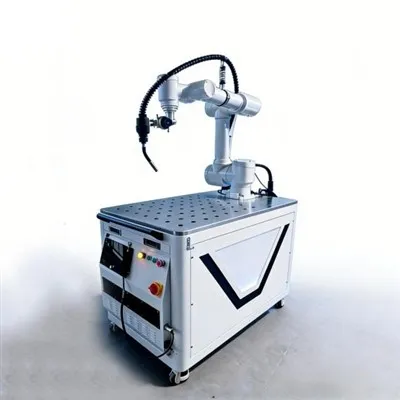
If you’re in a high – altitude area and are looking for a reliable palletizing solution, our collaborative palletizing robots could be the perfect fit for you. We have the experience and the expertise to make sure the robot works well in your specific environment.
Collaborative Palletizing Robot If you’re interested in learning more about our products or want to discuss a potential purchase, don’t hesitate to reach out. We’d be more than happy to have a chat with you and see how we can help you with your palletizing needs.
References
- "Industrial Robotics in Extreme Environments" – Journal of Industrial Automation
- "The Effects of High – Altitude on Machine Performance" – Research Report by the Institute of Mechanical Engineering
Xinweilai Intelligent Technology (Shandong) Co., Ltd.
As one of the most professional collaborative palletizing robot manufacturers and suppliers in China, we’re featured by quality products and good service. Please rest assured to wholesale bulk customized collaborative palletizing robot from our factory. For pricelist and quotation, contact us now.
Address: Jinghua Road, Economic and Technical Development Zone, Dezhou City, Shandong Province
E-mail: liujiqing@xinweilaiznkj.com
WebSite: https://www.xinweilaiznkj.com/
