In the dynamic landscape of educational technology, the role of signal distribution amplifiers has become increasingly pivotal. As a supplier of signal distribution amplifiers, I’ve witnessed firsthand the transformative impact these devices can have on educational institutions. In this blog post, I’ll explore the user – friendliness requirements for a signal distribution amplifier in an educational setting, drawing on my experiences and industry knowledge. Signal Distribution Amplifier
Ease of Installation
One of the primary user – friendliness requirements for a signal distribution amplifier in an educational environment is ease of installation. Educational institutions often have limited technical staff and tight schedules, so a complex installation process can be a significant deterrent.
A user – friendly signal distribution amplifier should come with clear and comprehensive installation instructions. These instructions should be written in simple language, with step – by – step diagrams if possible. For example, the amplifier should clearly indicate which cables need to be connected to which ports, and provide guidance on proper grounding.
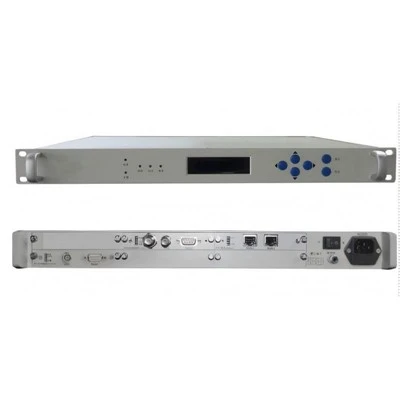
In addition, the physical design of the amplifier should facilitate easy installation. It should have well – labeled ports and be compact enough to fit into standard equipment racks or wall – mounted enclosures. Some amplifiers even come with pre – drilled mounting holes and brackets, making the installation process even more straightforward.
Intuitive Configuration
Once installed, a signal distribution amplifier needs to be configured to meet the specific needs of the educational institution. This is where intuitive configuration becomes crucial.
The amplifier should have a user – friendly interface, whether it’s a physical control panel or a software – based interface. For physical control panels, the buttons and knobs should be clearly labeled, and the functions should be easy to understand. For example, there should be dedicated buttons for adjusting signal strength, channel selection, and power on/off.
If the amplifier is configured via software, the software should have a clean and simple layout. It should be accessible from a web browser or a dedicated application, allowing users to configure the amplifier from any device with an internet connection. The software should also provide real – time feedback on the amplifier’s status, such as signal strength and device connectivity.
Compatibility with Existing Equipment
Educational institutions typically have a wide range of existing audio – visual equipment, including projectors, computers, and speakers. A user – friendly signal distribution amplifier should be compatible with this existing equipment.
This means that the amplifier should support a variety of input and output formats. For example, it should be able to accept HDMI, VGA, and DisplayPort inputs, as these are the most common video connection types in educational settings. On the output side, it should be able to distribute the signal to multiple devices simultaneously, whether they are monitors, projectors, or speakers.
In addition, the amplifier should be able to work with different resolutions and refresh rates. This ensures that the signal can be distributed without any loss of quality, regardless of the capabilities of the connected devices.
Reliability and Durability
In an educational setting, reliability is of utmost importance. A signal distribution amplifier that frequently malfunctions can disrupt classes and cause frustration for both teachers and students.
A user – friendly amplifier should be built to last. It should have a robust construction, with high – quality components that can withstand the rigors of daily use. The amplifier should also have built – in protection mechanisms, such as over – voltage protection and short – circuit protection, to prevent damage from electrical faults.
Regular software updates are also essential for maintaining reliability. These updates can fix bugs, improve performance, and add new features. The amplifier should be designed in such a way that these updates can be easily installed, either through an automated process or a simple manual update procedure.
Scalability
As educational institutions grow and their technology needs evolve, the signal distribution amplifier should be scalable. This means that it should be easy to add or remove devices and expand the system’s capacity.
A user – friendly amplifier should support daisy – chaining, which allows multiple amplifiers to be connected together to increase the number of output channels. It should also have the ability to integrate with other audio – visual equipment in the future, such as new projectors or digital signage displays.
In addition, the amplifier’s software should be able to manage larger systems as they scale. It should be able to handle multiple input and output sources without any performance degradation, and provide a unified control interface for all the connected devices.
Cost – Effectiveness
Cost is always a consideration in an educational setting. A user – friendly signal distribution amplifier should provide good value for money without sacrificing functionality or quality.
The amplifier should be priced competitively, taking into account its features and performance. In addition to the initial purchase price, users also need to consider the long – term costs, such as energy consumption and maintenance. A user – friendly amplifier should be energy – efficient, with low power consumption to reduce electricity bills. It should also be easy to maintain, with readily available replacement parts and a reasonable warranty period.
Technical Support
Even the most user – friendly signal distribution amplifier may encounter problems from time to time. That’s why reliable technical support is a crucial user – friendliness requirement.
As a supplier, we offer comprehensive technical support to our customers in educational institutions. Our support team is available to answer questions, provide troubleshooting assistance, and offer guidance on installation and configuration. We also provide online resources, such as user manuals and FAQs, to help users find solutions to common problems on their own.
In addition, we offer on – site support if needed. Our technicians can visit the educational institution to diagnose and fix any hardware or software issues, ensuring minimal disruption to classes.
Conclusion
In conclusion, user – friendliness is a critical factor when it comes to signal distribution amplifiers in an educational setting. From ease of installation and intuitive configuration to compatibility with existing equipment, reliability, scalability, cost – effectiveness, and technical support, every aspect of the amplifier’s design and functionality should be tailored to meet the specific needs of educational institutions.
Time and Frequency Synchronization If you’re an educational institution looking for a user – friendly signal distribution amplifier, I encourage you to reach out to us. We have a wide range of products that are designed to meet the highest standards of user – friendliness and performance. Our team of experts can help you choose the right amplifier for your needs and provide you with the support you need to ensure a seamless installation and operation.
References
- Smith, J. (2022). Audio – Visual Technology in Education. Educational Technology Press.
- Johnson, A. (2021). The Future of Signal Distribution in Educational Settings. Journal of Educational Technology Research.
- Brown, C. (2020). User – Friendly Design Principles for Electronic Devices. Design and Technology Journal.
China Go-Sat Microwave Co., Ltd.
China Go-Sat Microwave Co., Ltd. is one of the most professional signal distribution amplifier manufacturers and suppliers in China. With abundant experience, we warmly welcome you to buy advanced signal distribution amplifier made in China here and get quotation from our factory. All customized products are with high quality and competitive price.
Address: No. 3908 ShiBo Avenue, Baqiao District, Xi’an, China
E-mail: sales@go-satcom.com
WebSite: https://www.go-satcom.com/
