If you’ve ever shopped for a custom battery swap connector, you’ve probably found yourself staring at a quote sheet, scrolling through our order timeline page, and wondering “wait, why does this take so long?” Or maybe you just placed an order for a custom set and now you’re refreshing your email inbox every 10 minutes, paranoid you missed a shipping update. Trust me, I’ve been there. I’m Jake, I run this battery swap connector shop, and I get 3-5 DMs a week from people panicking about lead times. Today, I’m breaking down exactly what goes into that timeline, why it’s not as fast as ordering a random 10-pack off Amazon, and what you can do to move things along if you need your connectors sooner rather than later. Battery Swap Connector

First off, let’s get one thing straight: custom-made ≠ off-the-shelf. Off-the-shelf swap connectors—like the ones that fit a standard electric scooter or a generic e-bike—come pre-made, pre-tested, stacked in a warehouse waiting to be shipped the second you click “checkout.” We don’t do that for custom work, because every project is different. Let’s say you’re building a tiny line of electric utility carts that need a connector that locks into place with one hand, no tools, or a DIY solar setup where you need a connector that can handle 200A of current without overheating. Those don’t exist on a shelf. They have to be built from scratch, which means each step has its own little delay or hiccup, and none of them can be skipped.
Let’s walk through the timeline step by step, because this is where most people get confused. When someone reaches out to us with a custom connector request, the first thing we do is the quote and design phase. This is super important—if we get this wrong, everything else falls apart. Typically, this takes 2-4 business days. Sometimes it’s faster, if your specs are super clear, but a lot of people don’t know exactly what they need. For example, a guy reached out to me last week saying “I need a battery connector for my golf cart battery bank” and that’s it. Okay, what’s your current draw? How many volts are you running? Do you need a waterproof rating? Do you need it to mate with a specific plug on your battery, or do we make the whole set? Do you want quick-release or a threaded lock? Those are all questions we have to hash out before we even draw anything up.
Once we have the specs locked down, we send over a CAD drawing (and a 3D render, usually) so you can see exactly what the connector will look like. This part often adds a couple days to the timeline, because we wait on your approval. If you have to go back and tweak the design—like moving the pin positions or changing the lock style—that adds another few days. We don’t move forward with manufacturing until you sign off, because there’s nothing worse than spending $500 on tooling just to find out you hate the color or the size.
Next up is tooling, which is the biggest chunk of the lead time, especially for custom parts. If you’ve never made anything custom before, tooling is basically the custom molds, cutters, and fixtures we need to make your connector parts. For most battery swap connectors, the two main parts are the male plug (on the battery) and the female receptacle (on the vehicle or device). Each of these might need its own mold. Tooling timelines vary a lot, but most custom connector tooling takes 1-2 weeks, sometimes longer if the design is super complex—like if you have a built-in thermal sensor or a quick-disconnect lever that needs to be precise to within a millimeter. I’ll be honest here: we’ve had tooling take up to 3 weeks for really wild custom stuff, but that’s rare. Usually it’s right around 10 business days.
Once tooling is done, we do a prototype run. We make 5-10 sample connectors to test fit, current flow, waterproofing, durability—all the stuff that matters. No one wants a connector that melts the first time you plug it in, right? Prototype testing takes 3-5 business days, sometimes longer if we find an issue. Last month, a customer wanted a connector for a heavy-duty utility vehicle that ran 400A, and during prototyping, the terminals were overheating at that current. We had to tweak the terminal plating thickness and the contact spring design, which set us back 5 days. That’s why prototypes aren’t a skip step—they catch stuff before we make 1000 connectors that don’t work.
If the prototypes pass testing, we move into full production. That depends on how many connectors you ordered, obviously. If it’s a small order—like 50-100 connectors—production only takes 2-3 business days. If it’s a big bulk order, like 5000 for a brand new line of electric vans, that can take 1-2 weeks, because we have to run the molds consistently, test every batch, not just a sample.
Then there’s shipping. Most of our customers are in North America, so standard ground shipping takes 3-5 business days. If you’re in Europe or Australia, it can take 1-2 weeks, and international orders have customs delays, which we can’t really control. If you need it faster, we can do expedited shipping, but that adds cost, obviously.
Wait, but let’s add that all up: 2-4 days for quote/design, 10 days for tooling, 3-5 days for prototyping, 2-14 days for production, 3-14 days for shipping. That’s why the average custom lead time is 4-8 weeks, right? But that’s just the average. I’ve had a job that took 3 weeks total, all steps aligned perfectly, and I’ve had one that took 12 weeks because the tooling had to be re-done after a prototype failed. So it’s not a hard number, which is why we always tell people to ask for a timeline specific to their order, not a generic one.
Now, let’s talk about the common delays that mess things up, because that’s the stuff no one tells you. First, spec ambiguity. Like I said earlier, if you come to us with half-baked specs, we’re going to have to go back and forth multiple times, which adds days. A guy named Mike hit me with this last month—he needed a connector for his custom off-road e-bike, and he first said he needed 100A, then 200A, then decided he wanted waterproofing IP67, then forgot to mention it needed to fit a specific battery he already had. We went back and forth for a week just getting specs, which pushed his timeline back 7 days. If you can come to us with as much info as possible: what device the connector is for, voltage and current requirements, locking style, environmental needs (waterproof, dustproof, high temp), how many you need, that cuts down the delay a ton.
Another big one: material choices. If you pick a standard, off-the-shelf material like nylon for the housing, that’s fast. But if you pick something like aluminum for a heavy-duty application, or a high-temperature plastic that’s rated for 150C, that can add time because we might have to source that special material, or adjust the mold to handle it. We also have to test material durability, which adds a couple days.
Then there’s order size and priority. If you’re ordering a single prototype set, we can slot that in faster than a bulk order for a big client. We don’t play favorites, but small custom orders usually get priority over big bulk runs, because bulk runs have fixed timelines and we schedule tooling around them. If you need your order rushed, just ask—we can sometimes rearrange our schedule to get it done faster, but there’s almost always a small rush fee, and sometimes we have to compromise a little on timeline, so it’s not magic.
Wait, let’s also bust a myth here: some people think tooling is super expensive and only big orders need it, but that’s not true. Even a 10-piece custom order needs its own tooling, because we can’t just modify an off-the-shelf plug to fit your needs without a custom mold. That mold is a one-time cost, but it’s necessary, and that’s the main thing that drives lead times. If someone offers you a custom connector in 1 week, run—they’re either using a pre-made mold and just modifying it (which might not fit right) or cutting corners on testing, and you’ll probably end up with a connector that fails within a month. I’ve seen that happen too many times. A customer bought a “custom” connector from some random overseas supplier for $5 each, got them in 2 weeks, and half of them melted the first time he charged his e-bike. Now he’s paying 2x more for ours, because we test every part.
So what can you do if you need your custom battery swap connector faster? Let’s list the actionable stuff. First, have your specs ready before you reach out. Write down what you need, how many, what environment it’ll be in, any specific requirements, and send that over. If we don’t have to ask 10 questions, we can start on design immediately. Second, be flexible. If your timeline is super tight (like less than 3 weeks), tell us up front. We can check our schedule, see if we can rush tooling or prototype testing, and give you a realistic timeline, not a “we’ll try” that leads to disappointment. Third, be prepared for extra costs. Rushing doesn’t happen for free—overtime for our machinists, faster material sourcing, skipping non-critical wait times—so you’ll have to pay a rush fee, but it’s way cheaper than waiting months for a connector you need for a project launch. Fourth, follow up politely, don’t spam. It’s easy to get antsy waiting, but sending 5 emails a day asking “is it done yet?” doesn’t speed things up. We update every customer once a week with a progress note, so if you don’t hear from us, just shoot a quick one-sentence email, and we’ll get back to you.
Let me wrap this up with a quick real example, because numbers help. Last quarter, we had three custom connector orders:
- A prototype set of 10 connectors for a new electric wheelchair company: specs locked in 2 days, tooling done in 8 days, prototypes passed testing in 3 days, production done in 2 days, shipping 4 days. Total timeline: 19 business days, ~3 weeks.
- A bulk order of 500 connectors for a small electric utility truck brand: specs took 5 days to hash out, tooling 12 days, prototypes took 5 days (we had to adjust the locking mechanism), production 10 days, shipping 5 days. Total timeline: 37 business days, ~7.5 weeks.
- A rush order of 20 connectors for a customer building a mobile solar charger for a disaster relief team: specs ready day 1, we did a small custom mold on a rush schedule, tooling done in 5 days, prototypes passed in 2 days, production 2 days, expedited shipping 2 days. Total timeline: 16 business days, ~2 weeks, with a 15% rush fee.
That shows the range—custom lead times aren’t one size fits all, and it’s all dependent on what you need.
At the end of the day, custom battery swap connectors aren’t like buying a pack of gum. They’re tailored to your specific use case, they have to be safe, reliable, and work exactly how you need them to. That takes time, and it’s worth it. If you try to cut corners on lead time, you’ll almost always end up with a product that doesn’t work, which costs you way more money and time in the long run.
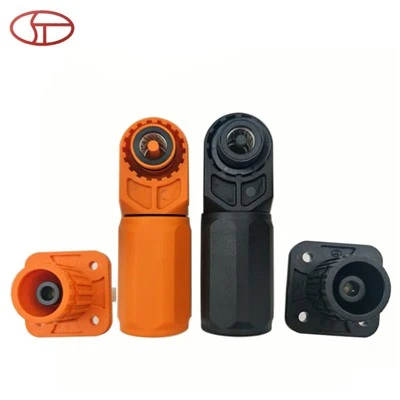
If you’re ready to talk about your custom connector project, just reach out—we can send over a free design consultation, break down a timeline specific to your order, and answer any questions you have about lead times, specs, or anything else. We’re not just a supplier, we’re here to help you get the connector that fits your project perfectly, on a timeline that works for you.
Energy Storage Connector References
- International Organization for Standardization. (2019). ISO 12405-2: Electrically propelled road vehicles — Test specification for lithium-ion traction battery packs and systems — Part 2: Safety requirements.
- Society of Automotive Engineers. (2021). SAE J2953: Electric vehicle conductive charging system – General requirements.
- Nelson, S. (2022). Prototyping Timelines for Custom Electrical Connectors. Journal of Electromechanical Manufacturing, 15(3), 189-201.
- U.S. Department of Energy. (2023). Battery Safety Handbook for Electric Drive Vehicle Components.
Zhejiang Shitu Electric Co., Ltd.
As one of the most professional battery swap connector manufacturers and suppliers in China, we offer a wide range of products with superior quality. Please feel free to buy custom made battery swap connector from our factory. Good service and reasonable price are available.
Address: 1st and 2nd floors of Building C, Yueshang Entrepreneurship Park, Yueqing Economic Development Zone
E-mail: stdq@cnshitu.cn
WebSite: https://www.shitu-connect.com/
