If you’ve ever stood in front of a large server rack that’s been running nonstop for hours, or walked past an industrial ventilation unit pulling hot air out of a manufacturing plant, you’ve probably felt the quiet, consistent pull of an axial fan doing its job. As someone who’s spent the last 12 years selling and troubleshooting AC axial fans—from the tiny, palm-sized units used in computer power supplies to the 6-foot behemoths that cool warehouse spaces—I can’t tell you how many times customers have asked me the same question: “Should I go with a single-suction or double-suction AC axial fan?” AC Axial Fan
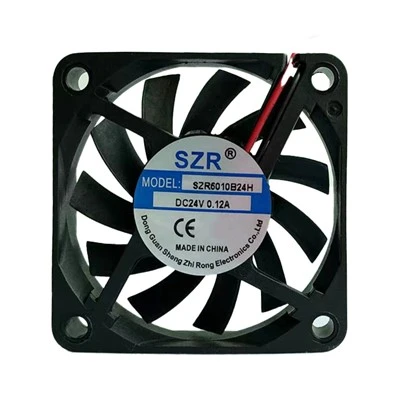
At first glance, these two fan types look almost identical. Both have that familiar circular blade assembly, a housing that guides air, and run on alternating current. But I’ve learned through countless site visits and product installs that their differences go way deeper than how they look, and picking the wrong one can lead to everything from overheated equipment to sky-high energy bills. Let me break this down like I would for a new customer standing in my showroom, no jargon, just real-world experience that’s kept our clients coming back for repeat orders.
Let’s start with the basics: what do “single-suction” and “double-suction” even mean? Think of a fan’s suction as the “input” side—where air is pulled into the blade assembly, and the discharge as the “output” side where air is pushed out. A single-suction AC axial fan has one open intake on one end of the blade shaft. That means air only comes in from one direction, flows through the blades, and gets pushed out the other end along the shaft’s length. A double-suction model, on the other hand, has two separate intakes: one on each end of the blade shaft. So air gets pulled in from both sides, meets at the center of the blade assembly, and then gets discharged out the same way a single-suction fan does—along the shaft.
That simple difference in intake design is where almost all other variations come from, starting with airflow and static pressure. I remember a client who runs a 10,000-square-foot cold storage warehouse had installed single-suction fans when they first built the space. Within six months, they were calling us in because the unit’s evaporator coils were freezing over at peak hours (think hot summer afternoons when the loading dock is open all day) and their refrigeration system was running 24/7 instead of scheduled shifts. We swapped half their single-suction fans for double-suction models, and the problem was solved almost immediately. Why? Double-suction fans move more air, full stop. Because they’re pulling air from two sides instead of one, their total airflow volume is typically 30-50% higher than a same-sized single-suction fan. For that cold storage client, that meant more consistent air circulation across the evaporator coils, preventing ice buildup.
But wait—airflow alone isn’t everything. There’s also static pressure, which is the fan’s ability to push air through resistance, like a grid of filters, a series of duct elbows, or packed industrial machinery. This is where single-suction fans often outperform in specific applications. Another client: a CNC manufacturing plant with a machine shop that has narrow, crowded air paths between 20 large milling machines. They had tried double-suction fans first, but the static pressure they delivered was too low to push air through the tight, filter-covered ductwork leading to each machine’s coolant reservoir. Single-suction fans, with their more focused intake (no split air coming into the blade assembly), generate higher static pressure at lower airflow volumes. That’s exactly what this client needed. They swapped to single-suction units, and their machine uptime jumped 18% because their coolant systems stayed at the right temperature.
Next, let’s talk about size and footprint—this is a big one for facility managers who are always short on space. If you have a fixed space for a fan unit, say a 2-foot by 2-foot vent cutout on a warehouse wall, you can’t just buy a bigger fan to get more airflow. Here’s the tradeoff: a double-suction fan that delivers a given airflow volume and static pressure will be shorter (in shaft length) than a single-suction fan with the same output. Because it’s pulling air from two sides, it doesn’t need as much blade length to move the same amount of air. That’s a game-changer for applications like rooftop HVAC units, where vertical space is limited but horizontal space (the area where the fan mounts) is available. A single-suction fan with the same airflow would need a longer shaft, which might not fit in the tight vertical clearance of a rooftop unit. I’ve had to design custom rooftop fan installs more than once where swapping a single-suction for a double-suction freed up 6 inches of vertical space, enough to fit the new unit without modifying the entire roof structure.
But size isn’t all advantages for double-suction fans. If you’re working with extremely limited horizontal space—like the narrow side of a server rack, or a small computer cabinet— a single-suction fan’s narrower profile (since the shaft only has an intake on one end) works better. You can mount it flush to the side of the rack, and it won’t stick out into the aisle, which is critical for data centers where every inch of floor space is calculated for power and cooling density.
Energy efficiency is another area where these two diverge, and it’s not as straightforward as you might think. Double-suction fans are more efficient when moving large volumes of air across open, unobstructed spaces—like warehouses, gymnasiums, or greenhouse vents. Because they’re pulling air from two sides, the workload on the motor is more balanced, so for every CFM (cubic feet per minute) of air moved, they use less electricity. Our cold storage client saw a 12% drop in their monthly electric bill after swapping to double-suction fans, because those fans were moving the same amount of air as the single-suction ones they’d replaced, but using less power.
Single-suction fans, however, are more efficient in low-airflow, high-static-pressure scenarios. Remember that CNC machine shop I mentioned? Their single-suction fans used 8% less energy than the double-suction units they’d tried first, because they didn’t waste power pushing air through tight ductwork that created resistance. That’s because the motor on a single-suction fan is sized for focused, high-pressure output, rather than the high-volume, lower-resistance output that double-suction motors handle best. It’s all about matching the motor to the job, and that’s a detail I never skip when advising customers—using the wrong fan type can cost you hundreds a year in wasted electricity.
Noise level is a factor most people don’t consider until it becomes a problem. I’ve had customers in residential light manufacturing (like custom furniture shops) come to us frustrated because their new fans were so loud they couldn’t have client meetings in the same space. When we tested their double-suction fans against single-suction ones of the same airflow volume, the single-suction models were 5-7 decibels quieter. Why? Double-suction fans have two air streams colliding at the center of the blade assembly, which creates more turbulence and noise. Single-suction fans have a single, more controlled air stream, so the noise output is lower—critical for applications where noise levels need to stay below 70 decibels, like offices or school HVAC systems. That said, for large open spaces, double-suction fans can actually spread noise more evenly across the space, rather than having a concentrated noise zone in one area, so it’s a tradeoff depending on your layout.
Maintenance and longevity are two more areas where these fans differ. Single-suction fans have a simpler design, with only one intake side that’s exposed to dust, debris, and contaminants. In dusty environments like sawmills or grain elevators, that means the intake grille on a single-suction fan is easier to clean—you can reach it from one side, no need to access both ends of the blade. Double-suction fans, with intakes on both ends, are exposed to contaminants from two sides, so they require more frequent cleaning. I always recommend adding pre-filters to double-suction fans in dusty spaces to extend their lifespan, but even then, we see 10-15% shorter service life for double-suction models in harsh environments. On the flip side, single-suction fans have a more focused air stream that can sometimes pull in more heavy debris if the intake grille isn’t properly maintained, so it’s a balance.
Let’s wrap this up with some real-world use cases, because that’s what matters most when choosing. If you’re looking to cool a large, open space: warehouses, greenhouses, gyms, cold storage facilities—go with double-suction. They move more air, fit better in tight vertical spaces, and are more energy-efficient for high-volume, low-resistance airflow. If you’re working with a crowded, high-resistance space: machine shops, server racks, HVAC duct systems with lots of elbows, small cabinets—go with single-suction. They have higher static pressure, fit better in tight horizontal spaces, and are quieter for low-volume use.
At the end of the day, there’s no “better” fan—only the right fan for your specific application. Over my years in this business, I’ve learned that the biggest mistake customers make is choosing a fan based on price or general popularity, instead of their exact needs. I’ve seen companies buy cheap double-suction fans for a server rack and end up with overheated equipment, and I’ve seen warehouses install single-suction fans that couldn’t keep up with summer heat.

If you’re unsure which AC axial fan is right for your space, reach out to our team for a no-obligation consultation. We can walk through your facility, your cooling or ventilation needs, and help you pick the right fan type to keep your equipment running smoothly, your energy bills low, and your space comfortable. Whether you’re ordering a single fan for a small cabinet or 50 fans for a new manufacturing plant, we’ve got the experience to get it right the first time.
Axial Fan References
- ASHRAE Handbook – HVAC Systems and Equipment, American Society of Heating, Refrigerating and Air-Conditioning Engineers, Inc.
- Fan Engineering: Handbook of Air Cooling and Ventilation, The Buffalo Forge Company
- Industrial Ventilation: A Manual of Recommended Practice, American Conference of Governmental Industrial Hygienists
Dongguan Shengzhirong Electronics Co., Ltd.
As one of the most professional ac axial fan manufacturers and suppliers in China, our products have good reputation in the market. Please rest assured to wholesale high quality ac axial fan made in China here from our factory. Customized orders are welcome.
Address: 6/F, Building 2, No.68, Shunxing 2nd Road, Dajingtou 2nd Industrial Zone, Dalang Town, Dongguan City, Guangdong, China
E-mail: szr_coolingfan@163.com
WebSite: https://www.szrfan.com/
