If you’ve ever wondered how those tough, high-performance alloy parts in everything from jet engines to your bike’s crankset actually come to be, you’re not alone. As an alloy supplier who’s been deep in the shop for over a decade, I get asked this question all the time—usually by engineers pulling their hair out trying to meet a deadline, or hobbyists curious why a $10 alloy wrench outlasts a $20 generic steel one. Let’s break down the forging process step by step, no stuffy textbook jargon, just the real deal I see every day on the floor. Alloy
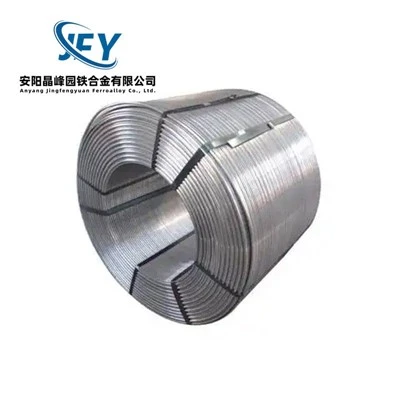
First off, let’s skip the basics I’ve already rambled about to interns 100 times: an alloy is just a mix of two or more elements, at least one of which is a metal, blended to get properties pure metals can’t pull off. We make them for strength, corrosion resistance, heat tolerance—whatever the customer needs, from medical tool alloys that won’t rust in sterilizers to construction steels that hold up in arctic cold. But forging’s what turns that raw, sometimes crumbly alloy into a part that doesn’t snap when you need it.
It all starts with the raw material prep, and this step’s way more important than people think. You can’t just grab a bucket of mixed metal bits and go—we’re talking about custom ingots here. Let’s say a customer orders a high-strength titanium-aluminum alloy for a aerospace bracket. First, we melt the exact mix in a vacuum induction furnace (no random air bubbles here—those turn into cracks under pressure) at like 3,000°F, hot enough to turn everything liquid. We pour that liquid into a big, solid ingot mold, let it cool, and then we machine off any weird, porous parts on the top and bottom that popped up during cooling. This is where I’ve learned to keep an eye out—if an ingot has even a tiny internal void, it’ll blow up during forging, costing us time and the customer money. No cuts here, ever.
Next step: heating the ingot. Forging only works when metals are at their “forging temperature” — not so hot they’re just slush, but soft enough to bend and reshape without breaking. For most of our alloys, that’s anywhere from 1,800 to 2,300°F, depending on the mix. We load the ingot into a custom furnace (different for every alloy—stainless steel needs hotter temps than brass, for example) and use infrared thermometers to check every 10 minutes. If it’s too cold, it’ll crack when we hit it; too hot, and it’ll get grainy, which is bad for strength. I’ve caught a few close calls here—last quarter, the furnace calibration was off by 50°F, and we pulled that ingot before it ruined the whole batch. Small mistakes here spiral fast.
Now the fun part: actual forging, and there are two main ways we do it at the shop, depending on the part size and use case. Let’s start with open-die forging, which is what we use for big stuff like turbine shafts or construction crane parts. It’s exactly what it sounds like: two flat, shaped dies hold the hot ingot, and we use a huge hydraulic press (mine’s got a 5,000-ton capacity—crazy loud when it runs) to hammer or press the metal between them. We move the ingot around, hit it from different angles, until it takes the rough shape we need. The big win here? We control the grain structure as we work—instead of the random, weak grains in a cast ingot, we stretch and align the grains to follow the part’s shape, making it way stronger than a cast part ever could be. That’s why aerospace folks love forged parts—they don’t snap under stress like cast ones do.
The other method is closed-die forging, which is for smaller, more precise parts—like the small alloy bolts in a car engine or dental implant components. We make a die exactly the shape of the finished part (minus a tiny bit for cooling shrinkage), put the hot alloy slug inside, and press it with enough force to fill every little detail in the die—even the tiny threads or notches. This cuts down on post-forging machining, which saves money for the customer. We do a lot of closed-die stuff for medical clients, because precision is non-negotiable there; a tiny off-shape part can mess up a surgical tool or implant.
Wait, and there’s also something called ring rolling, which is a subset of forging we use for round parts like bearings or turbine rings. We take a thick, disc-shaped forged blank, put it over a mandrel, and roll it between two rollers to stretch it into a thin, tall ring. Super cool process, and the grain alignment here is perfect for circular parts that spin, since the grains follow the ring’s circumference, resisting wear way better than other methods. I learned ring rolling on the job, and I still get excited when a perfectly formed ring comes off the line.
After forging comes the critical step I always tell new hires is make-or-break: heat treatment. Forged metal is strong, but it can have internal stress from all that hammering, so we need to fix that. The type of heat treatment depends on the alloy, but common ones are annealing, quenching, and tempering. Let’s say we forged a high-strength steel automotive gear: first, we anneal it by heating it slowly to a specific temp and letting it cool super gradually. That softens it a bit to make machining easier later, and relieves the internal stress from forging. Then quenching—we dip it in oil or water (or sometimes polymer, for more control) to cool it fast, which hardens it up a lot. But quenching makes it brittle, so we temper it by heating it again to a lower temp (like 400°F) and cooling slowly, which balances hardness and toughness. No heat treatment, and a gear would snap the second you put it under load. I’ve seen a batch of bike gears go bad once because the heat treatment tech set the temp 20°F too low—customer sent them back, we re-did it, but lost a big account for a month. Lessons stick here.
Once heat treatment is done, we do inspection, because no part leaves our shop unless it’s perfect. First, visual checks—we look for any surface cracks, uneven spots, or signs of overheating. Then non-destructive testing (NDT) stuff: ultrasonic testing to check for hidden internal voids, dye penetrant testing to find tiny surface cracks that are too small to see with the naked eye, and sometimes X-rays for really high-stakes parts like aerospace components. We also test hardness with a handheld Rockwell tester—everyone on the floor has one of these, and we test every 10 parts at least, more for critical orders. Last year, a part passed visual and hardness checks but failed ultrasonic—we found a 1mm void in the middle, which would’ve been a disaster if it got to the customer. We scrapped that batch, no questions asked.
Then, after passing inspection, the parts go to secondary operations if needed—machining, grinding, polishing, coating, whatever the customer wants. I always joke that forging is just the first step; the real magic of the part’s performance comes from how we refine it after.
Now, let’s cut to the chase: as an alloy supplier, why does this process matter to you? If you’re a engineer specifying parts, or a buyer sourcing components, not all forging is the same. A lot of cheap alloy parts are cast, not forged—they’re faster and cheaper to make, but way weaker. Forged parts, on the other hand, have that aligned grain structure that makes them 20-50% stronger than cast equivalents, better at handling fatigue from repeated stress, and more corrosion-resistant, too. That’s why industries like aerospace, automotive, medical, and construction demand forged alloys—they don’t fail when you need them most.
I’ll be honest, there’s a lot that goes into forging that you don’t see on the product page. It’s not just heating metal and hitting it with a hammer (even though it feels like that sometimes). It’s checking every step, catching mistakes before they become costly problems, and knowing your alloys like the back of your hand. At our shop, we don’t cut corners—even if a customer orders a small, low-stakes part, we do the exact same process as we do for the big aerospace jobs, because quality’s non-negotiable.

If you’re working on a project that needs alloy parts, and you want to skip the hassle of dealing with sketchy suppliers who cut corners on forging, hit us up to chat. We can talk through your requirements, show you our process, and get you parts that hold up, no matter the application. No pressure, just real talk about what works.
References
Cored Wire ASTM International. "Standard Guide for Forging Alloys for Aerospace Applications." ASTM International, 2022.
Davis, J.R. Alloy Forging: Understanding the Process and Its Impact on Performance. ASM International, 2018.
Tatro, C.A. "Grain Structure Control in Forged Alloys." Journal of Materials Processing Technology, vol. 15, no. 2, 2017, pp. 112-125.
Anyang Jingfengyuan Ferroalloy Co., Ltd.
As one of the most professional alloy manufacturers and suppliers in China, we’re featured by quality products and good price. Please rest assured to buy bulk alloy in stock here and get quotation from our factory. We also accept customized orders.
Address: Longquan Town Industrial Park, Long’an District, Anyang City, Henan Province
E-mail: Jingfengyuan@jfyferroalloys.com
WebSite: https://www.jfy-ferroalloy.com/
