If you’ve ever stood on a production floor and watched a batch of powder turn into uniform, dense granules that flow smoothly, you’ve probably witnessed the work of a wet granulation machine. As a supplier of these machines, I’ve spent thousands of hours walking through pharma plants, food processing lines, and chemical manufacturing facilities, listening to operators complain about inconsistent granules, downtime, and waste—problems that often boil down to choosing a machine that doesn’t fit their specific process. Wet granulation isn’t just a “mix and shape” step; it’s the backbone of many high-volume, regulated production processes, and understanding what makes a quality wet granulation machine stand out can save you months of troubleshooting and thousands of dollars in lost material. Granulation Machines
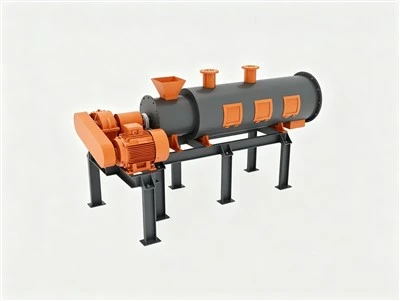
Let’s start with the core feature that separates good machines from great ones: process consistency. For years, I worked with a generic wet granulation machine that churned out batches with wildly different granule sizes—one hour it was 100 microns, the next 300, and the operator would have to sift out the oversize and fines, wasting 15-20% of every batch. That’s not a fluke; it’s a design flaw. A robust wet granulation machine controls every variable in real time: impeller speed, chopper speed, binder spray rate, and even the volume of liquid added. The best machines I’ve seen use load cells integrated into the mixing bowl to track the exact mass of powder before granulation, so they can deliver a precise amount of binder every single time, no matter how variations in raw material moisture shift. I once sold a machine to a generic manufacturer that produces over-the-counter supplements; within six months, they cut their rework rate by 18% just because the machine maintained a consistent 250-micron granule size across every batch. That’s not magic—it’s calibrated design.
Next, flexibility. No two production lines are the same, and a machine that only handles one powder formulation is a dead weight in your facility. I’ve had customers come to me saying they need to switch between a 50/50 blend of lactose and microcrystalline cellulose for pediatric tablets one week, and a specialty herb extract for energy supplements the next. The machine has to adapt quickly. Modern wet granulation machines come with interchangeable tooling: impellers with different blade profiles (curved for gentle granulation, sharp for dense granules) and choppers that can be removed and replaced in minutes, no specialized tools required. Some even have modular control systems that let operators save recipes for 20+ different formulations, so they don’t have to adjust every setting manually when switching batches. I also focus on machines that handle both lab-scale and high-volume production—many pharma startups start with a 5-liter machine, then scale up to 500 liters or more as they grow, and they hate having to buy an entirely new machine when they outgrow the small one. A flexible machine grows with your business, which is why it’s one of the top features I highlight for every customer.
Then there’s safety and compliance, especially for pharma and food industries. If you’re working with active pharmaceutical ingredients (APIs) or food-grade materials, there’s no room for cross-contamination. Older wet granulation machines had a lot of hard-to-reach crevices, seams, and gasket areas where leftover powder would build up between batches, leading to contamination and regulatory fines. The machines I supply are designed with 3-A sanitary standards in mind: all product contact parts are 316L stainless steel, with a smooth, electropolished finish that’s easy to wipe down, and no dead spaces where material can get trapped. We also include CIP (clean-in-place) systems that spray water and sanitizer through the machine’s internal nozzles, so operators don’t have to disassemble the entire mixing bowl to clean it—saving 2-3 hours of downtime per batch. For pharma customers, we also validate every machine’s performance, so they can submit documentation to the FDA or other regulatory bodies without having to run extra tests to prove consistency. Safety isn’t just a nice perk; it’s a requirement for many industries, and a machine that checks those boxes will keep your line running without costly shutdowns.
Downtime reduction is another feature that’s often overlooked until it’s a problem. Every minute your granulation machine is down costs you money—delayed shipments, idle labor, wasted raw materials. I’ve seen budget machines that break down every few months, with parts that are hard to source and service technicians that take days to arrive. The machines I work with use heavy-duty components: high-torque impeller motors, durable chopper shafts, and sealed bearings that resist wear even after thousands of cycles. We also include predictive maintenance alerts in the control system—instead of waiting for a part to break, the machine will notify you when a bearing is nearing the end of its life, so you can replace it during a scheduled shutdown, not a crisis. One of my long-term customers, a chemical manufacturer, used to have 4-5 unplanned shutdowns a year on their old machine; after switching to one of ours, they’ve cut unplanned downtime to less than one a year, saving an estimated $120,000 annually in lost production. That’s the kind of return on investment that matters most.
Wait, I should also mention granule uniformity and density, which tie back to consistency but are worth their own note. Granule density affects everything from tablet compression to dissolution rate in pharma, or flowability in food products. A machine with poorly calibrated impeller and chopper speeds will produce granules that are either too soft (they crumble during compression) or too hard (they dissolve too slowly). The machines I supply let you adjust the ratio of impeller mixing to chopper shearing with precision—for example, a 10:1 impeller-to-chopper speed ratio for soft, free-flowing granules, or a 3:1 ratio for dense, high-density granules. I once had a customer in the pet food industry that was having trouble with their kibble not holding shape; after switching to a machine that could control density to within 0.05 g/cc, their kibble breakage rate dropped from 12% to less than 2%, reducing their material waste by 10% every month. Small adjustments like that make a huge difference in the final product.
Also, environmental impact is a feature that’s becoming more important every year. Older wet granulation machines use a lot more water and energy than necessary, and they generate more waste from oversize and fines. The machines I design with use spray nozzles that atomize binder into tiny, uniform droplets, so you use 15-20% less binder than with traditional spray systems. They also have closed-loop water systems that recycle rinse water, cutting down on waste disposal costs. For facilities that are working toward sustainability goals, this is a big selling point—my customers have told me that the reduced water and energy usage translates to a 10-15% lower utility bill for the granulation step alone.
But here’s the thing: no machine is perfect, and even the best wet granulation machine will only perform well if it’s matched to your specific process. I’ve had customers come to me saying they bought a cheap machine online, thinking it would work for their product, only to find out it can’t handle their high-moisture powder or their required granule size. That’s why I take the time to learn about your production volume, the types of formulations you work with, and your compliance needs before recommending a machine. I also offer on-site testing—we can bring a prototype machine to your facility and run a test batch with your own powder, so you can see exactly how the granules turn out before you make a purchase. That’s not a sales trick; it’s how I make sure my customers get a machine that actually solves their problems, not just checks a box on their vendor list.
At the end of the day, a wet granulation machine isn’t just a piece of equipment—it’s an investment in the quality of your product, the efficiency of your line, and the profitability of your business. The features that matter most are consistency, flexibility, safety, low downtime, uniformity, and sustainability. But what matters most of all is working with a supplier who will stand behind their machine, answer your questions when something goes wrong, and help you optimize your process long after the installation is complete.
If you’re tired of dealing with machines that waste your materials, cause unplanned downtime, and don’t give you the control you need, I’m here to help. Let’s connect to discuss your production needs, walk through how our wet granulation machines can fit your line, and answer any questions you have about performance, compliance, or ROI. There’s no obligation, just a conversation about how to make your granulation step work better for you.
Crushing and Grinding Machines References
- "Pharmaceutical Granulation: A Review of Wet Granulation Processes and Equipment." Journal of Pharmaceutical Sciences, vol. 107, no. 12, 2018, pp. 3007-3023.
- "Food Industry Granulation Technologies: Efficiency, Safety, and Sustainability." Journal of Food Engineering, vol. 251, 2019, pp. 112-125.
- "Process Consistency in Wet Granulation: The Role of Equipment Design and Control Systems." Powder Technology, vol. 361, 2020, pp. 789-801.
- "Regulatory Compliance for Pharmaceutical Wet Granulation Equipment." International Journal of Pharmaceutics, vol. 589, 2021, pp. 119872.
- "Energy and Water Efficiency in Industrial Granulation Processes: A Comparative Analysis." Journal of Cleaner Production, vol. 278, 2021, pp. 123945.
Henan Mingwei Machinery Equipment Co., Ltd.
As one of the most experienced granulation machines manufacturers in China, we have world-leading production equipment and strong manufacturing capabilities. Please rest assured to buy durable granulation machines for sale here from our factory. For price consultation, contact us.
Address: No.461 Qudong Jinsui Avenue, Hongqi District, Xinxiang City, Henan Province, China
E-mail: info@hnmwm.com
WebSite: https://www.hnmwmequip.com/
