If you’ve ever spent an afternoon fixing a leaky faucet, replaced a toilet fill valve, or untangled a dripping pipe under your kitchen sink, you’ve probably interacted with an O ring without even realizing it. As someone who’s been supplying precision O rings for plumbing systems for over a decade, I get asked this question all the time: “Are O rings really used in plumbing?” The short answer is yes—they’re one of the most unsung heroes of residential and commercial plumbing, working quietly to stop leaks, withstand constant water pressure, and keep whole systems running smoothly. Let’s break down why they matter, how they’re used, and why the right O ring can make or break a plumbing job. O Ring
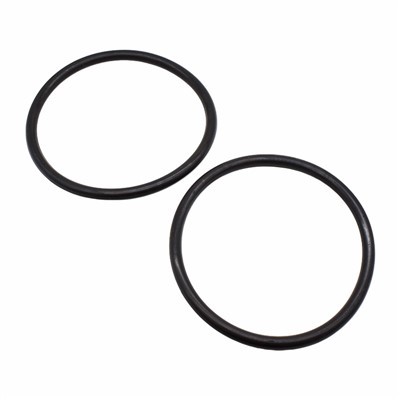
First, let’s start with the basics: what an O ring even is, in case you’re new to the trade. An O ring is a simple, round, torus-shaped elastomer seal designed to fit into a groove between two mating parts. When compressed, it fills the gap between those parts, creating a barrier that prevents fluid (in this case, water, wastewater, or even gas) from leaking out, and keeps external contaminants from getting in. For plumbing, that’s non-negotiable—you don’t want water seeping where it shouldn’t, and you definitely don’t want dirt, mold, or bacteria creeping into your pipes from outside.
Now, why are O rings the go-to for plumbing instead of other types of seals? Let’s compare for a second. Gaskets work well for flat, static surfaces, but they can’t handle the constant small movements in plumbing parts—like when you turn a faucet handle, or a toilet tank refills and pushes against the seal. Packing glands work for rotating parts, but they require regular lubrication and wear out faster in high-moisture environments. O rings, though? They’re versatile, easy to install, cost-effective, and can be made from materials tailored to exact plumbing needs. That last part is key—plumbing environments vary wildly, so O ring suppliers have to deliver options that match.
Let’s get into the specific plumbing applications where O rings are the backbone. Start with faucets, the most common place people encounter O rings. A standard single-handle kitchen faucet has at least two O rings: one under the spout base (that keeps water from dripping up around the spout when it’s turned on) and another inside the cartridge, where water splits into hot and cold. Many old-style compression faucets have a washer at the base of the stem, but a worn stem O ring is often the culprit behind that annoying drip-drip-drip from the spout when the faucet is off. I’ve seen plumbers replace a worn O ring on a 10-year-old faucet in 5 minutes, saving a customer from calling a handyman or replacing the whole fixture—something they’d never have noticed if they didn’t know to check those small seals.
Next, toilets. Toilet leaks aren’t just annoying; a running toilet can waste hundreds of gallons of water a month, and the most common fix is an O ring. The flush valve between the toilet tank and bowl has a large rubber O ring that seals when you flush—if that O ring gets warped or cracked, water will seep from the tank into the bowl nonstop. I’ve also had commercial accounts reach out for heavy-duty O rings for toilet flush valves in office buildings, where high traffic means the seal is compressed hundreds of times a day. A generic O ring won’t hold up there; that’s why material selection matters so much.
Then there’s pipe fittings and connections. Threaded pipes, whether for copper, PEX, or PVC, rely on O rings in compression fittings to create a watertight seal. Unlike threaded joints that use pipe tape, a compression fitting uses a metal nut to compress a rubber O ring between the pipe end and the fitting body. This creates a tighter seal, is easier to install for DIYers, and holds up better to temperature changes than thread tape alone. For underground plumbing lines, we also supply O rings for coupling seals that connect pipe segments under concrete or soil—those have to withstand constant pressure, temperature swings, and even occasional ground movement, so we use a rigid yet flexible nitrile rubber for those.
What about water heaters? Yep, even those have O rings. The anode rod (which extends the life of your water heater’s tank) has an O ring at its base that seals the top of the heater so water doesn’t leak out when the anode is screwed in. If that O ring goes bad, you’ll get a slow leak around the top of your water heater that’s easy to miss until it’s caused water damage. We supply O rings specifically sized for standard water heater anode rods, which is a small but high-demand part for both plumbers and homeowners doing their own maintenance.
Now, here’s a mistake a lot of people make (and I see it every day as a supplier): using the wrong O ring material for a plumbing job. Elastomers aren’t one-size-fits-all, and choosing the wrong one can lead to fast failure, leaks, or even health issues. For potable water applications (drinking water lines), O rings have to meet strict standards—like NSF/ANSI 61 certification, which means they don’t leach harmful chemicals into water. That’s a big deal for residential plumbing, where O rings in faucet cartridges or water lines come into direct contact with drinking water. If a plumber uses a non-certified O ring for a potable water line, that’s not just a leak risk—it’s a health risk.
Then there’s temperature and chemical resistance. Hot water lines, for example, need O rings that can handle temperatures up to 200°F or higher, which is way too hot for some soft, generic rubber O rings. For commercial kitchens or industrial plumbing, pipes might carry hot water or even mild chemicals like bleach or dish soap, so we supply EPDM O rings that resist degradation from those chemicals. For outdoor plumbing, which faces freezing temperatures, UV exposure, and rain, we use neoprene O rings that stay flexible in cold weather and don’t break down from sun exposure. A lot of cheap O rings sold at big box stores are made from material that can’t handle these extremes, which is why plumbers often come to us for precision-made, application-specific O rings instead of grabbing the “universal” ones from the shelf.
I want to stress something here: O rings might seem tiny, but their impact on plumbing systems is enormous. A single faulty O ring can cause a drip that wastes 300 gallons of water a month (that’s enough to fill a small pool), a toilet leak that rots a subfloor, or a pipe connection failure that floods an entire first floor. As a supplier, I don’t just send O rings out the door—we work with plumbers, maintenance teams, and homeowners to pick the right size and material for their specific job. Last year, we had a commercial plumber reach out because he was dealing with recurring leaks in a 20-story office building’s plumbing; he’d been using standard O rings for all the flush valves, but they were cracking every 6 months from the repeated pressure. We supplied a heavy-duty Buna-N O ring with higher durometer (hardness) that’s designed for high-cycle applications, and he hasn’t had a leak in that building since. That’s the difference between a generic seal and a precision O ring made for plumbing.
Another common question: do O rings work for all plumbing, or just residential? Absolutely not. We supply O rings for municipal water systems, where pipe couplings and meter connections rely on seals that can handle city water pressure and exposure to chlorine. We also work with RV and marine plumbing, which face even harsher conditions—constant exposure to saltwater, temperature swings, and vibration. For marine plumbing, we have O rings made from silicone that resists saltwater corrosion and stays flexible in cold ocean temperatures. No matter the plumbing setting, O rings are a core component.
Now, if you’re a homeowner tackling a DIY plumbing project, or a plumber stocking up for a big job, choosing the right O ring matters more than you think. Measure the groove in your fitting—too small, and it won’t compress enough to seal; too big, and it’ll bulge out and get pinched when you tighten the connection. Check for certification: if it’s for potable water, make sure it’s NSF-listed. And match the material to the environment: neoprene for outdoor, EPDM for hot water, nitrile for general pressure applications.
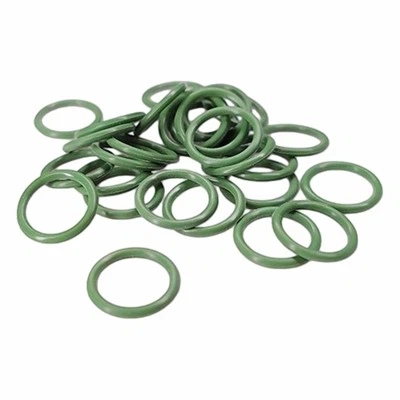
At the end of the day, O rings are the unsung foundation of plumbing systems. They’re not flashy like a new faucet or a high-efficiency toilet, but they’re the reason your sink doesn’t drip, your toilet doesn’t run, and your pipes don’t leak. If you’re working on a plumbing project and need the right O ring for your application, don’t settle for generic parts. Reach out to us to discuss your needs—whether you’re a DIYer replacing a faucet O ring, a plumber outfitting a commercial job, or a facility manager maintaining a multi-building system, we have the precision O rings tailored to your plumbing requirements.
Injection Molded Rubber Parts References
- American Society of Plumbing Engineers (ASPE). 2022. Plumbing Engineering Design Handbook, Volume 2: Pumps, Piping, and Equipment. ASPE Press.
- NSF International. 2021. Standard 61: Drinking Water System Components – Health Effects. NSF International.
- Rubber Manufacturers Association (RMA). 2020. Elastomer Seals for Plumbing Applications: Material Selection and Performance Guidelines. RMA Technical Bulletin.
- International Association of Plumbing and Mechanical Officials (IAPMO). 2021. Uniform Plumbing Code, Chapter 7: Pipe Systems and Fittings. IAPMO.
Haining Chaoyue Seals Co., Ltd.
As one of the most professional o ring manufacturers and suppliers in China, we offer a wide range of products with superior quality. Please feel free to wholesale high quality o ring made in China here from our factory. Also, custom service is available.
Address: Building 9, 158 Lianhong Road, Yuanhua Town, Jiaxing, Zhejiang, China.
E-mail: chaoyue@cyseals.com
WebSite: https://www.hncyseal.com/
