Hey there, if you’re deep in the market for micro gear pumps (or already have one on your workbench), you know that picking the right mounting option isn’t just a “nice-to-have”—it’s make-or-break for how your pump performs, how long it lasts, and even how easy it is to integrate into your machine. As a micro gear pump supplier, I’ve seen way too many projects derail because someone grabbed a random mounting bracket without thinking through their specific use case, so let’s break this down like we’re geeking out over a part we both work with. Micro Gear Pump
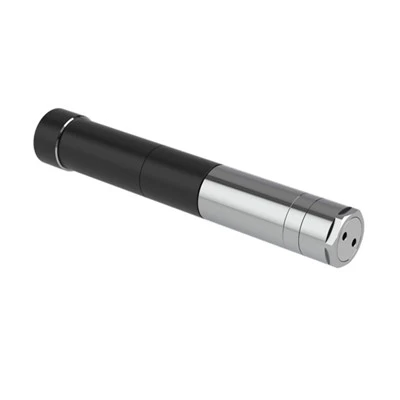
First, let’s start with what a micro gear pump’s mounting actually does, ‘cause it’s not just holding the pump in place. Micro gear pumps are tiny—we’re talking from 0.1 cc/rev up to like 10 cc/rev for most standard models, so they’re super sensitive to vibration, misalignment, and heat. If your mounting is loose, those tiny internal gears can wobble, cause premature wear, and even throw off flow rate accuracy (big problem if you’re dosing chemicals or moving lab samples). It also has to handle whatever connects to the pump: motors, tubing, pressure lines. Mess up the mounting, and you’ll be replacing seals more often than you’d like.
Now, the mounting options I see most folks asking about, and which ones actually work best for different jobs. Let’s dive in.
First up: Foot Mounting. This is the most common one for general-purpose micro gear pumps, right? It’s two little feet with bolt holes on the pump’s base, so you just drill two holes in your machine’s chassis, drop the pump in, and bolt it down. Super straightforward, cheap, easy to adjust if you mess up alignment. But wait—when is this actually a good fit? If your pump’s going in a stationary setup, like a lab analyzer or a small industrial dosing skid where vibration’s low, foot mounting works great. I’ve had a customer who uses our 2 cc/rev micro gear pump for fertilizer dosing in a small hydroponics system, and foot mounting’s perfect there—they bolt it to a plastic frame that’s sitting on a shelf, no issues after 2 years. But here’s the catch: if your machine has a lot of moving parts, or if the pump’s near a motor that vibrates a ton, foot mounting can let the pump shift. You’ve gotta use lock washers, not just regular ones, and make sure the bolt pattern matches exactly—we see so many people trying to force a bolt into a mismatched hole, and that’s a quick way to crack the pump’s aluminum housing.
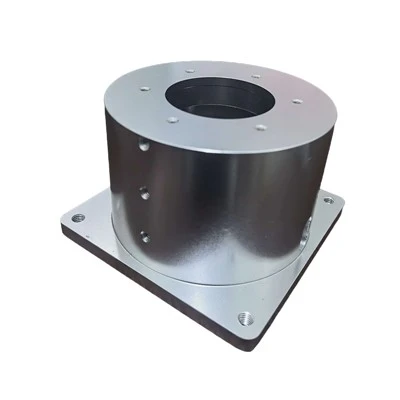
Next: Flange Mounting. This is the beefier cousin of foot mounting—instead of two small feet, there’s a full circular or rectangular flange around the pump’s motor or housing, with multiple bolt holes. Why would you use this? If you need the pump to be super rigid, like in a handheld device or a high-pressure application (we’re talking up to 100 psi for some of our pumps). Flange mounting distributes the load way more evenly, so there’s no chance of the pump tilting, which is huge for micro gears—even a 0.5-degree tilt can cause the gears to rub and wear out fast. I had a customer who makes portable water quality testers; they needed a pump that could withstand being jostled around in a backpack, so we went with a 30 mm flange mount. No issues with misalignment, and the pump hasn’t worn out once in 18 months of field testing. The downside? It’s a bit more work to machine the matching flange on your machine, and it’s more expensive than foot mounting. But if your application needs durability, it’s worth every penny.
Then there’s Inline Mounting. Wait, that’s a little different—inline mounting means you’re integrating the pump directly into the tubing line, instead of bolting it to a separate frame. No brackets, no extra hardware, just slip the pump’s inlet and outlet ports into your tubing (with some barbs or compression fittings, obviously). This is super popular for compact setups, like portable medical devices or small robotic systems where every inch counts. But here’s the thing: inline mounting only works if the pump’s lightweight enough that the tubing doesn’t pull on the ports. Our micro gear pumps are all under 1 lb, so that’s usually fine, but if you’re running high flow rates, the pressure in the tubing can tug on the ports and cause leaks. We recommend using clamp-style fittings for inline mounting, not just glue, so if you need to adjust the pump later, you can. I’ve seen a customer use inline mounting for a portable insulin pump prototype, and it worked perfectly—no extra bulk, and the pump’s small size fit right into the device’s casing.
Wait, there’s also Motorized Mounting, which is when the pump’s mounted directly to its own motor, usually with a coupling instead of a shaft that sticks out. A lot of modern micro gear pumps come pre-assembled like this, so you don’t have to worry about aligning the pump shaft and motor shaft. That’s a game-changer for someone who’s not good at precision alignment—we’ve had so many customers say they used to mess up shaft alignment all the time, but the motorized mount takes care of that. The only thing to watch here is that the motor’s mount is compatible with the pump’s. If you’re using a stepper motor for precise flow control, make sure the motor’s bolt holes match the pump’s motor flange—we include a mount adapter plate for most of our popular motors, so that’s not a headache.
Now, let’s talk about what you absolutely should consider before picking a mounting option, ‘cause one size doesn’t fit all. First, space constraints. If your machine’s tiny (like a lab chip or a wearable device), inline or direct mount is the only way to go. If you’ve got a big industrial skid, foot or flange is fine. Second, vibration and shock. If your pump’s going in a moving vehicle, or a machine that runs at high RPM, flange mounting with rubber gaskets between the pump and the mount is key. The gaskets absorb vibration, so the pump’s internal gears don’t get shaken up. Third, flow accuracy. If you’re dosing chemicals that need to be within 1% accuracy, you can’t have a loose mount causing the pump to shift. Flange mounting’s best here, ‘cause it keeps alignment perfect.
I’ve also had a few weird requests, like a customer who wanted to mount a micro gear pump on a flexible tube for a custom drink machine. That actually worked—they used a hose clamp around the pump’s housing to attach it to a flexible PVC tube, and it held up as long as the pressure was low. But that’s a niche case, not something I’d recommend for most applications.
Another mistake I see all the time is people ignoring the pump’s weight and balance. Micro gear pumps are small, but even a 0.5 lb pump mounted on a thin plastic bracket can cause flex over time. If you’re going with foot mounting, use a bracket that’s at least 1/8 inch thick aluminum, not plastic. Plastic brackets are cheap, but they flex, and flex = misalignment = pump failure.
Wait, should I mention common mounting hardware? Yeah, quick pro tip: use stainless steel bolts, not steel ones. If your pump’s in a wet environment (like a food and beverage machine, or a water tester), steel bolts will rust, and rust particles can get into the fluid you’re moving, which is a big no-no for medical or food applications. We include stainless steel mounting screws with all our pumps, just to save customers that hassle.
Now, let’s circle back to why this matters for you as someone buying a micro gear pump. If you pick the wrong mounting, you might end up with a pump that works for a week, then dies, or gives inconsistent flow. That’s not a problem with the pump itself—it’s a problem with the mount. As a supplier, we don’t just sell pumps; we help you pick the right mount too. We’ve got CAD files for all our mounting brackets and flanges, so you can just download them and machine them to fit your machine, no guesswork.
If you’re not sure which mounting option is right for your project, just reach out—we’ve worked with everything from lab equipment to off-road agricultural tools, and we can point you in the right direction. Don’t waste time messing around with a mount that doesn’t fit, or a pump that’s misaligned before it even starts.
Metal Castings References
- Gear Pump Mounting and Alignment Best Practices, Fluid Power Journal, 2022
- Micro Fluidic System Design Guidelines, Journal of Micromechanics and Microengineering, 2021
- Vibration Effects on Precision Micro Pump Performance, ASME International Mechanical Engineering Congress, 2020
Sanming Hongfeng Machinery Manufacturing Co., Ltd.
As one of the most professional micro gear pump manufacturers and suppliers in China, we’re featured by quality products and good service. Please rest assured to wholesale customized micro gear pump made in China here from our factory. Welcome to contact us for quotation.
Address: No.2 Gaoyuan Industrial Zone, Chenda Town, Sanyuan District, Sanming City, Fujian Province, China
E-mail: smhfjxzsq@163.com
WebSite: https://www.smhfmachinery.com/
