Hey guys, if you’ve ever worked with line laser modules – whether you’re a hobbyist building a project, a engineer setting up industrial alignment, or someone just trying to figure out why your laser line keeps acting up – you’ve probably asked this question at some point: do line laser modules actually need cooling? As a line laser modules supplier, I get this question all the time, and the short answer is… it depends. But the full breakdown? That’s where things get interesting, because skipping the right cooling (or overcooling when you don’t need it) can mess up your laser line’s accuracy, lifespan, and even how well it works day to day. Let’s dive in, no stuffy jargon, just real talk from someone who’s been in the laser game for years. Line Laser Modules
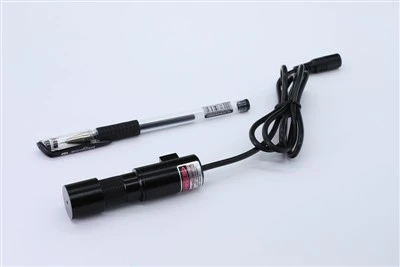
First, let’s keep it simple: what even is a line laser module? For anyone new, it’s basically a laser diode paired with a optical lens that stretches a tiny point laser into a straight, visible line – think the level lines you see on construction sites, the alignment lines on factory assembly lines, or even the lines that make those fun projection games for kids. The core part here is the laser diode, and diodes hate excess heat. That’s the root of the whole cooling question.
So when is cooling non-negotiable? Let’s start with the big ones. If you’re running a high-power line laser module – like anything over 500mW, and especially above 1W – heat stops being a minor nuisance and becomes a critical issue. I see this a lot with industrial clients: they’ll run a 2W line laser 24/7 on a manufacturing line, and if there’s no cooling, that laser dies in a matter of months instead of years. Why? Laser diodes are semiconductors, right? When they run, only part of the electrical energy turns into light; the rest becomes heat. The hotter the diode gets, the less efficient it is – so you end up using more power to get the same line, and eventually the semiconductor materials start breaking down.
Even more than lifespan, heat messes with the line’s accuracy. I had a client last year who was using a 1W line laser for woodworking alignment, and his lines kept drifting by 1-2mm over an hour of use. Turns out he was running it without any cooling, so the diode’s temperature rose 15 degrees, which shifted the lens’s alignment and made the line warp. Once we added a tiny passive heatsink – no fans, just a aluminum block mounted right to the laser’s housing – the drift stopped entirely. That’s the thing: heat doesn’t just kill diodes; it bends the optics, expands the module’s casing, and throws off the precise alignment that makes a line laser useful.
Active cooling (fans, heat sinks with airflow) vs. passive cooling (no fans, just metal heatsinks) – which do you need, and when? Passive is usually enough for lower-power modules, like under 500mW, especially if you’re running them intermittently (like a DIY project, or a one-off alignment job). But if you’re running a high-power module continuously, active cooling is almost always a must. Fans keep air moving away from the module, pulling heat out faster than passive can, which maintains a steady diode temperature.
Wait, but what about low-power modules? Do they ever need cooling? Let’s say you’ve got a 50mW green line laser for a DIY level, and you run it for 10 minutes straight – no cooling needed, right? That’s true, but I’ve seen cases where even low-power modules overheat. If someone’s cramming a tiny 100mW line laser into a tight, enclosed space – like a small robot, or a handheld tool where there’s no room for air flow – even that low power can build up heat over time. I had a maker who was putting a 200mW line laser into a 3D printer extruder cover, and the heat from the extruder was making his laser line dim and wobbly. We suggested a tiny custom heatsink that fit in the tight space, and that fixed it. So it’s not just power – it’s also your operating environment.
Another thing: temperature affects the laser’s color and visibility, especially green lasers. A lot of people don’t know this, but green diodes are actually more sensitive to heat than red or blue ones. Run a green line laser at too high a temp, and that bright 520nm green line you paid for might shift to a yellower, dimmer shade – which makes it way harder to see in bright environments. I can’t tell you how many times I’ve gotten an email from a customer saying “my green laser line used to be bright now it’s washed out” – nine times out of ten, it’s overheating.
Now, let’s talk about the myths. One big one: “more power always needs cooling.” That’s not exactly true. I’ve had a client who was using a 3W line laser for a outdoor projection job, running it for 8 hours a day, and he was able to use a passive heatsink because he was in a cool, shaded area. But if that same 3W module was running in a 90°F warehouse, passive wouldn’t cut it – he’d need a small fan. So it’s a balance between power, runtime, and ambient temperature.
Another myth: cooling means you need bulky, noisy fans. Nope. We make line laser modules with tiny, quiet fans that are almost unnoticeable, or even thermoelectric coolers (TECs) that use no moving parts – great for applications where noise can’t be tolerated, like medical devices or museum exhibits. For passive cooling, we use precision-machined aluminum heatsinks that weigh almost nothing, so they don’t add bulk if you’re working with a portable setup.
What happens if you skip cooling when you need it? Let’s list the real-world consequences, not just theoretical stuff. First, reduced lifespan: laser diodes have a rated lifespan, but that’s usually at a steady 25°C. Every 10°C rise in temperature cuts the lifespan in half. So a diode that would last 10,000 hours at 25°C might only last 1,250 hours at 65°C – that’s a huge difference. Second, line distortion or drift: as we talked about, heat expands the module’s casing and shifts the lens, so your straight line becomes wavy, or it moves out of alignment as the laser warms up. Third, dimmer output: heat reduces the diode’s efficiency, so you might get 30% less laser power when it’s hot, making your line hard to see in bright sunlight or industrial settings. Fourth, total failure: eventually, the semiconductor junctions burn out, and the laser stops working entirely.
Wait, but what if you have a cooling system that’s too big? Is that a problem? Sure, if you’re using a massive heatsink on a tiny 50mW module, you’re adding unnecessary bulk and cost, which doesn’t help anyone. For intermittent use with low power, keeping it simple – no cooling – is better. I always tell customers: match the cooling to your use case, not just the power. If you’re building a portable DIY laser pointer for occasional use, skip the heatsink. If you’re running a 1W module 24/7 on a factory line, invest in proper active cooling.
Let me give you a couple real examples from our clients to make this concrete. First, a construction company we supply line laser modules to: they use 100mW red line lasers for leveling concrete forms, running them 8 hours a day outdoors. We added small passive heatsinks, and they’ve had zero issues with drift or early failure – perfect for their use case, no need for fans. Second, a medical device company that uses 500mW blue line lasers to align surgical tools: they run them continuously in a sterile, enclosed cabinet, so we had to use thermoelectric cooling to keep the diode at a steady 20°C. No fans, no noise, no risk of contaminants getting into the cabinet – exactly what they needed. Third, a robotics company building a warehouse sorting robot that uses 2W line lasers to guide packages: the robot runs 24/7 in a 85°F warehouse, so we fitted it with tiny, quiet fans that keep the diode temperature stable, and their laser lines have stayed accurate for over a year now.
So what’s the takeaway here? Do line laser modules need cooling? It’s not a yes/no answer – it’s a “when, what type, and how much” answer. Let’s break it down into quick rules of thumb:
- If your line laser is under 500mW, used intermittently (less than 2 hours straight), and in a cool, well-ventilated space: cooling is optional, you can skip it.
- If your line laser is over 500mW, run continuously, or used in a hot/enclosed space: you need cooling – either passive (heatsink) for lower high power, or active (fans/TECs) for higher power or tight spaces.
- Green lasers are extra heat-sensitive: if you’re using a green line laser above 200mW, add cooling even if you’re running it intermittently, to keep the line bright and accurate.
Now, as a line laser modules supplier, I’ll be the first to say we don’t push unnecessary cooling on customers. It’s not good for anyone – adding a heatsink adds cost and bulk if you don’t need it. But we also don’t want to see someone waste money on a laser that dies in 6 months because they skipped cooling when they needed it.
If you’re still unsure whether your line laser needs cooling, or you’re worried about how to integrate cooling into your project, hit us up. We work with everyone from hobbyists to large industrial teams, and we can help you pick the right module with the right cooling setup for your specific use case. No one-size-fits-all, no overcomplicating things – just straight advice for whatever you’re building.
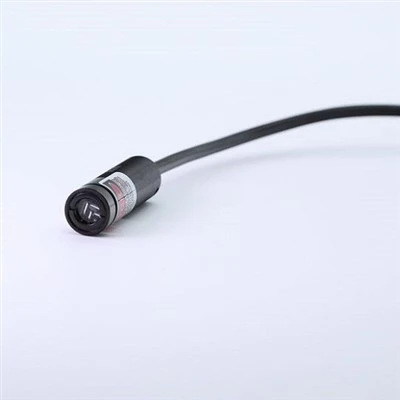
At the end of the day, a line laser is only as good as its ability to put out a straight, stable line when you need it. Heat is the quiet enemy that messes that up, so understanding when to address it is key to getting the most out of your module. Skip the guesswork, match the cooling to your needs, and you’ll have a laser that works as hard as you do.
Parallel Line Laser Modules References:
- Laser Diode Reliability: Effects of Temperature and Current, Laser Focus World, 2022
- Line Laser Alignment: Thermal Impact on Optics, Journal of Precision Engineering and Manufacturing, 2021
- Thermal Management for Low and High Power Laser Modules, International Society of Optics and Photonics (SPIE) Proceedings, 2020
- Green Laser Diode Performance Under Thermal Stress, Optics Express, 2019
Changshu Desheng Optics Electronics Co., Ltd.
As one of the most professional line laser modules manufacturers and suppliers in China, our products have good reputation in the market. Please feel free to buy advanced line laser modules for sale here from our factory. Good service and quality products are available.
Address: 8A, Yineng science and technology industrial park, No.183, Yinhe Road, Southeast Development Zone, Changshu, Jiangsu Province, China.
E-mail: desheng1@dershinelaser.com
WebSite: https://www.ds-lasers.com/
