Hey there! If you’ve ever dabbled in piezoelectric ceramics—whether you’re an engineer building sensors, a hobbyist tinkering with buzzers, or just someone who’s ever wondered how that fancy ultrasonic washer works—you’ve probably heard the terms “active” and “passive” thrown around. At our piezoelectric ceramics shop, we get this question all the time, and honestly, it’s the kind of thing that trips up even folks who’ve been working with piezo parts for years. Let’s break this down like we’re chatting over a coffee (or a stress ball, if you’re in production mode)—no stuffy lab jargon, just the real deal. Piezoelectric Ceramics
First, let’s start with the basics: piezo ceramics are those magical little materials that squeeze and flex when you zap them with electricity, and when you squeeze them, they spit out electricity. That dual effect—the direct (mech to elec) and converse (elec to mech) piezoelectric effect—is what makes them so useful. But here’s where active vs. passive comes in: it’s all about which way they’re using that effect, and what they’re built to do.
Passive piezo ceramics are the workhorses, the ones that just sit there and measure stuff. Wait, let’s rephrase that—they’re not “passive” like they’re lazy; they’re passive in the sense that their main job is to convert mechanical energy into electrical energy, not the other way around. Think about a vibration sensor on a factory motor. If the motor’s vibrating, it’s pushing on the piezo ceramic, right? That mechanical force deforms the crystal structure of the ceramic, and boom—you get a tiny voltage reading. That’s passive piezo 101. We make a ton of these for things like accelerometers, vibration monitors, and even some types of microphones. They’re usually made from lead zirconate titanate (PZT), same as active, but wait—no, not exactly. Passive ones often have a slightly lower “coupling factor,” which just means they’re better at turning mechanical stress into electricity than they are at turning electricity into movement. Why? Because we tune their composition and poling process (that’s the step where we zap them with a strong electric field to align the crystal dipoles) to favor the direct effect. It’s like a radio tuned only to pick up signals, not send them.
Take our most popular passive piezo part, the PZT-5H sensor disc we sell. A lot of our customers use these on conveyor belts to monitor for misalignment—if the belt starts vibrating too much, the disc spits out a voltage spike, and the system shuts down before something breaks. That’s pure passive action. They’re simple, durable, and don’t need a lot of power to work—great for remote sensors where you can’t run a ton of wires. The downside? They’re not great at moving when you apply voltage. If you try to use a passive sensor disc as a buzzer element, it’ll make a super weak sound, almost a mumble. That’s because we didn’t build it to do the converse effect well.
Now, active piezoelectric ceramics—those are the ones that do the opposite: they turn electricity into mechanical movement, and they’re built for that job. Think ultrasonic cleaners, inkjet printer heads, buzzers that are loud enough to hear across a room, and even those tiny motors in camera lenses. These use the converse piezoelectric effect, and their composition is tuned for a higher coupling factor, specifically for movement. Wait, but do they never use the direct effect? Sometimes, but it’s secondary. For example, an ultrasonic transducer for a cleaner: you apply AC voltage to the active piezo, it vibrates at that high frequency (like 40 kHz), and that vibration creates tiny bubbles in the water that scrub your glasses. But if you ever need to calibrate it, you might use the direct effect to measure how much movement it’s making. Still, the main gig is outputting movement, not sensing it.
Our active piezo parts, like the PZT-4 stack actuators, are another top seller. A lot of aerospace customers use these for precise positioning—like adjusting the angle of satellite antennas by just a few microns. When you apply a voltage, the stack expands (or contracts, depending on polarity) super evenly, no wobble, no backlash. That’s the kind of precision you can’t get with a regular motor. Active piezos also tend to have a tighter grain structure and more uniform poling than passive ones, because we need the movement to be consistent every single time. If one area of the ceramic isn’t poled right, the movement will be lopsided, and that’s a problem for a buzzer or an actuator.
Wait, let’s clear up a common mix-up: is it just the shape that makes them active or passive? No, not really. You could take the same PZT composition, cut it into a disc, and turn it into either. If you tune the poling to favor direct effect (sensing), it’s passive. If you tune it for converse (movement), it’s active. Shape matters for performance—like a thin disc is better for high-frequency buzzers, a thick stack is better for high-force actuators—but the core difference is the purpose and how we manufacture them. That’s a question we get a lot, especially from small businesses that are just getting into piezo parts, so it’s good to spell that out.
Another key difference: power needs and output. Passive piezos are low-power devices. They generate their own voltage from mechanical input, so they don’t need a battery or external power supply to work—though you might need a small amplifier to make the signal strong enough for a controller. Active piezos, though, need an external power source. Actuators might need anywhere from 100V to 1000V to get enough movement, and buzzers usually run on 3V or 5V, but still, they’re drawing power. If you try to run an active piezo with a coin battery, it won’t do much—you need that voltage to push the dipoles in the ceramic to move. That’s a big consideration for design: if you’re building a remote sensor, passive is the way to go; if you’re building a device that moves, active is non-negotiable.
Durability and use cases also set them apart. Passive piezos, since they’re just sensing, tend to handle repetitive stress better. A vibration sensor on a factory line might get knocked around every day, but as long as it’s not cracked, it’ll keep working. Active piezos, though, are under more strain—they’re flexing or expanding repeatedly, at high frequencies sometimes. So we make them with thicker, more robust electrodes and sometimes coat them with a protective layer (like epoxy) to keep them from wearing out. That’s why you don’t see active piezos in long-term, high-stress sensing apps as much—they’re built to move, not just sit there.
Let’s talk about a real example to make this concrete. A customer of ours a few months back came in confused: they were trying to build a door access sensor, and their first order was active piezo discs, but they weren’t picking up the vibration of someone tapping the door. Why? Because the active discs were tuned to move, not to sense. When the door tapped them, they barely generated a voltage. We swapped them for passive PZT discs, and it worked like a charm. That’s the kind of mistake we see all the time—people grabbing whichever piezo part they find first, not thinking about active vs. passive.
Another example: ultrasonic humidifiers. Those use active piezo transducers. They vibrate at 1.7 MHz, turning water into a fine mist. If you used a passive piezo here, it’d just sit there—apply voltage, and it wouldn’t move enough to create the mist. Same with a smoke detector’s piezo alarm: that’s an active buzzer, so it’s loud enough to wake you up. A passive one would be a quiet hum, not an alarm.
Now, let’s get into some niche stuff, just to keep it interesting. There are also “active” systems that use piezo, but no—wait, no, we’re talking about the ceramic material itself here. Some people mix up active piezos with active piezo systems, which might have electronics to amplify signals or control movement, but the ceramic is still either active or passive. Another point: the piezoelectric coefficient. Passive ones have a higher d33 coefficient (that’s how much charge they produce per unit stress) because we tune them for sensing, while active ones have a higher d31 or d33 coefficient for strain, meaning they move more per unit voltage. That’s the science behind the tuning, but you don’t need to memorize the numbers—just know that it’s tailored to their job.
So, to wrap up the key differences quickly, no fluff:
- Core function: Passive = mechanical → electrical (sensing), Active = electrical → mechanical (movement/actuation)
- Tuning: Passive for direct piezo effect, Active for converse piezo effect
- Power: Passive generates its own voltage, Active needs external power
- Use cases: Passive = sensors, microphones, vibration monitors; Active = buzzers, actuators, ultrasonic devices
- Manufacturing: Slight differences in composition and poling to optimize for their function
At our shop, we stock both types for exactly these use cases, and we always ask customers what they’re building before we recommend a part. If you’re not sure, that’s totally fine—we’ve helped everyone from high school science fair projects to Fortune 500 companies figure out if they need active or passive.
Wait, one more thing: a lot of people ask if you can mix them. Like, can you have a device that both senses and moves with piezo? Yep, that’s called a “bimorph” or a piezoelectric sensor-actuator hybrid. For example, some precision microscopes use a piezo actuator to move the lens, and a passive piezo to measure how much movement happened, for calibration. But those are two separate pieces of ceramic, usually, not one part being both. Trying to use a single piezo as both active and passive is like trying to use a light bulb as a solar panel—it can work a little, but it’s not optimized, and you’ll get bad performance.
If you’re reading this and you’re in the market for piezo parts, don’t overcomplicate it. Think about what you need the ceramic to do first: is it supposed to “listen” to something (vibration, sound, pressure) and turn that into a signal? Passive. Is it supposed to “talk” and make noise, move something, or create a frequency? Active.
We get it—piezo ceramics can feel like a black box if you’re new to them. That’s why we’re here. If you’ve got a project, a design question, or you’re just ready to order parts, hit us up for a chat. We’ll walk you through the specs, help you pick the right type, and make sure you get exactly what you need. No confusing tech jargon, no hidden fees, just solid piezo parts and solid advice.
Now, before I go, let’s drop some quick references if you want to dig deeper—we’re not trying to cite a 200-page textbook here, just the key stuff we use every day in our lab. Those are the real, practical ones, not just academic papers.

References:
- Jaffe, B., Cook, W. R., & Jaffe, H. (1971). Piezoelectric Ceramics. Academic Press.
- IEEE Standard on Piezoelectricity. (1987). IEEE Std 176-1987.
- Smith, R. T., & Welsh, F. S. (1971). Temperature Dependence of the Piezoelectric and Dielectric Properties of PZT Ceramics. Journal of Applied Physics.
- Piezoelectric Ceramics: Materials, Properties, and Applications. (2019). Industry Applications Research Journal.
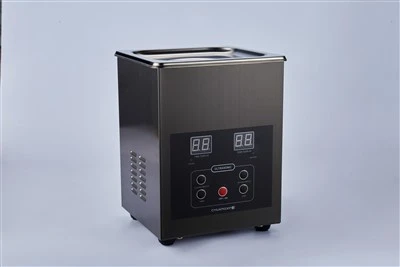
Ultrasonic Glasses Cleaner So yeah, that’s the lowdown. Active vs. passive piezos aren’t just random terms—they’re about what the material is built to do. Whether you need a sensor or an actuator, we’ve got you covered. Reach out to chat about your next project.
Shenzhen Soner Technology Co., Ltd.
Shenzhen Soner Technology Co., Ltd. is one of the most professional piezoelectric ceramics manufacturers and suppliers in China, specialized in providing high quality customized service. Please feel free to wholesale piezoelectric ceramics for sale here from our factory.
Address: Room 1510, Hubei Baofeng Bldg., No.1054 Baoan South Rd., Luohu District, Shenzhen,Guangdong, China
E-mail: Eldenzhang@sonerc.com
WebSite: https://www.sonerc.com/
