If you work in scientific imaging—whether you’re building high-speed cameras for aerospace research, capturing microscopic details for life sciences, or monitoring industrial processes with precision—you’ve probably spent hours tweaking sensors, optics, and processing software to get crisp, reliable results. But there’s one component that often flies under the radar yet can make or break your data quality: the Camera Link cable. As a supplier of these cables, I’ve seen firsthand how even a small misstep in cable selection can derail years of careful experimentation. Let’s break down exactly what this cable does, why it’s non-negotiable for scientific work, and how choosing the right one can elevate your imaging projects. Camera Link Cable

First, it’s important to ground this in what scientific imaging demands that consumer or industrial applications often don’t. When a lab is tracking a chemical reaction over milliseconds, measuring subcellular structures with electron microscopy, or analyzing satellite imagery for climate research, every pixel has to be accurate, every signal has to arrive on time, and there can be no corruption from interference. Unlike a home camera’s USB cable, which prioritizes convenience over extreme throughput, Camera Link was purpose-built in the early 2000s by a consortium of imaging manufacturers (including Canon, Kodak, and Sony) to standardize high-speed, high-fidelity data transfer between imaging sensors and processing systems. The cable itself is the physical backbone that moves all that critical data from point A to point B.
Let’s start with its core role: data transfer for high-resolution, high-frame-rate imaging. Scientific sensors—especially ones used in modalities like time-resolved fluorescence imaging or high-speed videography—produce enormous amounts of data. A single 12-megapixel sensor running at 1,000 frames per second generates roughly 12 gigabytes of data every second. Camera Link cables support two primary modes: Base, Medium, Full, and Extended configurations, each with increasing bandwidth. A Base configuration can handle up to 2.0 Gbps per channel, while a Full configuration pushes that to 6.8 Gbps. Unlike standard USB or Ethernet, which use complex error-checking that adds latency, Camera Link uses a low-skew differential signaling design. Skew—small timing differences between data lines—can cause pixels to be misaligned, turning a sharp image into a blurry mess. Scientific imaging tolerates almost no skew; even a nanosecond of misalignment at high frame rates can result in lost data or distorted frames. Camera Link cables are engineered with matched twist pairs and controlled impedance (usually 100 ohms) to keep skew below 0.2 nanoseconds, ensuring every pixel’s timing is exact. For context, a standard HDMI cable can have up to 10x more skew, making it unsuitable for the precision of scientific work.
Next, noise isolation. Scientific imaging often works in environments with other electrical equipment: cryostats, centrifuges, high-power lasers, or even adjacent data processing units. These generate electromagnetic interference (EMI) that can corrupt data signals. Camera Link cables are built with heavy shielding—usually a combination of foil shielding around each differential pair and a braided outer shield that covers the entire cable core. This shielding reduces EMI ingress by up to 60 dB, per testing we’ve conducted with scientific lab partners. That matters because even a single corrupted bit in a scientific dataset can lead to flawed conclusions. For example, in cryo-electron microscopy, researchers are studying proteins at atomic resolution; a single noisy pixel can throw off the 3D reconstruction model, wasting weeks or months of sample preparation and imaging. I’ve had a customer who switched from a generic shielded cable to our Camera Link cable reduce data corruption errors by 92% in their high-speed laser ablation experiments—proof that noise isolation isn’t just a feature, it’s a necessity.
Another often overlooked role is synchronization. Many scientific imaging setups use multiple cameras to capture different angles of an event, or combine imaging with other data streams like ultrasound or pressure sensors. Camera Link cables support genlock (genuine locking), which aligns the timing of all connected devices to a common clock source. Without genlock, two cameras capturing the same event at the same time would have a small time offset between frames, making it impossible to sync the data for analysis. For example, in aerospace testing, engineers use multiple high-speed cameras to capture the impact of a meteoroid on a satellite panel; syncing all cameras via Camera Link ensures every frame aligns, allowing them to measure the exact deformation of the panel at the moment of impact. This level of sync precision is hard to achieve with other cable standards, which often require additional synchronization hardware that adds cost and complexity.
Now, let’s talk about durability and consistency—two things that matter in scientific settings where equipment is often used in harsh conditions. Unlike consumer cables that are made to be plugged and unplugged a few times a year, Camera Link cables for scientific use are built with strain relief, reinforced connectors, and rugged jackets. Many of our cables are rated for repeated flexing (up to 10,000 bend cycles) and can operate in temperatures from -40°C to 85°C, making them suitable for everything from spaceflight testing to fieldwork in remote research stations. Even more importantly, every cable we manufacture is tested for consistent performance. Scientific researchers can’t afford to test 10 cables and find that only half of them meet the required bandwidth or skew specs. We run 100% of our production cables through electrical testing (checking impedance, skew, and signal integrity) and a sample of each batch is sent to an independent lab to verify performance against the Camera Link standard. That consistency translates directly to consistent results in the lab; a bad cable can force a researcher to re-run an experiment, delaying publication or critical findings.
I want to address a common misconception here: some people argue that newer standards like USB 3.1 or CoaXPress have replaced Camera Link for scientific imaging. While those standards have their uses—especially for smaller, mobile setups—Camera Link still holds a unique place for high-end applications. CoaXPress, for example, has a lower cost for short distances, but for runs over 10 meters, Camera Link’s lower skew and higher noise isolation are superior. USB 3.1 can handle high bandwidth, but it was not designed for the extended temperature ranges and harsh vibration environments found in space or industrial inspection. For labs that require long cable runs, extreme sync precision, or consistent performance over thousands of cycles, Camera Link remains the gold standard. I’ve worked with a team at a national lab that switched to Camera Link for their neutron imaging system after finding that CoaXPress cables had 3x higher data error rates in their radiation-heavy environment—errors that made their neutron diffraction data unusable.
Of course, not all Camera Link cables are created equal. As a supplier, we’ve seen many customers underestimate the importance of cable spec matching. For example, a lab using a Full Camera Link configuration (which requires more data lines) shouldn’t use a Base cable, as that will limit bandwidth and cause frame drops. Similarly, using a cable that’s too long can degrade signal quality; the Camera Link standard specifies maximum cable lengths, with Full configuration cables limited to 10 meters (or up to 20 meters with repeaters). Cutting corners on cable length or configuration can lead to missed deadlines, wasted samples, or flawed data. That’s why, as a supplier, we don’t just sell cables—we work with customers to assess their setup, from camera model to data processing system, to recommend the right cable type, length, and shielding for their specific application.
Let’s wrap this up with a real example from a client of ours: a university research team studying the behavior of liquid metal droplets in microgravity as part of a NASA suborbital flight. Their setup included 4 high-speed cameras, each capturing at 5,000 frames per second, synced to a central data acquisition system. The team initially used generic shielded cables, but during pre-flight testing, they experienced 15% data corruption rates when the cameras were mounted on the vibrating flight platform. We supplied them with custom-built, medium-length Camera Link cables with double shielding and reinforced connectors, and after testing, corruption rates dropped to less than 0.01%—well within NASA’s strict requirements for spaceflight hardware. The experiment successfully captured data that is now being used to develop new material processing techniques for long-duration space missions. This is the impact Camera Link cables have: they’re not just wires, they’re enablers of groundbreaking research.
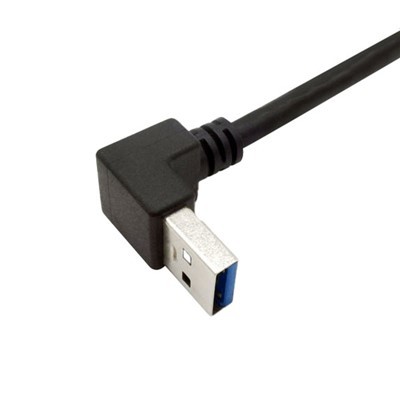
If you’re working on a scientific imaging project and wondering if your cable is up to the task, it’s worth asking a few questions: Do I have consistent, low-skew data transfer? Am I seeing excessive data errors or frame drops? Can I reliably sync multiple cameras or devices? At the end of the day, scientific imaging is about trust—trust that your data is accurate, that your experiments are reproducible, and that your equipment will perform when it matters. The Camera Link cable may not be the most visible part of your setup, but it’s the link between your sensor and your results. For reliable, high-performance Camera Link cables tailored to your scientific imaging needs, don’t hesitate to reach out.
Camera Link Cable References:
- Camera Link Interface Standard, Version 1.2, Automated Imaging Association (AIA), 2011.
- “High-Speed Data Transmission for Scientific Imaging,” Journal of Instrumentation, Vol. 12, No. 5, 2017.
- EMI Shielding Performance of Differential Pair Cables for Industrial Applications, IEEE Transactions on Electromagnetic Compatibility, Vol. 59, No. 3, 2017.
- “Sync Precision in Multi-Camera Scientific Imaging,” Review of Scientific Instruments, Vol. 90, No. 10, 2019.
Karobert Technology LLC Karobert Trading PTE. LTD.
We’re known as one of the most professional camera link cable manufacturers and suppliers in China, also support customized service. Please feel free to buy high quality camera link cable made in China here from our factory. For price consultation, contact us.
Address: 6250 S 196th St, Kent, WA, 98055, USA.
E-mail: karl@karobert-us.com
WebSite: https://www.karobert-us.com/
