Hey everyone, it’s Jake from [your company name]—your go-to FIBC bags supplier, and today we’re breaking down a question I get literally every single day: how much do these big flexible bags actually cost? Let’s be real, if you’ve ever had to source bulk packaging, you know this isn’t a “one size fits all” kind of answer. I’ve seen people freak out when they get a random quote online for $10 a bag, then another for $30, and they’re like “Jake, which one’s legit?” So let’s cut through the noise, no fancy corporate jargon, just straight talk from someone who’s been selling these things for 8 years. FIBC Bag
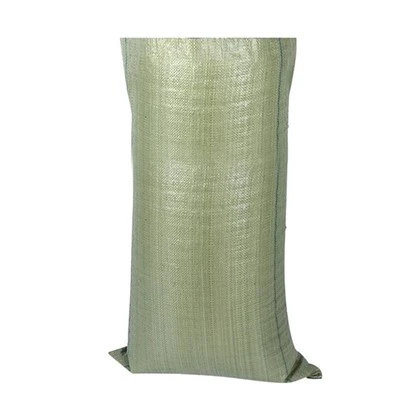
First off, let’s get what FIBC bags even are for anyone new here. FIBC stands for Flexible Intermediate Bulk Container—we call them big bags, bulk bags, whatever works. They’re used to move everything from grain, fertilizer, and plastic pellets to construction sand, recycling fluff, even food-grade spices (yes, we make those too). So if you’re hauling 500 to 2000 kilograms of stuff, you’re probably using one of these bad boys.
Now, why such a price range? Let’s start with the biggest factor: size and load capacity. Basic small-to-medium FIBCs (the ones that hold 500 to 1000 kg) are the cheapest, usually running between $0.80 and $2.50 per bag for standard stuff. But wait—hold on—those cheap ones? They’re probably 1-ton max, not 2-ton, and they’re not built for heavy industrial use. The standard full-sized big bag that most people order is 1000 kg (1 metric ton) capacity, which is the sweet spot for logistics. Those usually land between $1.20 and $4 each, but that’s just the base. The big jump comes when you add specs.
Let’s talk fabric weight—this is non-negotiable for durability. A basic PP (polypropylene) fabric bag that’s 120 grams per square meter (gsm) is thin, lightweight, perfect for light grain or non-abrasive materials. That’s the $1.20 to $2 range. But if you’re moving abrasive stuff like construction aggregate, ore, or recycled glass, you need a 150 or 180 gsm fabric. That thicker fabric stands up to being dragged, stacked, and rubbed against forklifts way better, so those jump to $2.50 to $4. And if you need a 2-ton capacity bag? We’re looking at 180 to 220 gsm, because that extra weight means heavier fabric—so that’ll be $3 to $6 per bag. I once had a customer come to us after buying $0.90 bags from a random seller; they ripped apart mid-haul of plastic pellets, cost them $12k in lost product and downtime. Don’t be that guy.
Next up, liners and coatings. This is where things get extra (in a good way, if you need it). If you’re moving fine powder—like flour, cement, or pharmaceutical ingredients—you need a polyethylene liner to keep dust from leaking out, keep moisture in, and prevent cross-contamination. A basic loose liner adds $0.20 to $0.50 per bag. If you need a food-grade liner? Another $0.10 to $0.30, because those have to meet FDA standards, no funny business. Then there’s coatings: UV-stabilized coatings for bags that’ll sit outside on a job site for months, or anti-static coatings for flammable stuff like plastic pellets or chemicals. Add UV coating, and you’re up $0.30 to $0.70; anti-static adds $0.25 to $0.50. I had a farm customer who kept leaving their grain bags outside during harvest season—basic bags would start breaking down after 2 weeks, UV-stabilized ones last all 3 months of harvest, so it’s worth it.
Then there are design features, and these matter a lot for how you use the bag. Lift loops: standard two-loop bags are the base, but four-loop bags for extra stability when stacking high add $0.10 to $0.25. Top and bottom options: open-top bags (you fill them with a shovel or a loader) are cheapest, spout-top for automated filling adds $0.30 to $0.60, and discharge spouts at the bottom add another $0.20 to $0.40. If you need a tab top to seal it tight, or baffles to keep the bag shape so it stacks better in a shipping container? That’s another $0.15 to $0.30. Last year, a food processing client switched from open-top to spout-top bags and cut their filling time by 40%—totally worth the extra cost.
Now, quantity—duh, economies of scale, everyone knows that, but let’s get specific. If you order a single bag, you’re paying retail, which is at the high end of those ranges, maybe $5 to $10 each. But order 1,000 bags? That’s the bulk sweet spot, so you’ll pay 20-30% less per bag. Order 10,000 or more? We can knock another 10-15% off, because we’re running full production lines, no small setups. Last quarter, a landscaping company ordered 12,000 1-ton UV-stabilized bags, saved almost $3,000 total just for the bulk order. And don’t forget—if you reuse bags? Wait, some FIBCs are reusable, which is a whole separate thing. Reusable industrial FIBCs (the heavy-duty ones with reinforced loops) can cost $8 to $15 each, but you can use them 5-10 times, so per use, that’s cheaper than buying single-use every time. I work with a construction company that reuses their sand bags for 8 hauls, so they’re paying $1.50 per use, not $2 per single-use bag.
Wait, let’s talk about common mistakes I see new buyers make. They see a $0.75 per bag quote from some random Alibaba seller, think it’s a steal, but then it’s a low-grade, non-compliant bag that splits, leaks, or doesn’t meet safety standards (like for lifting). Safety is a big one! If you’re using these bags for overhead lifting, they have to meet OSHA standards—add $0.50 to $1 per bag, but skip that, and you’re risking a serious accident. A guy I know lost his job because a cheap bag split while lifting 1.5 tons of steel, dropped it on a forklift, totaled it and almost hurt someone. So never cut corners on specs when safety is on the line.
Another thing: material type. Most FIBCs are PP, which is what we make 90% of our bags from—cheap, durable, versatile. But if you need something like woven polyester for even higher heat resistance? That’s more expensive, $5 to $10 per bag for standard loads. Or conductive FIBC for explosive materials? That’s a whole other category, usually $6 to $12 per bag. Stick to PP for most stuff, it’s the sweet spot.
Let’s round this out with real examples, because numbers are boring without context. Let’s say you’re a small farm needing 500 1-ton bags to haul corn. Basic 120 gsm PP, open-top, food-grade liner: that’s $1.50 per bag, total order cost $750. If you need UV-coated because you’re storing them outside? Add $0.30, total $1.80 per bag, $900. Now, if you’re a mid-sized fertilizer company ordering 10,000 1.5-ton bags for chemical fertilizer, with anti-static coating, four loops, discharge spout: that’s $3.20 per bag, total $32,000. But bulk discount knocks that down to $2.70 per bag, total $27,000—way better. If you’re a recycling company needing reusable bags for plastic pellets, ordering 200 heavy-duty 2-ton bags: $10 per bag, and if you reuse them 7 times, that’s $1.43 per use, way cheaper than single-use.
Now, let’s get transparent about my company—we’re not the cheapest, but we’re not the most expensive. We prioritize quality, so our quotes are based on what you actually need, not upselling junk you don’t need. If you tell me “I need 500 bags for grain, stored outside, lifted with forklift,” I’ll give you a quote for exactly that, no hidden fees. If you don’t need a liner, I won’t add that cost. We also do custom specs—if you need a logo printed on the bag, that’s an extra $0.20 to $0.40 per bag, and we can do that in 2 weeks, no waiting months.
Wait, one more thing that affects price: customization. If you need a weird size—like 500 kg instead of 1000 kg, or a special height for fitting in your shipping containers—we can do that, but custom sizes add $0.50 to $1.50 per bag, because we have to adjust our production runs. Same with logo printing, as I said, or special labeling for regulatory stuff, like Hazard Class labels for chemicals.
So putting it all together, here’s the quick breakdown you can take to anyone sourcing FIBCs: single-use basic bags start at $0.80, go up to $6+ for heavy industrial/ specialized specs, reusable FIBCs start at $8, and bulk orders (1000+) get 20-30% off that. The cheapest quote isn’t always the best—check gsm, liners, coatings, safety standards, and actual use case, not just the sticker price.
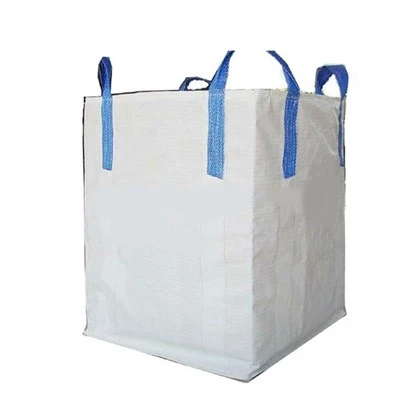
If you’re tired of guessing at quotes, tired of bags that break mid-job, or just want a straight answer for your specific needs, hit me up. I don’t do generic quotes—send me what you’re hauling, how many you need, how you’re using them, and I’ll give you a transparent, no-BS number. No hidden fees, no upselling, just a fair price for a bag that actually works for your job. We’ve got all specs, we’re OSHA and FDA compliant for the food stuff, and we can ship anywhere. Stop wasting time dealing with sellers who don’t know their FIBCs—let’s chat.
Super Sacks References:
- FIBC Manufacturers Association. (2023). FIBC Costing Guide: Factors Impacting Bulk Bag Pricing. Industrial Packaging Review, 12(3), 45-52.
- Occupational Safety and Health Administration (OSHA). (2022). Safety Standards for Overhead Lifting with Flexible Intermediate Bulk Containers. U.S. Department of Labor.
- European Industrial Bag Association. (2024). Specifying FIBCs for Industrial and Agricultural Applications. Global Bulk Packaging Report, 18(1), 19-26.
- Plastics Industry Association. (2023). Polypropylene FIBC Durability and Cost Efficiency: A 5-Year Analysis. Packaging Tech Journal, 9(2), 78-85.
Hebei Hesheng Plastic Products Co., Ltd.
Hebei Hesheng Plastic Products Co., Ltd. is one of the most professional fibc bag manufacturers and suppliers in China for over 30 years, specialized in providing the best customized service. We warmly welcome you to wholesale high quality fibc bag for sale here from our factory. For price consultation, contact us.
Address: Tasizhuang Industral Zone, Qing County, Cangzhou City, Hebei, China.
E-mail: office@heshengbulkbag.com
WebSite: https://www.hs-bulkbags.com/
