Hey there, if you’ve ever wandered through a modern loft, you’ve probably stopped dead in your tracks at the open railings along the stairwell, the balcony, or that cool mezzanine that splits the space. Chances are, those are glass railings—they’re kind of a big deal right now, and as a glass railing supplier, I get asked about them all the time. Let’s break this down like we’re chatting over a coffee, no confusing jargon, no stuffy specs you don’t care about. First off, what even is a glass railing for a loft? It’s not just some random panel of glass stuck between two posts, okay? It’s a custom-built barrier specifically made to meet loft needs—open-concept living, high ceilings, big views, that raw industrial vibe lofts are famous for—while keeping you safe. Think of it as the upgrade to those clunky metal railings or the rickety old wooden ones that feel like they’ll tip over if you lean too hard. Glass Railing
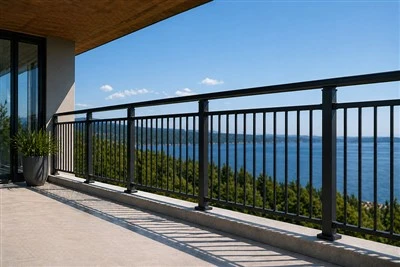
Wait, lofts are different from regular apartments, right? Like, they used to be warehouses or factories, so they have those huge exposed windows, vaulted ceilings, maybe a spiral staircase that winds up to a tiny mezzanine, or a gap between the main floor and a lofted office nook. The whole point of a loft is that open, airy feel—no walls, no clutter blocking light. A regular solid railing would ruin that. A glass railing? It’s basically invisible, almost. You still get the safety barrier (building code requires railings 42 inches high for residential, by the way—we’ll get to that later) but you don’t block the sunlight or the view of that city skyline you paid extra for when you bought the loft. That’s the sweet spot, really.
Now, let’s talk about the actual components, because it’s not just glass. Most glass railings for lofts use tempered glass, not the regular stuff you’d buy at a hardware store. Tempered glass is way stronger—like, five times more resistant to impact—and if it ever breaks, it shatters into tiny, dull pebbles instead of sharp shards. That’s non-negotiable for safety, especially if you have kids, pets, or you’re just clumsy (guilty). The thickness? Usually 10mm or 12mm is standard for residential lofts—enough to hold up if someone leans on it, but not so thick it looks bulky. Some people opt for laminated glass too, which has a plastic layer between two panels. It’s even stronger, and if it does break, the pieces stay stuck to the plastic, so no falling glass. Perfect for lofts that have high foot traffic or are near a busy street where wind could knock something loose.
Then there’s the hardware that holds the glass in place, and this is where most people get confused. There are three main styles for lofts, and each works differently depending on your space. First, there’s the top-mounted system—glass panels sit on top of a horizontal metal rail (usually aluminum or stainless steel, because they don’t rust and hold up well). That’s super popular for stairwells, because it’s easy to install along the slope of the stairs. You can get the rail in different finishes too: brushed stainless for that sleek industrial look, black matte for a modern moody vibe, even gold if you want to add a little luxury. Second, there’s the bottom-mounted, called a “base shoe” system. The glass slots into a narrow metal base that’s bolted to the floor or the stair step. This one is almost invisible, because you barely see the base, so the glass looks like it’s floating. That’s perfect for lofts where you want that “wow” factor, like if your mezzanine overlooks the living room. Third, there’s the spigot system—metal clamps (spigots) that attach to the corners or middle of the glass panels, holding them up without any top or bottom rail. That’s the most minimal, sleek style, great for big lofts with huge views. We recently did a spigot system for a client in Brooklyn whose loft overlooks the East River, and he said it looked like the railings weren’t even there—you could see the skyline perfectly.
Wait, let’s talk about why glass railings are made for lofts specifically, not every space. Lofts are all about maximizing light and space. If you have a solid wood railing, it cuts your living room in half, makes high ceilings feel lower, and all that natural light from the warehouse-style windows gets blocked. Glass lets that light flow through every level of the loft—so your main floor feels bright, the mezzanine doesn’t feel like a cave, and you don’t have that cramped, boxed-in feeling. Also, a lot of lofts have industrial design elements: exposed brick, concrete floors, metal pipes. Glass railings pair with that perfectly—they’re clean, modern, and don’t compete with the raw, unfinished look. You don’t want a fancy carved wood railing in a space that’s supposed to feel like a converted factory, right? Glass is neutral, it works with every style—industrial, mid-century modern, even if you want to add a little boho decor later, it doesn’t clash.
Now, safety stuff—important, because I’ve heard horror stories of people buying cheap glass railings that don’t meet code. Building codes for railings are strict for a reason, and lofts are no exception. The height needs to be at least 42 inches from the finished floor to the top of the rail, and the gaps between glass panels (or between the glass and the rail) can’t be more than 4 inches, so a kid’s head can’t get stuck. Also, the glass has to be tempered, like I said earlier—regular glass is a disaster waiting to happen. We make sure every single one of our glass railings meets local building codes, because cutting corners on safety isn’t worth it, especially in a loft where the drop from the mezzanine could be 10 feet or more.
Another thing people don’t think about: maintenance. Lofts are usually big, open spaces, so you don’t want a railing that’s a pain to clean. Glass railings? Wipe them down with a glass cleaner once a week, done. No scrubbing wooden slats, no polishing metal every other day (though the hardware does need a quick wipe too, to keep fingerprints off). If you get fingerprints on black matte glass, they barely show up anyway, which is perfect if you have a busy household. Also, glass is durable—doesn’t scratch easily, doesn’t warp like wood, doesn’t rust like metal. We’ve had clients who installed their railings 5 years ago, and they still look brand new.
Wait, are there any downsides? Let’s be real, no product is perfect. Some people say glass can be slippery if it’s wet, but if you use anti-slip glass coating (we offer that as an add-on), it’s no problem. Also, if you have a super busy loft, like a studio with lots of foot traffic, glass can collect dust more than other materials? But honestly, a quick wipe takes 2 minutes, so it’s not a big deal. And if you’re worried about privacy—like, if your loft is on a busy street—you can get frosted or tinted glass, or even etched glass, so you have privacy without losing the open feel. That’s a good hack for city lofts where neighbors are close.
Now, as a glass railing supplier, let me tell you a little about how we work with lofts specifically. Every loft is different—different stair slopes, different mezzanine heights, different floor layouts. So we don’t do one-size-fits-all. We measure every space in person (or send our team to measure remotely if needed), customize the glass thickness, the hardware style, the finish, even the type of glass to fit your exact loft. For example, if you have a spiral staircase, we can cut the glass panels to follow the curve of the steps, so it looks seamless, not like a bunch of random panels slapped together. We also offer different hardware finishes to match your other elements—stainless for metal pipes in your loft, black matte for a minimalist look, bronze for a warmer vibe. A lot of our clients come to us because they want to keep their loft’s raw industrial charm, and glass railings do that without sacrificing safety.
Let me give you an example of a recent project. We worked with a guy in Chicago who had a 2,000 square foot loft that used to be a meatpacking warehouse. He had a mezzanine with an old wooden railing that was wobbly, and he hated that it blocked the view of his exposed brick wall and the large windows facing the skyline. We installed a base shoe glass railing—12mm tempered glass, black matte base, no top rail. He said it completely transformed the space: the mezzanine now feels like an extension of the main floor, the light flows through, and you can still see the brick and the windows perfectly. It didn’t take away from the industrial feel, it enhanced it. That’s the goal, right?
So, to wrap this up: a glass railing for a loft is a custom, safety-compliant barrier made of strong tempered (or laminated) glass, paired with sleek, low-profile hardware, designed specifically for the unique needs of lofts—open-concept layouts, high ceilings, big views, industrial design aesthetics. It solves the problem of solid railings blocking light and space, keeps you safe, works with every loft style, and is low-maintenance.

If you’re a loft owner thinking about upgrading your railings, or a contractor working on a loft project, we can help you figure out exactly what you need. We’ll walk you through all the options, answer any questions, and make sure you get a railing that fits your space, your style, and your budget. Don’t settle for a generic railing that doesn’t do your loft justice—glass railings are the way to go. Reach out to us to chat about your project, no pressure, just honest advice and great products tailored to lofts.
Stainless Steel Railing References:
- International Residential Code (IRC) 2021, Section R312.1 Railings Required
- Glass Association of North America (GANA) Tempered Glass Safety Guidelines
- Architectural Glass and Metal Association (AGMA) Railing System Installation Standards for Residential Applications
- Loft Industry Association Open Concept Design Report, 2023
- National Association of Home Builders (NAHB) Kitchen & Bath Design Guide, 2022 (Railing Component Recommendations)
ZP Aluminum Co., Ltd.
ZP Aluminum Co., Ltd. is one of the most professional glass railing manufacturers and suppliers in China. With abundant experience, we warmly welcome you to wholesale customized glass railing made in China here from our factory. If you have any enquiry about quotation, please feel free to email us.
Address: LEPING INDUSTRIAL ZONE, SANSHUI DISTRICT, FOSHAN, GUANGDONG, CHINA
E-mail: general@zp-aluminum.com
WebSite: https://www.zp-railing.com/
