When I first started fielding this question from wheel shops and casual car owners a few years back, I’ll admit I had to pause. Back then, I’d had more than one shop call, frustrated, saying they’d tried every trick in the book to fix their aftermarket wheels only to end up with worse damage—and now they were asking if my company’s wheel repair machines could even handle them. It’s a question that doesn’t have a one-word answer, and as a supplier who’s spent years tuning these machines to work on every type of wheel from every corner of the aftermarket, I get why it’s so confusing. Let’s break this down, not as a sales pitch, but as someone who’s stood next to techs as they worked on everything from budget alloy swap meets wheels to high-end forged units that cost more than some people’s monthly car payment. Wheel Repair Machine
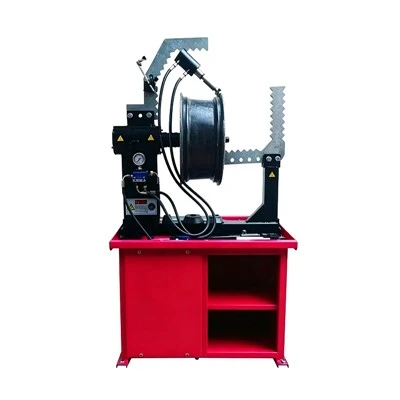
First, let’s get one thing straight: aftermarket wheels aren’t a single group. When someone says “aftermarket wheel,” they’re talking about three main categories, and each one behaves totally differently when you run them through a repair machine. There’s cast alloy (the most common aftermarket wheel, cheap to make, thousands of copies of the same design), forged alloy (stronger, made by hammering or compressing aluminum into shape, used for performance cars), and flow-formed alloy (a middle ground, heated and stretched to be lighter than cast but cheaper than forged). Then there are steel wheels, which are sometimes sold as aftermarket options for trucks or work vans, though less common for passenger cars. That distinction matters a lot because not all wheel repair machines are built to work on all of these.
A lot of people think any wheel repair machine can fix any wheel, but that’s not true. The machines I supply have adjustable pressure settings, temperature controls, and tooling that can adapt to these different types of metal, but only if the tech using them knows what they’re doing. Let’s take cast alloy first—it’s the weakest of the three, porous and prone to cracking if you apply too much force. I once watched a new shop owner rush a repair on a cast wheel that had a 2-inch bend on the lip, crank the pressure too high on an old machine they’d bought used, and end up with a crack that went all the way through the wheel. That’s not the machine’s fault—that’s a mismatch between the machine’s capabilities and the tech’s understanding of the material. My machines have a material calibration tool that walks you through setting the right pressure and heat for cast, forged, or flow-formed, which takes that guesswork out.
Then there’s forged aftermarket wheels. These are tough, which is why performance drivers love them, but they’re also rigid—too rigid for some cheaper wheel repair machines that can’t apply the precise, controlled pressure needed to straighten bends without warping the tread area or the barrel. I had a customer last year who owned a set of $3,000 forged wheels for his Porsche 911, which he’d bent after hitting a pothole on a highway. He’d taken them to three local shops that claimed to do wheel repair, and they’d all told him the wheels were “too strong to fix” and offered to sell him new ones. He found us online, watched a couple of our demo videos, and brought the wheels in. Within an hour, our tech straightened the barrel and straightened the lip back to its original shape, no cracks, no warping. He later told me he’d saved almost $3,000 that day, and that’s when I realized a lot of the “can’t fix aftermarket wheels” stories come from using the wrong machine for the job.
Now, what about the damage that people most often run into on aftermarket wheels? Not just bends—curb rash, gouges, cracks. Let’s talk about curb rash first, because that’s the most common issue. A lot of budget aftermarket wheels have thin lips that scratch easily when you parallel park too close to a curb. My machines have sanding and polishing attachments that are precision-controlled, so you can grind down the curb rash without digging into the surrounding metal, then reshape the lip to look almost new. But if you have a machine that doesn’t have a variable speed sanding tool, you’ll end up with uneven lines or too much material removed, which weakens the wheel. I’ve seen that happen more times than I can count—techs using a one-size-fits-all sander that’s too rough, and the lip ends up thinner than it should be, making it prone to bending again.
Cracks are another story. A lot of people think if there’s a crack in an aftermarket wheel, it’s scrap, but that’s not always true. Small, hairline cracks on the barrel or lip can be fixed with a process called TIG welding, and our machines work with that—we even include a built-in heat control that lets you heat the wheel just enough to expand the metal before welding, which prevents more cracks from forming later. But here’s the catch: if the crack is on a cast wheel that’s porous, or if the wheel has already been welded once before, you might not be able to fix it. Forged wheels are a different story—their dense metal holds welds really well, so even larger cracks can be repaired as long as the structure isn’t compromised. The key here is that a good wheel repair machine isn’t just for straightening bends; it’s for working with the material, and that requires specific features.
Wait, but what about fake aftermarket wheels? That’s another big one. There are millions of counterfeit wheels out there that look exactly like high-end forged wheels or OEM performance wheels, but they’re actually cheap cast wheels made in overseas factories with substandard metal. A customer of mine last year brought in four wheels that he’d bought online for his truck, which he thought were real name-brand forged wheels. When our tech ran them through the machine, the metal was so porous that when they tried to straighten a small bend on the lip, the wheel cracked completely. Turns out, they’d been scammed. Our machine couldn’t fix those, not because it wasn’t good enough, but because the wheel itself was garbage. That’s a case where the machine can only work with what it’s given—if the base material is defective, no repair machine in the world can fix that.
I know a lot of people are worried about warranty too. If you fix an aftermarket wheel with a repair machine, will it void the wheel’s warranty? That’s a common question, and honestly, it depends on two things: the wheel manufacturer’s policy, and how the repair is done. A lot of aftermarket wheel manufacturers explicitly say that you shouldn’t attempt to repair bends or damage yourself, or take them to an unqualified shop, because improper repair can cause failure. But if you use a reputable shop with a quality repair machine, and the repair is done correctly, most manufacturers won’t void the warranty—they just don’t want you making things worse. I always tell customers to check their wheel’s warranty documentation first, but from what I’ve seen, proper wheel repair doesn’t void warranties.
Let’s also talk about the difference between a basic wheel straightener and a full wheel repair machine, because that’s where a lot of the confusion comes in. A basic wheel straightener only does one thing: straighten bends in the barrel. It doesn’t have sanding tools, heat controls, or precision alignment for lips. Those are the machines that can’t handle most aftermarket wheels, because they can’t fix curb rash, they can’t weld cracks, and they often apply too much pressure that warps the wheel. The machines I supply are full-service wheel repair systems, which have all those features built in, so they can handle almost all common aftermarket wheel damage—from bends to curb rash to small cracks.
I’ve had shops tell me they used to send all their aftermarket wheel work out to a specialty shop, which charged them $150 to $200 per wheel, and now with our machine, they can do the same repair in 30 minutes for $30 or $40 per wheel. That’s a huge cost savings, especially for busy shops that get dozens of wheel repair jobs a week. But I also don’t want to sugarcoat it: it takes training. You can’t just unbox one of our machines and start working on $2,000 forged wheels the same day. We include on-site training for every customer, because we’ve seen too many techs try to wing it and end up ruining a wheel. The calibration, the pressure settings, the heat levels—all of that is learned, not just something the machine can do on its own.
Let me give you a real example that stuck with me. A small independent wheel shop in Ohio called me last spring, panicking because they had a set of aftermarket flow-formed wheels for a Mustang that had a big bend on the barrel. They’d tried to straighten them with their old basic straightener, and it made the bend worse, plus they scratched the lip so bad the customer threatened to take his business elsewhere. We set up a training session for their two techs, walked them through setting the pressure for flow-formed metal, using the barrel straightening jaws, and then buffing out the lip scratches. By the end of the day, they had the wheels fixed, and the customer was so happy he brought in five more wheels for repair that same week. Now that shop does all their aftermarket wheel work in-house, and they tell me it’s added almost $2,000 a month to their revenue.
Is there any aftermarket wheel that our machines can’t fix? I’ll be honest—yes, a few. If a wheel has a large crack that’s gone all the way through, or if it’s bent so bad that the metal has stretched beyond its breaking point, or if it’s a counterfeit wheel with metal that’s too porous to work with, we can’t fix it. But that’s true for any repair method, not just machine-based repair. You can’t fix a wheel that’s so damaged it’s structurally compromised, no matter if you use a machine or a welder. The good news is that the vast majority of aftermarket wheel damage—small to moderate bends, curb rash, hairline cracks—can be fixed with a quality wheel repair machine, as long as you have the right training.
A lot of people still believe that aftermarket wheels are too “special” to repair, or that repair machines are only for OEM wheels. That’s just not the case. Aftermarket wheels are made of the same basic metals as OEM wheels—aluminum, steel, forged alloy—the difference is in their design and quality. The right repair machine can adapt to those differences, as long as you know how to use it.
If you’re a wheel shop owner, or someone who works on cars, and you’re tired of turning away aftermarket wheel work because you don’t have the right equipment, or you’re paying too much to send it out, the first step is to figure out what kind of aftermarket wheels you’ll be working with, and what kind of damage you commonly see. A basic straightener might work for cast steel wheels, but if you’re working with forged or flow-formed performance wheels, you need a full-service machine with adjustable pressure, heat control, and precision tooling.
I’ve spent years refining these machines, talking to techs, watching them make mistakes and get it right, and the bottom line is: yes, a good wheel repair machine can fix most aftermarket wheels. It’s not a magical fix-all, and it’s not for every type of wheel damage, but it’s a reliable, cost-effective way to bring in work and keep customers happy.

If you’re ready to talk more about what our machines can do for your shop, or if you have questions about whether a particular set of aftermarket wheels can be repaired, reach out and let’s connect. We’ve helped hundreds of shops across the country set up their wheel repair operations, and we’re happy to walk you through the process, no pressure to buy anything right away. Don’t let the myth that aftermarket wheels can’t be repaired hold you back from taking on that profitable work.
Wheel Repair Machine References
Wheel Repair Industry Association. (2022). Best Practices for Repairing Aftermarket Alloy Wheels. Industry Standards Manual.
Society of Automotive Engineers. (2021). Material Specifications for Forged and Flow-Formed Wheels. SAE International.
Counterfeit Automotive Parts Report. (2023). Global Market Analysis of Fake Alloy Wheels. Consumer Reports.
Wuqiang County Youao Auto Maintenance Tools Co., Ltd.
As one of the most experienced wheel repair machine manufacturers and suppliers in China, we’re featured by quality products and good service. We warmly welcome you to wholesale advanced wheel repair machine in stock here and get quotation from our factory. We also accept customized orders.
Address: Pangtuan Village, Wuqiang County, Hengshui City, Hebei Province, China
E-mail: 13273316558@163.com
WebSite: https://www.youaotools.com/
