If you’ve ever held together a car door, assembled a garden shed, or installed a heavy-duty outdoor light bracket, chances are you’ve used a cold forged fastener—even if you didn’t know it. For the past 12 years, I’ve run my own small-scale cold forging operation, supplying fasteners to construction firms, automotive repair shops, and even small-scale engineering startups, and one question I get asked at least twice a week is: “What makes a cold forged fastener different from the ones I can pick up at the local hardware store?” Most people assume all fasteners are just screws or bolts, but the cold forging process changes everything—from their strength to how long they last, and that difference isn’t just technical jargon. It’s the reason a bolt holding a trailer axle won’t snap on a bumpy highway, or a bolt securing a wind turbine blade won’t loosen in a harsh coastal wind. Cold Forged Fasteners
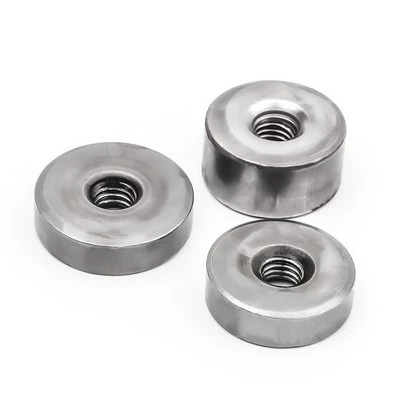
Let’s start with the basics: what is cold forging, exactly? It’s a metal forming process that shapes metal components at room temperature, instead of heating them up to melting or near-melting points like traditional hot forging or machining. You take a coil of metal—most commonly carbon steel, stainless steel, or alloy steel—and feed it into a machine that cuts off small, precise lengths (called blanks) of the metal, then slams those blanks into a series of precision dies at high speed. No heat, no melting, no weak spots from metal cooling unevenly. The metal deforms plastically, meaning it flows like soft clay under pressure, takes the exact shape of the die, and hardens as it does—this is called work hardening, and it’s a huge part of what makes cold forged fasteners so durable.
I remember my first time watching a cold forging machine run back when I was just a production line worker at a larger forging plant. I’d been tasked with loading steel blanks, and I stood there for an hour watching the machine churn out hex bolts one after another. Each bolt came out perfectly formed, no rough edges, no gaps, no need to grind off extra metal. That’s one of the biggest wins of cold forging: it’s super efficient, cuts down on material waste by up to 50% compared to machining, and produces parts with consistent dimensions every single time. If you’ve ever bought a bolt that’s slightly too short or has a weirdly shaped head that won’t fit your wrench, that’s often a machining flaw. Cold forging eliminates most of that because the dies are machined to exact tolerances, so every fastener that comes off the line is identical to the last.
Now, let’s talk about the science behind why cold forged fasteners are stronger. When you machine a bolt, you’re actually cutting away metal to get the shape you want. That leaves tiny, sharp edges and micro-cracks on the surface of the bolt—weak points that can start to split or snap under pressure, especially when exposed to extreme temperatures or corrosion. With cold forging, we’re not cutting anything; we’re shaping the metal. The grain structure of the metal flows continuously with the shape of the fastener, instead of being broken by machining. If you look at a cross-section of a cold forged bolt under a microscope, the grains follow the contour of the threads and the head of the bolt, like water flowing around a rock. A machined bolt, by contrast, has grain structure that’s cut off at the surface, making it more prone to fatigue failure.
Work hardening amplifies that strength even more. When you deform metal at room temperature, the crystals inside the metal align and become tighter, which makes the material harder and more resistant to bending or breaking. A cold forged bolt can be up to 30% stronger than a standard hot forged or machined bolt made from the same type of steel. That’s not just a number—for a construction worker building a skyscraper, a 30% stronger bolt means the difference between a job that meets safety codes and one that needs to be re-done. For a farm owner using bolts to secure a tractor plow, that strength means the plow won’t come loose mid-field during harvest season.
But cold forging isn’t just about strength—it’s also about consistency, which is critical for industries that rely on precise tolerances. When you’re supplying fasteners to an automotive manufacturer that’s building 10,000 trucks a day, every bolt has to fit exactly the same way. If one bolt is 0.1mm too long, it might not thread into the frame; if another is 0.1mm too short, it could work loose over time. The dies used in cold forging are machined to within thousandths of an inch, and the process runs at high speed, so we get hundreds of identical parts every hour. I’ve had automotive clients tell me that when they switched from machined bolts to cold forged bolts, their assembly line downtime from bad fasteners dropped by 70%. That’s a big win for their bottom line, and for their safety records, because they’re not stopping to fix fastener issues halfway through a shift.
Of course, cold forged fasteners aren’t perfect for every job. You won’t find me selling cold forged fasteners for applications that require very large parts—like the giant bolts used to hold together bridge trusses, which are better made with hot forging. Hot forging is better for parts over a certain size because it’s easier to shape large pieces of metal when they’re hot, and the heat makes the metal more malleable for those big, bulky forms. But for fasteners—bolts, nuts, screws, studs, rivets, the small to medium parts that hold most things together—cold forging is the gold standard. It’s also the only method that can produce fine thread fasteners with consistent precision, which is why you’ll almost never see a fine thread machined bolt; those are always cold forged.
Another common question I get is about corrosion resistance. A lot of people think cold forging changes the metal’s resistance to rust or corrosion, but actually, it’s more about the type of steel we use. We work a lot with 304 and 316 stainless steel cold forged fasteners for coastal applications, like securing boat docks or offshore wind farm parts. Because cold forging shapes the metal without leaving those micro-cracks that machining creates, the surface of a cold forged fastener is smoother and less porous, which helps prevent saltwater and moisture from getting into tiny gaps and causing corrosion. That doesn’t mean they’ll never rust, but they’ll last 2-3 times longer in harsh environments than a comparable machined fastener. I had a customer a few years ago who used our cold forged stainless steel bolts for a pier in Florida; he told me that after 5 years, the original bolts from another supplier (machined) had rusted so bad he had to replace them, while our bolts still looked almost new.
Now, let’s talk about why a small supplier like me chooses cold forging over other methods, and why that matters for my customers. When I first started this business out of a 10,000-square-foot workshop, I looked at different forging methods, and cold forging was the only one that made sense for my target customers: small to medium businesses, contractors, and startups that need high-quality fasteners without the huge price tag of big brand name parts. Because cold forging is efficient, it keeps costs lower than hot forging or custom machining, so I can supply top-tier fasteners at a price that’s competitive with low-quality hardware store parts. But I never cut corners on material or process—every single blank of metal I use is tested for purity, every die is inspected after 10,000 cycles to make sure there’s no wear that would produce a flawed part.
I also work closely with my customers to tailor fasteners to their specific needs. Last year, a small robotics startup came to me needing custom screws for their new line of warehouse robots. The standard off-the-shelf screws kept coming loose during testing, so I worked with their engineering team to adjust the die for the cold forged screws to have a slightly deeper thread and a flatter head that would sit flush with the robot’s aluminum frame. They tested the modified screws for 6 months, running the robots 24/7, and didn’t have a single fastener failure. That’s the kind of hands-on service you don’t get from a big national supplier that just ships generic parts.
I think a lot of people overlook fasteners, but they’re the unsung heroes of almost every industry. A cold forged bolt doesn’t get as much fanfare as a new engine part or a solar panel, but if it fails, the whole thing stops working. I’ve seen first-hand what happens when a fastener fails: a car crash because a suspension bolt snapped, a bridge section shifting because a bolt came loose, a factory line shutting down for hours because a small screw in a conveyor belt broke. That’s why I take my work so seriously—every cold forged fastener I ship is tested for hardness, thread tolerance, and surface finish before it leaves my workshop. I don’t sell parts that I wouldn’t use in my own home or on my own truck.
If you’re in the market for fasteners, whether you’re a contractor building a new deck, an engineer designing industrial equipment, or a homeowner fixing your garage door, it’s worth asking if the parts you’re looking at are cold forged. The difference might not be obvious at first, but over time, you’ll notice it. Cheap machined or hot forged parts might save you a few dollars upfront, but they’ll cost you more in replacements, downtime, and even safety risks down the line. Cold forged fasteners are an investment in durability, consistency, and peace of mind.
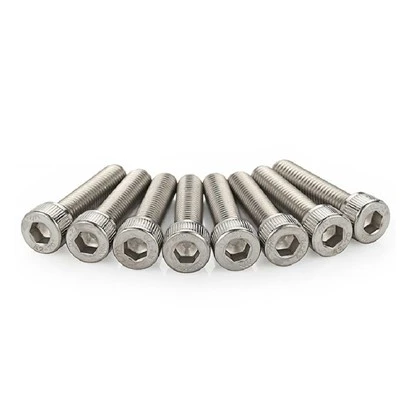
I’ve been in this business for 12 years, and I’ve seen the quality of fasteners drop as big box stores push for lower and lower prices. But there’s still a demand for parts that are built to last, and that’s what I provide. If you’re tired of fasteners that break too soon, or you need custom fasteners for a specific project, I’d love to talk. No generic sales pitches, no long wait times, just high-quality cold forged fasteners tailored to your needs. Reach out to me, and let’s figure out the right solution for your project.
Screw References:
- Degarmo, E. P., Black, J. T., & Kohser, R. A. (2011). Materials and Processes in Manufacturing. John Wiley & Sons.
- European Cold Forgers Association. (2020). Cold Forging: The Preferred Manufacturing Process for High-Performance Fasteners. Industry Technical Report.
- Dieter, G. E. (1986). Mechanical Metallurgy. McGraw-Hill Education.
- American Society of Mechanical Engineers. (2018). Fastener Quality Standards for Cold Forged Components. ASME B18.2.1.
Wuyuan Jieyi Automotive Electrical Appliance Co., Ltd.
As one of the most professional cold forged fasteners manufacturers and suppliers in China, we’re featured by quality products and good service. Please rest assured to wholesale bulk durable cold forged fasteners in stock here from our factory. We also accept customized orders.
Address: No. 7 Likeng Road, Industrial Park Wuyuan County, Shangrao City, Jiangxi Province
E-mail: wyjydqz@163.com
WebSite: https://www.wyjydq.com/
