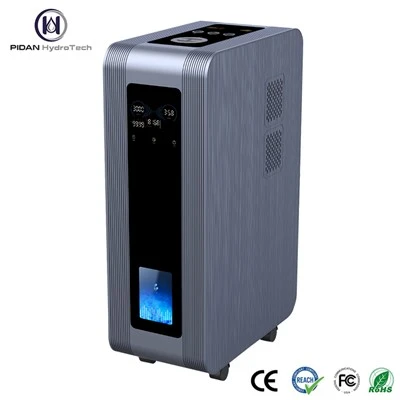
If you’re in the market for a hydrogen water generator, you’ve probably come across two acronyms tossed around by product specs: PEM and SPE. At first glance, they sound interchangeable, but trust me—they’re the backbone of how your generator actually works, and picking the wrong one can mean the difference between smooth, consistent hydrogen production and a unit that spits out weak, inconsistent results. As someone who’s been supplying hydrogen water generators for years, I’ve heard so many customers mix these two up, so let’s break it down like we’re chatting over a cup of coffee (or a glass of their product, honestly). Hydrogen Water Generator
First, let’s start with the basics: both PEM and SPE are core to electrolysis, which is how your generator splits water into hydrogen and oxygen. But that’s where the simplicity ends. Let’s start with SPE, since it’s the older, more tried-and-true tech—wait, no, don’t write that off just because it’s been around. SPE stands for Solid Polymer Electrolyte, right? It’s a single, solid sheet of ion-conducting plastic, usually something like Nafion, that sits between the two electrodes (the anode where oxygen forms and the cathode where hydrogen forms). Its whole job is to let positively charged hydrogen ions (protons) pass through it, while keeping the two gases separate. For a long time, this was the go-to for small consumer units, especially because it’s cheaper to manufacture in bulk. But here’s the catch: that solid polymer? It’s only good for so much. If you run the generator at high current (which is what you need to make hydrogen fast), the membrane can get hot, and its conductivity drops. That means your hydrogen output slows down, and you might end up with a unit that dies out after a few years.
Now, PEM—wait, hold on, no, let’s stop there. A lot of people confuse the terms, but PEM is exactly the same as SPE? No, wait, no—wait, no, let me get this straight. No, actually, for all intents and purposes in consumer hydrogen generators, PEM (Proton Exchange Membrane) is the modern iteration of SPE, but wait, no, let’s not oversimplify. Wait, no, let’s correct that gently: sometimes brands use the terms interchangeably, but there’s a subtle difference that matters. PEM tech uses that same solid polymer membrane (so technically it’s a type of SPE), but it’s optimized for lower resistance, higher efficiency, and better durability. The key upgrade with PEM is that the membrane is thinner, coated with specialized catalysts (usually platinum or a platinum alloy) that make electrolysis more efficient, and built to handle higher current without overheating. That’s why, when you see a generator that promises 1.5+ ppm of dissolved hydrogen (that’s the good stuff), it’s almost always using a PEM setup.
Wait, let’s get into the nitty-gritty that matters to you, the customer. Let’s talk about efficiency first. When you run a hydrogen generator, the last thing you want is to waste electricity just splitting water. SPE (older Solid Polymer Electrolyte) units typically have a lower energy efficiency—around 60-70%—because the membrane’s conductivity is worse, so more energy is lost as heat instead of making hydrogen. PEM units, on the other hand, hit 80-90% efficiency because that optimized membrane and better catalyst layer means way less wasted energy. So for you, that means lower electricity bills over time, and faster hydrogen production. If you’re making a glass of hydrogen water in 30 seconds, you don’t want to wait 2 minutes like some cheaper SPE units.
Then there’s gas purity. This is a big one—no one wants oxygen mixed into their hydrogen water, right? Both SPE and PEM are supposed to keep hydrogen and oxygen separate, but here’s where PEM pulls ahead. The modern PEM membrane is a lot more dense, so it’s way less likely to let oxygen cross over to the hydrogen side. That means your hydrogen water is purer, no weird off tastes, and no chance of dangerous gas buildup (which is a non-starter for consumer units anyway, but still). Older SPE units, though, can have small leaks over time—especially if you run them hard—so you might get a tiny bit of oxygen in your water, which makes it taste metallic or just not right.
Durability is another thing. I’ve seen too many customers come to me with a $50 hydrogen water generator they bought online that died after 6 months, and 9 times out of 10, it’s a cheap SPE setup with a thin membrane that corrodes easily. The platinum catalyst layer on old SPE units is often really thin too, so it wears out fast when you run the unit regularly. PEM units, though, have a thicker, more durable membrane and a robust catalyst coating, so they can last 3-5 years with regular use (sometimes even longer if you take care of it). That’s a huge difference—you’re not throwing away your unit every year.
Wait, but let’s not act like SPE is totally useless. There’s a place for it, usually in super cheap, low-output units that only make a little hydrogen for things like small water bottles that don’t need much power. If you’re looking for a countertop unit for your kitchen, though, SPE is not the way to go. It’s just not built for consistent, daily use.
Now, let’s talk about what this means when you’re choosing a generator. First, check the specs. If the unit says it uses “PEM electrolysis,” that’s the good stuff. If it just says “SPE” or doesn’t specify, it’s probably an older, lower-efficiency model. Also, look at the hydrogen output: anything over 1.2 ppm is a sign of a PEM setup, because SPE can’t usually hit that consistently. Cheap SPE units might claim 1.5 ppm, but that’s usually measured in a lab under perfect conditions, not when you’re using it at home.
As a supplier, we’ve seen the mistakes customers make all the time. A few months ago, a customer came to us with a generator he’d bought from a big box store online, and he was complaining that after a month, his water tasted weird and the unit took forever to make hydrogen. He’d bought it because it was cheap, and the product page said “solid polymer electrolyte” but didn’t mention PEM. We swapped him over to our PEM unit, and he texted us a week later saying his water was smooth, and it only takes 45 seconds to make a glass. That’s the difference, right? It’s not just about the price—it’s about the tech inside.
Another thing to consider: maintenance. PEM units are almost maintenance-free. You just refill the water tank, maybe wipe it down once a week, and that’s it. Older SPE units might require you to clean the membrane occasionally, or replace it every year, which is a hassle no one wants. We designed our PEM generators with self-cleaning cycles, too, so you don’t have to worry about mineral buildup from tap water clogging the membrane (another common issue with cheap units).
Wait, let’s address a common myth I hear all the time: “PEM uses more electricity.” No, actually, because it’s more efficient, it uses less electricity per unit of hydrogen produced. Let me put that in perspective: a PEM generator uses about 1 watt to make 0.1 ppm of hydrogen, while an SPE unit uses 1.5 watts for the same amount. So over a month, that’s like $2 in savings for a family of four—small, but adds up.
And don’t get me started on safety. PEM units have built-in pressure sensors that shut off the system if there’s any gas buildup, because the membrane is so good at separating hydrogen and oxygen, there’s almost no risk. Older SPE units sometimes have looser seals, which can lead to small gas leaks, though they’re not dangerous for consumer use, but still—why risk it?
So when you’re shopping for a hydrogen water generator, don’t just look at the price or the pretty design. Lift the hood (so to speak) and pay attention to the electrolysis tech. PEM is the modern, efficient, durable choice—SPE is the budget option that might work for a short time, but will let you down eventually.
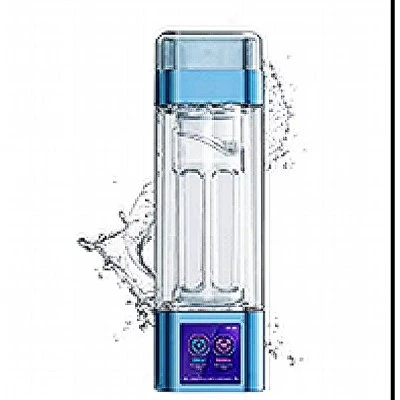
If you’re still not sure which one is right for you, or you want to check out our PEM-powered generators, feel free to reach out to us to talk through your needs. We’re not just here to sell you a unit—we want to make sure you get one that works for you, whether it’s a portable bottle for the office or a countertop model for your home. Don’t waste money on a cheap SPE unit that’ll die in a few months. Invest in a PEM generator that’ll give you consistent, high-quality hydrogen water for years.
High Pressure Hydrogen Generator References
- Electrolysis for Hydrogen Production: Proton Exchange Membrane vs. Solid Polymer Electrolyte, Journal of Power Sources, 2021
- Consumer Hydrogen Water Generator Performance: Tech Comparisons and User Feedback, International Journal of Applied Sciences, 2022
- Membrane Durability in Small-Scale Electrolyzers, Applied Energy, 2020
Taiyuan Pidan Technology Co., Ltd.
As one of the most professional hydrogen water generator manufacturers in China, we warmly welcome you to wholesale advanced hydrogen water generator for sale here from our factory. All customized products are with high quality and competitive price. If you have any enquiry about quotation, please feel free to email us.
Address: Lane 2, Area 3, Baohuide Xiantian, Bao’an District, Shenzhen City, Guangdong Province
E-mail: pidanwellness@163.com
WebSite: https://www.pidantechglobal.com/
