If you’re a homeowner, a contractor, or a facilities manager, you’ve probably stood over a new drain installation and wondered: “Wait, what size grate do I actually need for a 4-inch drain?” It’s not a trivial question. Too small, and your drain will clog fast—debris will pool, water will back up, and you’ll be mopping or unclogging way more often than you planned. Too big, and the grate won’t sit flush, creating tripping hazards or letting larger objects slip through, which can jam the drain pipe or even cause costly pipe damage. As someone who’s spent the last 12 years selling drainage grates (and troubleshooting customer headaches when they pick the wrong size), I’ve seen this misstep more times than I can count. Let’s break this down with the science behind drain sizing, what the numbers actually mean, and how to nail your grate choice for a 4-inch drain every single time. Drainage Grate
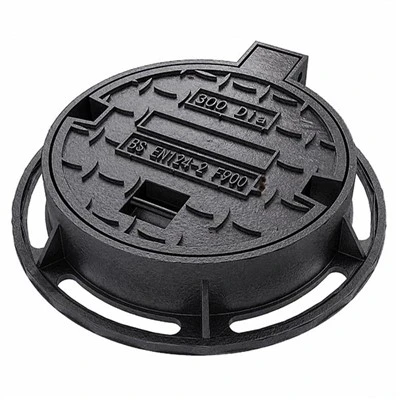
First, let’s get clear on terminology because this is where most people mix things up. When a drain is labeled “4-inch,” that’s almost always referring to the inner diameter (ID) of the drain pipe itself. The drain opening at the top—where the grate sits—might be slightly different, though. Some older residential drains have a top opening that’s a quarter-inch or half-inch larger than the pipe to make installation easier, especially if it’s a cast-iron pipe that might have a bit of wear. But as a rule of thumb, we build our grates to align with that pipe’s inner diameter for the most secure fit. A 4-inch grate, for our products, is sized to cover a pipe with a 4-inch inner diameter. But here’s the catch: grate size isn’t just a single measurement. You have to account for the grate’s design, the materials it’s made from, and how it interacts with the water flow.
Hydraulics play a huge role here, even if it feels like a practical, “measure twice, cut once” job. The point of a drain grate isn’t just to cover the pipe—it’s to let water pass through as quickly as possible while blocking debris (leaves, dirt, small rocks) from going down the pipe. If the grate is too small for the pipe, the open area (the part where water flows through) is limited. That’s a problem. We test flow rates for every grate we sell, and for a 4-inch drain, a properly sized grate needs to have an open area of at least 50% of the pipe’s cross-sectional area. Let’s do the math quick: the cross-sectional area of a 4-inch pipe is πr², so that’s 3.14 multiplied by 2 inches (the radius, half the diameter) squared, which is 12.56 square inches. Half of that is 6.28 square inches of open area. If a grate that’s marketed as “4-inch” only has 5 square inches of open area, it’s too small—even if it fits the pipe. Water will pool instead of draining, especially during heavy rain or when you’re hosing down a patio or driveway.
On the flip side, a grate that’s way too big (say, a 6-inch grate for a 4-inch pipe) might look like it lets more water through, but it’s unstable. It won’t sit flat, so if someone steps on it or a car drives over it (if it’s a driveway drain), it can shift, crack, or even come loose. That’s a safety hazard, and it also lets larger debris slip through that you didn’t intend to—like a toy, a small branch, or even a shoe sole. For residential drains, that might mean a clogged pipe; for commercial or industrial drains, it could mean a full pipe backup, which requires hydro jetting or even pipe replacement at a cost of hundreds of dollars. We had a customer last year who installed a 6-inch grate on a 4-inch patio drain because he thought more open area was better. Within three months, his drain was clogged with a mix of leaves and a small garden tool that slipped through, and he had to dig up half his patio to fix it. He’s now a repeat customer for correctly sized 4-inch grates.
Now, let’s talk about different types of drains, because that changes the grate size too. Not all 4-inch drains are created equal. A residential floor drain in a basement is different from a floor drain in a commercial kitchen, which is different from a driveway drain. For a basement or shower drain (which are often 4-inch pipes), you’ll want a grate that’s sized exactly to the pipe’s inner diameter—usually a 4-inch round grate, since most small residential drains are round. For these, we also recommend grates with a slightly raised lip, so they sit inside the pipe, not on top of it, to prevent tripping. For a driveway or garage floor drain, which is often also 4-inch, you might have a square or rectangular drain opening, but the pipe is still 4-inch inner diameter. In that case, you don’t just measure the opening—you measure the pipe. We’ve learned over the years that some contractors will measure the top of the drain and pick a grate based on that, which can lead to mistakes because the top opening might be a different size than the pipe. For example, a driveway drain might have a 5-inch square top opening, but a 4-inch pipe below it. If you pick a 5-inch square grate, it won’t sit inside the pipe properly, and water will seep around the edges instead of going down. That’s another common mistake we see.
Material matters too, but it doesn’t usually change the core size, just the durability. Our drainage grates come in cast iron, stainless steel, and heavy-duty plastic. For a 4-inch drain, a cast iron grate is ideal for driveways or areas with heavy foot traffic, because it can handle the weight of cars and trucks without bending. A stainless steel grate is better for commercial kitchens or areas with exposure to chemicals (like laundry rooms or industrial spaces), because it won’t rust. Plastic grates work for light-duty applications, like a bathroom drain or a small patio. Regardless of the material, the size of the grate still needs to match the pipe’s inner diameter to work right. I’ll give you a quick tip: when you’re checking a 4-inch drain, grab a tape measure and measure across the inside of the pipe, not just the top edge. That’s your target grate size. If the pipe is 4 inches, a 4-inch grate will fit perfectly inside, with a little space around the edges for a gasket if you need one (we supply those as accessories).
Wait, what about if someone has a drain that’s been repaired with a coupling or a reducer? That’s another scenario we run into a lot. Sometimes, old drain pipes get damaged, so a plumber will add a reducer to go from a 6-inch pipe to a 4-inch pipe. In that case, you still size the grate to the final pipe, which is 4 inches. The reducer should be flush with the top of the pipe, so the grate sits on that reducer. If you size the grate to the original 6-inch pipe, it’ll be too big for the reducer, and it won’t seal. We had a plumber come to us last year for a job at a historic building where the original drain was 6 inches, but they’d repaired it with a 4-inch reducer. He tried a 6-inch grate first, and it didn’t work. We sent him two 4-inch cast iron grates with a reducer lip, and he’s referred three other plumbers to us since then. That’s the kind of detail that comes from being in this business for years—you learn that it’s not just the original pipe, it’s any modifications that have been made.
Let’s also cover code, because local building codes often specify grate sizes for drainage systems. Most residential building codes in the U.S. require that the grate cover exactly the drain opening or pipe to prevent debris and pests from entering. For a 4-inch drain, that means a 4-inch grate, because a larger grate would leave gaps for pests (like rodents or insects) to get in, which is a health hazard. Commercial codes are even stricter—many require that grates are sized to the pipe to ensure proper flow and prevent backups during heavy use. If you’re working on a project, it’s always a good idea to check your local code, but 9 times out of 10, a 4-inch grate is the right choice for a 4-inch pipe. The exception would be if your drain has a larger top opening that’s required by code for flow purposes, but even then, you’ll still need a grate adapter that fits the 4-inch pipe, so the outer grate might be a little bigger but the inner part is the right size.
I want to share a recent customer story that sums this up perfectly. A customer contacted us in May, panicking because his basement was flooding during a rainstorm. He’d installed a 5-inch square grate on his 4-inch basement drain, thinking it would let more water through. But the gaps between the 5-inch grate and the 4-inch pipe were so big that leaves and dirt were getting stuck in the space, clogging the drain from the top down. He spent three days unclogging it before he reached out to us. We sent him two 4-inch round cast iron grates with a fine mesh (ideal for basement drains, to catch small debris), and within a week, he reached out to say the flooding had stopped. That’s exactly why we do this—we don’t just sell grates, we help people fix the small, avoidable mistakes that cause big problems.
So to recap, the key points for choosing the right size grate for a 4-inch drain are: First, measure the inner diameter of the drain pipe, not just the top opening. That’s your baseline. Second, prioritize open area over outward size. A properly sized 4-inch grate will have enough open area to handle the water flow for your application. Third, match the grate’s size to the pipe, not just the drain’s top opening, especially if the drain has been modified with a reducer or coupling. Fourth, consider your application: residential, commercial, light-duty, heavy-duty, that will affect the material and the design of the grate, but not the core size.
If you’re still not sure—maybe your drain is in a tight spot, or it’s an older pipe that’s a little worn—don’t guess. That’s the biggest mistake people make. We’ve been in this business long enough that we can help you figure out the exact size you need, even if your pipe is a little off-standard. We’ve worked with plumbers, homeowners, facility managers, and contractors on thousands of 4-inch drains, and we know the nuances that come with older pipes, modified systems, and different use cases. You don’t want to end up with a grate that’s too small, too big, or the wrong material, leading to clogs, backups, or safety hazards.
If you’re ready to get the right grate for your 4-inch drain, or if you have questions about sizing, materials, or installation, feel free to reach out to our team to discuss your specific needs. We’re here to help you pick the right product, no guesswork required.
Composite Manhole Cover References
- American Society of Civil Engineers (ASCE). (2021). Drainage System Design and Installation Standards. ASCE Press.
- International Code Council (ICC). (2022). International Residential Code (IRC) for Plumbing and Drainage. ICC.
- National Association of Home Builders (NAHB). (2020). Residential Drainage Best Practices. NAHB Research Center.
- University of Florida Extension. (2019). Residential Yard Drainage Guide. University of Florida Institute of Food and Agricultural Sciences.
Hangzhou Hongkun Municipal Engineering Co., Ltd.
We are one of the most experienced drainage grate manufacturers and suppliers in China, also accept customized orders. We warmly welcome you to wholesale bulk high quality drainage grate in stock here from our factory. If you have any enquiry about quotation, please feel free to email us.
Address: No.666, Jiuheng Road, Shangcheng District, Hangzhou City, Zhejiang Province
E-mail: tsxhxw@126.com
WebSite: https://www.hkmuni.com/
