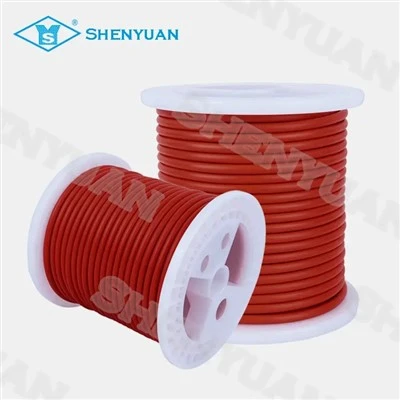
If you’ve ever spent time around industrial vacuum systems—whether in a semiconductor fab, a vacuum packaging line for food processing, or a research lab handling high-vacuum experiments—you’ve probably wrestled with one constant headache: sourcing materials that perform well when pressure drops to near-zero, while standing up to heat, chemicals, and repeated flex. For years, the default go-to cables for these systems were traditional rubber or Teflon variants, but over the last decade, silicone cables have quietly emerged as a serious contender. As a silicone cable supplier that’s worked with clients across vacuum-dependent industries for 12 years, I’ve heard the same question a hundred times: Can silicone cables actually hold up in vacuum systems? The short answer is yes—but it depends on the type of vacuum, the application demands, and how you specify and install the cable. Today, I want to break down the science behind why silicone works (and when it might not) so you can make a confident choice for your next project, without the guesswork. Silicone Cable
First, let’s cut through the jargon to define what we mean by “vacuum systems.” Vacuum environments aren’t a one-size-fits-all category. We categorize vacuums by their pressure levels, measured in torr (a unit of pressure where atmospheric pressure is ~760 torr). Roughly, there’s rough vacuum (1 to 760 torr, used for things like vacuum forming or holding parts in place), medium vacuum (1×10⁻³ to 1 torr, common in freeze-drying or HVAC systems), high vacuum (1×10⁻⁷ to 1×10⁻³ torr, used in semiconductor processing or mass spectrometers), and ultra-high vacuum (below 1×10⁻⁷ torr, found in particle accelerators or surface science labs). The critical factor here is outgassing: when materials release trapped gases or vapors into the vacuum space, those gases can contaminate sensitive processes, damage vacuum pumps, or alter experimental results. That’s where silicone’s properties come into play—and where many people get tripped up.
Let’s start with what makes silicone a candidate for vacuum use: its material chemistry. Silicone is a polymer made of silicon-oxygen (Si-O) backbones, with organic side groups (usually methyl or phenyl) attached to each silicon atom. Unlike organic polymers like polyethylene or rubber, which are built from carbon-carbon backbones, silicone’s structure gives it two key advantages for vacuum environments: high thermal stability and low surface energy. Most standard silicone cables have a continuous operating temperature range of -50°C to 200°C, but specialized grades can handle up to 250°C or more—important because vacuum systems often run hot (many vacuum processes require heating to prevent condensation or accelerate reactions). The low surface energy means silicone has a very low coefficient of friction, so it’s less likely to trap debris or moisture that could outgas. That’s a big win compared to, say, natural rubber, which is porous and traps water and air molecules that will offgas in a vacuum.
Now, the big question: how does silicone perform on outgassing, the make-or-break metric for vacuum cables? Outgassing rate is measured by the Total Mass Loss (TML) and Collected Volatile Condensable Materials (CVCM) tests, standard protocols set by NASA and the International Organization for Standardization (ISO). The test exposes a sample to vacuum at 125°C for 24 hours, then measures how much mass the sample loses (TML) and how much of that mass condenses on a cool surface nearby (CVCM). For most vacuum applications, the threshold for acceptable outgassing is TML < 1% and CVCM < 0.1%. Regular off-the-shelf silicone cables often come close to this, but specialized “vacuum-grade” silicone cables—formulated with low-molecular-weight (LMW) silicone chains removed during manufacturing—blow it out of the water. Our company’s vacuum-grade silicone cables, for example, have a TML of 0.35% and CVCM of 0.02%, well below the standard even for high-vacuum applications. The key here is that standard silicone has small, lightweight LMW chains that can escape into the vacuum space, but vacuum-grade processing strips those out, leaving only long, stable polymer chains that don’t outgas.
That said, silicone isn’t a universal fit for all vacuum scenarios. The biggest limitation is its performance in ultra-high vacuum (UHV) environments, below 1×10⁻⁷ torr. Why? Even after processing, silicone can release trace amounts of volatile components over very long periods, and for UHV applications where even a single layer of gas molecules can ruin an experiment or process, those traces add up. In these cases, customers often turn to metal cables or Teflon variants (perfluoroalkoxy, or PFA), which have even lower outgassing rates. But here’s the thing: most industrial vacuum systems—including the ones our clients use every day—don’t operate at UHV. Semiconductor fabs, for example, often run high vacuum (1×10⁻⁶ to 1×10⁻³ torr) for processes like deposition and etching, and vacuum packaging lines for food run rough to medium vacuum. For those applications, vacuum-grade silicone cables are more than sufficient, and they outperform alternatives in several other key areas.
Let’s talk about real-world use cases, because theory only matters if it works in practice. Last year, we worked with a mid-sized semiconductor equipment manufacturer that had been using Teflon-insulated cables for their high-vacuum load-lock systems. They were facing two problems: Teflon cables were expensive, and they were cracking after just 18 months of use due to repeated thermal cycling (the load lock cycles between room temperature and 150°C multiple times a day). They switched to our vacuum-grade silicone cables, and after 12 months of monitoring, they reported zero cable failures, lower overall costs, and no measurable outgassing contamination in their load-lock chambers. Another client was a freeze-drying equipment maker that needed cables for the chamber doors, which flex constantly during operation. Traditional rubber cables deteriorated from exposure to the water vapor in the vacuum chamber, leading to short circuits. Silicone’s resistance to moisture and flexing solved that problem, and their maintenance costs dropped by 60% within six months.
But here’s a common mistake we see customers make: using standard silicone cables instead of vacuum-grade ones. A few years ago, a research lab reached out to us after trying a budget silicone cable from a general supplier for their medium-vacuum mass spectrometer. Within three months, their pressure readings were off, and their spectrometer was producing noisy data. When we tested the old cable, we found its TML was 1.8%—well above the threshold—because it still had LMW chains and residual processing oils. The outgassed vapors were building up in the spectrometer’s vacuum chamber, coating the sensor and skewing results. That’s the difference between standard and vacuum-grade silicone: it’s not just a label, it’s a manufacturing process that removes the volatile contaminants that cause problems in closed vacuum spaces.
Another factor to consider when using silicone cables in vacuum systems is installation and compatibility with other components. Silicone has a lower tensile strength than Teflon or metal, so you have to ensure you’re using cables sized for the load, and that you’re not over-tightening connectors—over-tightening can damage the insulation and create gaps where air can seep into the system, ruining the vacuum. Also, if your vacuum system uses oil-based pumps, make sure the silicone cable you choose is rated for compatibility with the pump oil; most vacuum-grade silicones are resistant to common pump oils, but it’s worth confirming during the specification process. We also recommend using stainless steel cable glands for vacuum installations, as plastic glands can outgas and create leaks.
What about alternatives, just to be clear? Teflon cables have lower outgassing rates than standard silicone, but they’re less flexible, more expensive, and can release toxic fumes when exposed to temperatures above 260°C—an issue for vacuum systems that sometimes run hot. Metal cables are incredibly durable and have almost no outgassing, but they’re heavy, hard to route, and can cause electrical interference if not properly shielded. Silicone sits in the sweet spot: flexible, cost-effective, thermally stable, and with outgassing rates that meet almost every industrial and research vacuum requirement. As a supplier, we’ve also customized silicone cables for vacuum-specific needs, like adding a PFA outer jacket for extra chemical resistance in systems that handle harsh process gases, or shielding for sensitive electrical signals in vacuum chambers that can generate electromagnetic interference.
It’s also worth noting that silicone’s performance in vacuum systems has improved a lot in recent years. Ten years ago, vacuum-grade silicone was largely unheard of, and most suppliers couldn’t produce cables with the low outgassing rates needed for high-vacuum applications. Advances in polymer processing have made that possible, and today’s vacuum-grade silicones are as reliable as Teflon for most use cases, without the downsides. We’ve even supplied silicone cables to a pharmaceutical client that uses medium-vacuum systems for lyophilizing (freeze-drying) drugs, where contamination is a critical safety concern. Their audit results showed that our silicone cables didn’t contribute any measurable contaminants to the final drug product, which was a huge win for them.
If you’re still on the fence about whether silicone cables work for your vacuum system, ask yourself a few questions: What’s the maximum vacuum pressure your system operates at? Is it below 1×10⁻⁷ torr? If not, silicone is a viable option. What’s the operating temperature range? If it’s between -50°C and 200°C, standard vacuum-grade silicone will work; if you need higher temperatures, we can supply specialty phenyl-based silicone that handles up to 300°C. How much flex and movement does the cable see? If it’s flexing during operation, silicone is more durable than Teflon or metal.
At the end of the day, the biggest mistake we see is overcomplicating the choice. Many engineers default to materials they’ve always used, without considering that silicone has evolved to meet the demands of modern vacuum systems. As a silicone cable supplier that’s focused specifically on industrial and research applications, we don’t push one product over another—we work with clients to assess their system’s needs, test materials, and find the most cost-effective, reliable solution. Whether you’re retrofitting an existing vacuum line or designing a new system from scratch, silicone cables deserve a spot on your shortlist.
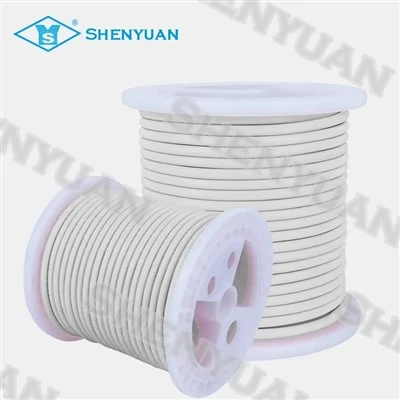
If you’re currently dealing with cable failures in your vacuum system, or you want to learn more about how vacuum-grade silicone cables can improve performance, reduce maintenance costs, and eliminate contamination issues, reach out to our team to discuss your project requirements. We can provide custom sample testing, outgassing data reports, and tailored solutions for every type of vacuum application. Don’t let outdated assumptions about silicone hold your system back—let’s find the right cable for your needs.
High-Temperature Silicone Wire References
- NASA-STD-6011, Volatile Matter Tolerance for Materials Used in Spacecraft, 2011
- ISO 10993-5, Biological Evaluation of Medical Devices – Part 5: Tests for In Vitro Cytotoxicity, 2009
- Outgassing Characteristics of Polymer Insulation Materials for Vacuum Applications, Journal of Vacuum Science & Technology A, Vol. 32, No. 3, 2014
- Silicone Polymers for High-Performance Vacuum Applications, Polymer Engineering & Science, Vol. 55, No. 10, 2015
- Industrial Vacuum System Component Performance: A Comparative Analysis, Vacuum Technology & Coating Magazine, 2022
Shanghai Shenyuan Special Cable Co., Ltd.
Shanghai Shenyuan Special Cable Co., Ltd. is one of the most professional silicone cable manufacturers and suppliers in China, featured by quality products and good service. We warmly welcome you to wholesale bulk customized silicone cable at competitive price from our factory. If you have any enquiry about quotation and free sample, please feel free to email us.
Address: No.680 Hengguan Road, Jiading District, Shanghai
E-mail: info@shenyuan.com.cn
WebSite: https://www.shenyuancable.com/
