Hey folks, if you’re out there spec-ing electrical components for sites like oil refineries, chemical plants, grain silos, or even underground mines—places where a single spark can turn a routine task into a disaster—this question probably crossed your mind: Can a regular push button switch hold up in a hazardous environment? As a push button switch supplier who’s fielded this exact question a hundred times over the years, I get why it’s such a big one. No one wants to be the person whose switch causes a flash fire or an explosion, so let’s break this down without the stuffy jargon that makes industrial engineering blogs impossible to follow. Push Button Switch

First, let’s define what a “hazardous environment” actually means, because it’s not just a buzzword. The National Electrical Code (NEC) and International Electrotechnical Commission (IEC) split these spaces into classes, zones, and divisions based on what kind of explosive materials are floating around. Class I has flammable gases or vapors (think gas stations or paint booths), Class II is combustible dust (grain elevators, woodworking shops), and Class III is flammable fibers or flyings (textile mills). Within each class, zones tell you how much of the material is present—Zone 1 means the explosive stuff is there during normal operation, Zone 2 means it’s only there if something breaks, and so on. Regular consumer-grade push buttons, like the ones you have on a microwave or a toaster, are totally fine for your home office or retail space. But in a hazardous environment? Those are a hard no. Why? Let’s talk about the two biggest risks here: sparks and ingress of explosive materials.
A standard off-the-shelf push button works by having a button on the outside of the switch housing that you press, which pushes a metal contact inside to complete (or break) an electrical circuit. When that metal contact snaps closed or open, it can create tiny arcs—mini sparks, basically—that are super hot. If there’s flammable gas or dust right there, that spark is enough to ignite the whole cloud. Also, the housing on most cheap push buttons isn’t sealed tight. So dust or gas can seep into the switch, build up over time, and then when you press the button, that spark ignites the material inside. That’s how you get an explosion. But wait—does that mean all push buttons are out of the question? Absolutely not. The key is picking the right kind of push button built specifically for hazardous locations.
Let’s talk about the two main certification types that matter here, because this is non-negotiable. You’ll see UL certifications from Underwriters Laboratories, or ATEX certifications from the European Union, and those aren’t just stickers—they mean the switch was tested in actual hazardous conditions. First, there’s intrinsic safety, often shortened to “IS.” Intrinsically safe push buttons are designed so that even when they’re working normally, the electrical energy they produce is too low to ignite explosive materials. The contacts only operate at super low voltage and current, way below the minimum needed to spark a fire. They also have built-in barriers that limit any extra energy that could come from a faulty circuit. Think of it like a power outlet in your phone charger—its energy is just enough to charge your phone, not enough to melt something or start a fire. That’s the same idea here.
Then there’s explosion-proof (sometimes called “flameproof”) push buttons, which are a different beast. These are built like a tiny pressure vessel. If an explosive gas does get inside the housing and ignites, the housing is strong enough to contain that explosion so it doesn’t break out. Plus, the gaps around the button stem and the contacts are super precise—so precise that the explosion gases cool down as they seep through those tiny gaps, making them too cool to ignite the explosive material outside the housing. These are used for environments where you might have higher energy circuits, or where the hazardous material is more volatile, like an oil refinery where there’s constant exposure to flammable propane.
Now, a lot of people ask me—what’s the catch here? Why can’t you just modify a regular push button to be hazardous-rated? Short answer: you can’t. The testing for these certifications is rigorous, and you can’t just seal a regular housing and call it a day. For example, an intrinsically safe push button has to go through hundreds of cycles of pressing and releasing, and test labs check that even after all that wear, the electrical output is still low enough to not ignite anything. Explosion-proof ones have to withstand multiple internal explosions without breaking, and the gaps have to be exactly the right width—too wide, and the explosion escapes; too narrow, and it doesn’t cool properly. Modifying a switch voids any certification, and that’s not just a paperwork thing—it’s a safety violation that could get you in big trouble, or worse, cause an incident.
I’ve seen this go wrong before, too. A few years back, a small chemical plant tried to save money by using a cheap, non-rated push button for their transfer pump controls. They thought, “We just need a button to turn the pump on and off, right?” Well, one day a small leak of ethanol vapors got into the control cabinet, and when the maintenance worker pressed the button, the spark from the contact ignited the vapors. It wasn’t a huge explosion, but it damaged the cabinet, shut down production for three days, and could’ve hurt someone if the cabinet had been closer to the floor where workers were standing. That’s the kind of mistake that makes us as suppliers push hard on only selling certified switches—we don’t want to be part of a situation that’s avoidable.
Now, let’s get to the practical stuff you actually care about, not just theory. What should you look for when choosing a hazardous-rated push button? First, match it to your environment’s classification. If it’s a Class I, Zone 2 space (where explosive gases are only present during a fault), an intrinsically safe switch might be overkill, but it’s still the right call for safety. If it’s Class I, Zone 1, you’ll need either intrinsically safe or explosion-proof, depending on your circuit. Also, think about the ingress protection (IP) rating, which tells you how well the switch is sealed against dust and water. For a grain silo, you’ll want an IP66 or higher, because dust can get everywhere and damage the switch, not just create a spark risk.
Another thing: don’t forget about accessories. Hazardous-rated push buttons don’t work in a vacuum. They need to be paired with other certified components, like barrier relays or control cables, that also meet the same safety standards. Even the best switch in the world is useless if the cable you’re using isn’t rated for hazardous locations, because a bad cable could create a spark too. That’s a common mistake I see new plant managers make—they focus only on the button and ignore the rest of the system.
Wait, but what about low-use applications? Like a safety stop button on a machine that’s used once a month. Do you still need a hazardous-rated switch? 100% yes. Even if the button is pressed rarely, if the environment has explosive dust or gas, a spark is a spark. And a dust buildup on a non-rated button’s contacts over time can create enough flammable material to ignite when you press it, even if the button itself is only used once. Safety stops are extra critical because you press them in an emergency, when you’re likely rushed and maybe not paying attention, so you don’t want to worry about whether the button will work or cause a problem.
I also want to address a myth I hear a lot: “Hazardous-rated switches are way too expensive.” Yeah, they’re pricier than a $5 consumer push button, but let’s do the math. A single spark incident can cost you way more than the difference in price. The grain silo I mentioned earlier? The explosion cost them over $100k in repairs and downtime, plus fines from OSHA. A certified hazardous push button costs maybe $50 to $150, depending on the rating. That’s a no-brainer. Plus, most insurance companies offer discounts for facilities that use certified components, because they’re seen as lower risk. So it’s not just a safety call—it’s a financial one too.
Now, back to the original question: Can a push button switch be used in a hazardous environment? The answer is yes, but only if it’s specifically designed, tested, and certified for that exact type of environment. Regular push buttons are a no-go, and modified ones are even worse. As a push button switch supplier, we specialize in these certified units—intrinsically safe, explosion-proof, IP-rated, whatever you need for your specific space. We work with small shops and big refineries alike, so we know that one size doesn’t fit all. If you’re not sure what rating you need, don’t guess—send over details about your facility’s class, zone, and the environment (dust, gas, whatever), and we can help you pick the right one.
If you’re out there planning a new installation, upgrading your controls, or replacing a faulty switch, don’t cut corners here. Hazardous environments demand components that have been proven safe, not just ones that look like they’ll work. A push button might seem simple, but when it comes to safety, even simple components matter.
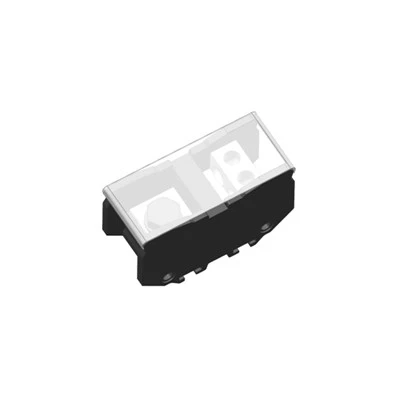
If you’re ready to source the right hazardous-rated push button for your project, or just have more questions about which rating fits your space, reach out to connect with our team to discuss your needs. We’re here to help you make safe, cost-effective choices that keep your team and your facility protected.
Spring Terminal Block References
NFPA 70: National Electrical Code (NEC) Article 500-505
IEC 60079: Explosive Atmospheres Standard Series
UL 1203: Standard for Explosion-Proof and Dust-Ignition-Proof Electrical Equipment for Hazardous (Classified) Locations
Zhejiang Weide Electric Co., Ltd.
Zhejiang Weide Electric Co., Ltd. is one of the most professional push button switch manufacturers and suppliers in China, featured by quality products and low price. If you’re going to buy the newest push button switch, welcome to get free sample from our factory. We also accept customized orders.
Address: No. 555, South Binhe 2nd Road, Yueqing City, Zhejiang Province, China
E-mail: zjwdir@wdirele.com
WebSite: https://www.chweide.com/
